
1. Introduction to Liquid AI LFM2-Nano
The world of artificial intelligence is changing fast — and not just in the direction of bigger, more powerful models. A quieter but arguably more important revolution is happening at the other end of the scale. Compact, efficient, deployable-anywhere AI models are becoming the hottest topic in tech circles, and one name is leading the charge: Liquid AI with its LFM2-Nano family.
On September 25, 2025, Liquid AI — headquartered in Cambridge, Massachusetts — announced a breakthrough in AI model training and customization that enables 350M to 2.6B parameter foundation models, called “Nanos,” to deliver GPT-4o-class performance on specialized agentic tasks — while running on phones, laptops, and embedded devices. In internal and partner evaluations, Liquid Nanos perform competitively with models up to hundreds of times larger.
This is a big deal. For years, the conversation around AI has been dominated by models that require enormous data centers, massive computing budgets, and a stable internet connection. Liquid AI is flipping that script entirely. The LFM2-Nano is not just a smaller model — it is a fundamentally different idea about how AI should work and where it should live.
Whether you are a developer building mobile apps, a startup looking to cut cloud costs, or simply someone curious about the future of AI, this article will walk you through everything you need to know. Let’s dive in.

2. What Is Liquid AI LFM2-Nano?
Let’s start from the very beginning, because understanding what LFM2-Nano is requires a quick look at the company behind it.
Liquid AI is an MIT-born AI company focused on building efficient, real-world-deployable AI systems. Their flagship product line is called Liquid Foundation Models (LFMs) — a family of models designed not for showing off on leaderboards, but for actually working on the hardware that people use every day.
Liquid Foundation Models leverage Liquid Neural Networks, a proprietary architecture rooted in dynamical systems and signal processing, to deliver frontier-grade intelligence at a fraction of the compute — on any hardware, on or off the cloud.
The “LFM2” part refers to the second generation of these models. The “Nano” designation refers to a special subset of LFM2 models that have been further trained and tuned for very specific tasks. LFM2-Nanos are LFM2 base models that were further pre-trained and post-trained for domain or task-specific use cases such as data extraction, tool and function calling, retrieval augmented generation (RAG), and mathematical reasoning.
In plain terms: a Nano is a tiny specialist. Instead of trying to do everything, it does one or two things really, really well — and it does them while running entirely on your device, without sending a single byte to the cloud.
The initial LFM2-Nano release launched with seven task-specific models, including:
LFM2-350M-Extract — a multilingual data extraction model designed to pull structured information from unstructured sources, such as extracting data from an invoice email and formatting it into JSON.
LFM2-350M-ENJP-MT — a 350M parameter model for bidirectional English and Japanese translation, which surpasses the quality of generalist open-source models more than 10 times its size.
LFM2-350M-Math — a 350M parameter reasoning model capable of solving mathematical problems.
LFM2-1.2B-RAG — a 1.2B parameter model designed for answering questions based on long contexts for retrieval-augmented generation.
LFM2-1.2B-Tool — a 1.2B parameter model designed for function-calling use cases, such as agentic workflows.
Each of these models is a focused, purpose-built tool — and that focus is precisely what makes them so powerful at their designated tasks despite their tiny size.
3. Why Small AI Models Are the Future
Here is a question worth asking: if bigger models are generally smarter, why would anyone want a smaller one?
The answer comes down to practical reality. The cost and energy demands of serving large frontier models from data centers have been a major barrier to broad deployment. Running a 70-billion parameter model requires specialized server hardware, significant electricity, and a reliable cloud connection. That is fine for a research lab — but it creates serious problems for anyone trying to deploy AI in the real world.
Think about where AI actually needs to work: inside a car navigating a tunnel with no signal, on a medical device in a rural clinic, on a factory floor with no internet connection, inside a smartphone that needs to preserve battery life, or in a security-sensitive environment where data must never leave the building. None of these use cases can rely on a cloud API call happening every few seconds.
This is the core argument for small AI models, and Liquid AI’s CEO Ramin Hasani put it well when the Nanos were announced: “Instead of shipping every token to a data center, we ship intelligence to the device. That unlocks speed, privacy, resilience, and a cost profile that finally scales to everyone.”
The trend is clear and growing. The AI industry is beginning to recognize that the future is not one enormous model in the cloud — it is thousands of small, efficient, specialized models running everywhere. Nanos can lead to a step change in the economic and environmental impact of AI systems.
Small models also democratize AI. Not every startup has the budget to run GPT-4o at scale. But a 350M parameter model that runs locally, with zero marginal inference cost, is something that any developer can use, any startup can build with, and any business can deploy.
4. Lightweight AI Model Architecture Explained
Now let’s get into the fascinating part: how does LFM2-Nano actually work under the hood? Don’t worry — we will keep this accessible.
Traditional large language models (like GPT-4 or Llama) are based on the Transformer architecture. Transformers are powerful but computationally heavy. They use a mechanism called “attention” that processes all tokens in a sequence simultaneously — which requires memory and processing power that grows with the length of the input. This is great for capability, but terrible for efficiency on small devices.
Liquid AI took a different route. The LFM2 architecture is a hybrid model that combines two types of processing layers working together.
The first type is called Linear Input-Varying (LIV) convolution blocks — specifically, double-gated short-range LIV convolution blocks. These handle the majority of sequence processing. They are efficient, memory-friendly, and handle most of the computational heavy lifting. Unlike traditional attention, LIV layers maintain a constant-size memory state regardless of how long the input is. This directly solves one of the biggest problems with Transformers on edge devices: the KV cache, which grows with context length and eats memory.
The second type is standard Grouped Query Attention (GQA) blocks — a more efficient version of the attention mechanism that reduces memory bandwidth by sharing keys and values across head groups.
In the LFM2-1.2B model specifically, the architecture includes 10 double-gated short-range LIV convolution blocks and 6 grouped query attention blocks. This hybrid combination allows the model to capture both local context (via convolutions) and longer-range relationships (via attention) without needing the full computational cost of a pure Transformer.
The architecture was found using a tool called STAR — Liquid AI’s proprietary neural architecture search engine, which was designed to find the optimal neural architecture given quality, memory, and latency criteria for deployment on real hardware. The LFM2 design is edge-first: architecture, pre-training, and post-training were all co-designed around the objective of maximizing downstream quality subject to device-side latency and peak memory constraints.
The result is a model that delivers up to 2x faster prefill and decode on CPUs compared to similarly sized models — a remarkable achievement.

5. AI Model for Edge Devices: Real Use Cases
So where can you actually use the LFM2-Nano in the real world? The answer is: almost anywhere. Let’s walk through some concrete, practical scenarios.
Smartphones and Mobile Apps
The LFM2-350M can run with a sub-200 MB memory footprint on modern mobile hardware. That means developers building Android or iOS applications can integrate this model without requiring constant network connectivity or offloading computation to a cloud server. This is significant for privacy-sensitive applications — health monitoring, personal finance tools, offline assistants — where sending data to a server is undesirable or legally restricted.
IoT and Embedded Systems
The model has been shown to run on a Raspberry Pi 5 using just 300 MB with int8 quantization. That opens the door for IoT applications, edge data processing, and on-device inference for industrial and consumer hardware. Think smart factory sensors that process data locally, agricultural monitors that work without cellular coverage, or retail analytics devices that never send customer data to the cloud.
Automotive Systems
Liquid AI specifically mentions in-car assistants as a key use case. A voice assistant in a car that needs to work in a tunnel, underground parking, or rural areas with no signal cannot rely on a cloud API. LFM2-Nano can run natively on automotive-grade hardware, providing reliable, low-latency, offline-capable intelligence inside the vehicle.
Healthcare and Medical Devices
Medical environments often have strict data privacy requirements. A clinical tool that processes patient notes, extracts structured information, or assists with documentation — running entirely on a local device — avoids the legal and ethical complications of sending sensitive health data to a third-party server.
Enterprise and Industrial Deployments
Liquid’s Chief Technology Officer Mathias Lechner confirmed that enterprise customers have successfully deployed Liquid Nanos in scenarios ranging from high-throughput cloud instances at massive scale to running fully locally on low-power hardware.
The common thread across all of these use cases: the model comes to the data, rather than the data going to the model. That shift has profound implications for privacy, latency, reliability, and cost.
6. Tunable AI Model: Why It Matters
One of the most underappreciated features of the LFM2-Nano is how easy it is to customize. This is what Liquid AI calls tunability — and it is a game changer for businesses.
Most AI models are general-purpose. They are trained to do a little bit of everything, which means they are good at a lot of things but rarely excellent at any one specific task in your specific domain. Businesses that want a model to follow their internal processes, use their terminology, extract their specific data formats, or reason about their particular type of documents usually face an expensive and technically complex fine-tuning process.
Liquid AI has baked tunability into the LFM2 design from the start. The Nanos themselves are the product of this tunability — they are base LFM2 models that were further specialized through a combination of knowledge distillation, reinforcement learning, and model merging to excel at a particular task.
Liquid AI uses a combination of proprietary software for automated evaluations, knowledge distillation, reinforcement learning, and model merging to iteratively improve the performance of a model for a specific use case. The result is that a business can work with Liquid AI to create a custom Nano — a tiny model perfectly tuned for their specific workflow — without needing to build or maintain the infrastructure of a large model.
Liquid AI also offers a startup program through which selected startups gain access to their full stack along with guidance from their product and engineering teams to specialize and deploy the best model for their business.
For companies in finance, healthcare, logistics, e-commerce, or any other data-intensive industry, this tunability means they can have a high-performance, task-specific AI model that runs locally, costs almost nothing to serve, and is trained on their own data. That is a very compelling proposition.
7. On-Device AI Model Performance
Let’s talk about the numbers, because the performance of LFM2-Nano on real hardware is genuinely impressive.
The LFM2.5-1.2B-Instruct — the latest generation of Liquid’s small model family — achieves 239 tokens per second decode speed on an AMD Ryzen AI 9 HX 370 laptop CPU and 82 tokens per second on a mobile NPU. It runs under 1 GB of memory. The LFM2.5-350M achieves 40,400 tokens per second on an H100 GPU for high-throughput batch processing, and runs in just 81 MB of memory on a mobile GPU.
These numbers have real-world implications. At 82 tokens per second on a mobile NPU, a user gets a response that feels instant — there is no perceivable lag. At under 1 GB of memory, the model coexists comfortably with other apps on a modern smartphone. And at 40,400 tokens per second on an H100, enterprises running large-scale data extraction pipelines can process massive volumes at extremely low cost.
Beyond raw speed, on-device execution delivers three additional benefits that are harder to measure but equally important.
Privacy: Your data never leaves your device. For sensitive personal, medical, financial, or confidential business data, this is not just a nice feature — it is often a legal requirement.
Resilience: On-device models work offline. No internet connection, no API downtime, no service outages can interrupt them. For automotive, industrial, and mission-critical applications, this reliability is non-negotiable.
Cost: When there is no cloud inference bill, the economics of AI change entirely. Liquid AI describes this as “zero marginal inference cost” — once the model is on the device, each inference costs essentially nothing. For applications that run millions of inferences per day, this is the difference between a viable business and an unsustainable one.
8. Efficient Neural Network Design
The efficiency of LFM2-Nano is not an accident — it is the product of deliberate, systematic engineering choices made at every level of the model’s design.
Let’s look at the key design decisions that make LFM2 so resource-efficient.
Hardware-in-the-Loop Architecture Search
Rather than designing the architecture on paper and then testing it on hardware, Liquid AI used a hardware-in-the-loop approach. This means that during the architecture search process, candidate models were actually tested on real edge hardware — smartphones and laptop CPUs — and any architecture that violated device-side budgets for latency, decode speed, or peak memory was immediately discarded. Only architectures that passed real hardware tests were considered further. This ensures that the final model is genuinely optimal for the hardware it will run on, not just theoretically efficient.
Knowledge Distillation
LFM2 was trained using a technique called knowledge distillation, where a larger “teacher” model (Liquid’s own LFM1-7B) guided the training of the smaller “student” models. During pre-training, the cross-entropy between the student model’s outputs and the teacher model’s outputs was used as the primary training signal. This allows the small model to absorb the reasoning patterns and knowledge of a much larger model — and it is a significant reason why LFM2-Nanos can punch so far above their weight class.
Efficient Tokenization
LFM2 uses a byte-level BPE tokenizer with a 65,536-token vocabulary. The tokenizer was specifically optimized for encoding efficiency in English, Japanese, Arabic, Korean, Spanish, French, and German — the eight primary languages supported by the model. This reduces the number of tokens needed to represent text in these languages, which directly improves inference speed.
Quantization Support
All LFM2 models ship with support for Q4_0 quantization format via llama.cpp, which dramatically reduces the memory footprint of the model without significant quality loss. This is what enables the LFM2-350M to run in 81 MB on a mobile GPU and 300 MB on a Raspberry Pi.
Three-Stage Post-Training
LFM2’s post-training pipeline includes supervised fine-tuning, length-normalized preference optimization, and model merging — a three-stage process that refines the model’s instruction-following behavior, aligns it with human preferences, and consolidates the best properties of multiple training runs into a single final checkpoint.
The result of all these design choices working together: a model that achieves 3x faster training compared to its previous generation and 2x faster decode and prefill speed on CPU compared to competing models of the same size.
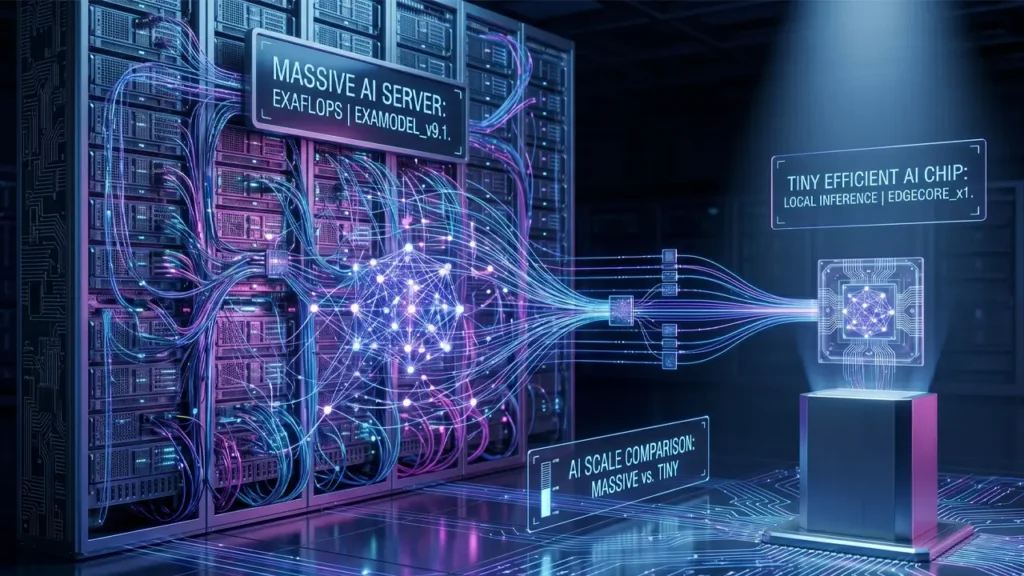
9. 350M Parameters: Enough or Not?
This is the question that many people ask when they first encounter the LFM2-Nano. Three hundred and fifty million parameters sounds like a lot — but when GPT-4 is estimated to have over a trillion parameters, is 350M really enough to do anything useful?
The answer, surprisingly, is yes — for the right tasks. And the benchmarks back this up.
Here is a comparison table to put things in perspective:
Inference Sovereignty Matrix
Analyzing the strategic shift from cloud-locked Transformers to Liquid Foundation Models (LFM). Evaluating on-device fidelity across data extraction and multilingual translation workflows.
| Model Identity | Scale | Deployment | Strategic Competitive Edge |
|---|---|---|---|
|
LFM2-350M Series
Liquid Neural Network
|
350M
|
Native On-Device |
Structural Data Extraction & MT
Zero-shot EN/JP translation parity with GPT-4o.
|
|
LFM2-1.2B-Extract
|
1.2B
|
Native On-Device | Complex Multilingual Extraction & Logic |
| Gemma 3 4B (Google) |
4B
|
Partially On-Device | General-purpose logic / Open weights |
|
GPT-4o (OpenAI)
|
EST. 200B+
|
Cloud Restricted | Broad General Intelligence / High Latency |
LFM2-350M Series
Native on-device execution for translation and structured extraction with sub-cent token economics.
Gemma 3 27B
CloudThe results speak clearly. The LFM2-350M-Extract outperforms Gemma 3 4B at structured data extraction — a model more than 11 times its size. The LFM2-350M-ENJP-MT delivers translation quality competitive with GPT-4o, a model estimated to be more than 500 times larger. And the LFM2-1.2B-Extract outputs complex objects in different languages at a level higher than Gemma 3 27B, a model 22.5 times its size.
The key insight here is that specialization multiplies capability. A 350M parameter model trained specifically on data extraction will outperform a 4B parameter general-purpose model on that task, because every parameter in the small model is doing exactly the work it was trained to do. The large general model spreads its capacity across thousands of different skills — the small specialist concentrates it entirely on one.
So is 350M enough? For general conversation and broad knowledge — no, it has clear limitations. But for a focused, well-defined task like extracting invoice data, translating between two languages, or answering questions from a document — absolutely yes.
10. Low Resource AI Model: Final Verdict
After everything we have covered — the architecture, the benchmarks, the use cases, and the philosophy — what is the final verdict on Liquid AI LFM2-Nano?
The short answer is: it is one of the most exciting developments in practical AI in recent years.
Here is a quick summary of what makes LFM2-Nano stand out:
LFM2-Nano Technical Datasheet
Analyzing the operational metrics of the LFM2-Nano series. Engineered for Inference Sovereignty, Liquid Neural Networks deliver high-throughput intelligence on local silicon without cloud dependency.
| Specification Pillar | Technical Capacity | Metric / Value |
|---|---|---|
| Architecture & Scale | ||
|
Sovereign Scale
|
Modular parameter range optimized for Total Weight Access. Zero-shot 32K context window for high-fidelity extraction. |
350M — 2.6B
Open Weights |
| Operational Performance | ||
|
Throughput
|
Industry-leading inference speeds across heterogeneous silicon. Native support for CPU, GPU, and NPU orchestration. |
239 TOK/S
Laptop CPU Benchmark
|
| Memory Load | Ultra-efficient footprint for mobile GPU deployment. Enables persistent background intelligence. |
81 MB VRAM
Mobile Optimized |
| Intelligence & Integration | ||
| Multilingual Density | Native instruction following in 10+ core languages including Arabic, Japanese, and Korean. | 10+ Global Langs |
|
Deployment
|
Turnkey integration with vLLM, ExecuTorch, and llama.cpp. High-fidelity tunability for domain-specific tasks. |
Native Cloud-Free
LLAMA.CPP / vLLM
|
Nano Efficiency
Full 32K context support on laptop CPUs and mobile NPUs without internet latency.
Integration
Open WeightsDeploy anywhere using ExecuTorch or vLLM. High tunability for specialized domain knowledge.
LFM2-Nano is not trying to replace GPT-4 or Claude for open-ended conversation and broad reasoning. What it is doing is something arguably more valuable for many real-world applications: it is bringing reliable, fast, private, low-cost AI intelligence to devices and environments where large cloud models simply cannot go.
For developers, the open weights and broad framework support (llama.cpp, ExecuTorch, Hugging Face Transformers, vLLM, MLX) mean that getting started is straightforward. For businesses, the tunable architecture and startup program mean that a custom, specialized Nano is within reach even for early-stage companies. For the AI ecosystem as a whole, the LFM2-Nano represents a proof of concept that small can be powerful — that a 350M parameter model can genuinely compete with models hundreds of times its size when specialization and efficient architecture design are taken seriously.
The trajectory is also clear. Liquid AI has already released LFM2.5, an updated generation with extended pre-training on 28 trillion tokens and a scaled reinforcement learning pipeline — pushing the boundaries of what small models can achieve even further. The Audio, Vision-Language, and multilingual variants of LFM2.5 extend the family into new modalities, bringing edge-capable AI to voice, images, and beyond.
The future of AI is not one giant model in a data center. It is intelligence embedded everywhere — in your phone, your car, your factory, your clinic, your home. Liquid AI LFM2-Nano is one of the most convincing demonstrations yet that this future is not just possible — it is already here.
Want to stay ahead of the latest developments in edge AI, small language models, and breakthrough technologies like Liquid AI LFM2-Nano? Visit www.aiinnovationhub.com for in-depth reviews, tutorials, and news from the frontier of artificial intelligence — written for everyone from curious beginners to experienced developers.
🇺🇸 English Review:
This article on Liquid AI LFM2-Nano is genuinely impressive. The way complex AI concepts are explained in such a simple and engaging manner makes it perfect even for beginners. I especially liked the focus on real-world use cases and edge devices. The site itself is fast, clean, and easy to navigate. Definitely a valuable resource if you want to stay ahead in AI trends. Highly recommended.
🇪🇸 Reseña en Español:
El artículo sobre Liquid AI LFM2-Nano es realmente interesante y fácil de entender. Explica tecnologías complejas de una manera clara, lo cual es perfecto para quienes no son expertos. Me gustó mucho el enfoque en aplicaciones reales y dispositivos edge. El sitio web también es rápido y bien estructurado. Sin duda, una excelente fuente para aprender sobre inteligencia artificial.
🇸🇦 مراجعة باللغة العربية:
المقال عن Liquid AI LFM2-Nano رائع جدًا ويقدم المعلومات بطريقة سهلة وواضحة. حتى المفاهيم المعقدة في الذكاء الاصطناعي أصبحت مفهومة للجميع. أعجبني التركيز على الاستخدامات العملية والأجهزة المحلية. الموقع منظم وسريع وسهل التصفح. أنصح به لكل من يريد متابعة أحدث تقنيات الذكاء الاصطناعي.
🇨🇳 中文评价:
这篇关于 Liquid AI LFM2-Nano 的文章内容非常优秀,讲解清晰易懂,即使是初学者也能轻松理解复杂的AI概念。我特别喜欢对实际应用和边缘设备的分析。网站设计简洁,加载速度快,阅读体验很好。如果你对人工智能感兴趣,这个网站非常值得关注。
🇫🇷 Avis en Français :
L’article sur Liquid AI LFM2-Nano est très bien structuré et facile à comprendre. Les explications sont claires même pour les débutants, ce qui est un vrai plus. J’ai particulièrement apprécié les exemples concrets et l’accent mis sur les applications réelles. Le site est rapide et agréable à parcourir. Une excellente ressource pour suivre les tendances en IA.
🇩🇪 Bewertung auf Deutsch:
Der Artikel über Liquid AI LFM2-Nano ist wirklich gut gemacht. Komplexe KI-Themen werden verständlich und klar erklärt, auch für Einsteiger. Besonders interessant fand ich die praktischen Anwendungsbeispiele und den Fokus auf Edge-Geräte. Die Website ist übersichtlich und lädt schnell. Eine sehr empfehlenswerte Plattform für alle, die sich für KI interessieren.