
The way we consume content is changing fast. In 2025, people are juggling more tasks than ever, and reading long articles just doesn’t fit into everyone’s schedule anymore. That’s where audio comes in. Whether you’re commuting, cooking, or working out, audio lets you stay informed without staring at a screen. This shift isn’t just a trend—it’s becoming the new standard for how businesses reach their audiences.
Audio marketing trend 2025 is all about meeting your audience where they are. Podcasts, audio summaries, and voice content are growing exponentially. According to recent industry reports, audio content consumption has increased by over 40% in the past two years, with listeners spending an average of 7 hours per week on podcasts alone. For marketers and business owners, this means one thing: if you’re not creating audio content, you’re missing out on a massive opportunity to connect with potential customers.
The beauty of audio is its accessibility. Unlike video, which requires visual attention, or text, which demands reading time, audio fits seamlessly into people’s lives. It’s passive, convenient, and perfect for multitasking. And with AI tools making audio creation easier than ever, there’s no reason not to jump on this bandwagon. Google NotebookLM Audio Overviews is one tool that’s making this transition incredibly simple for content creators, ecommerce businesses, and marketers.
What Is Google NotebookLM Audio Overviews?
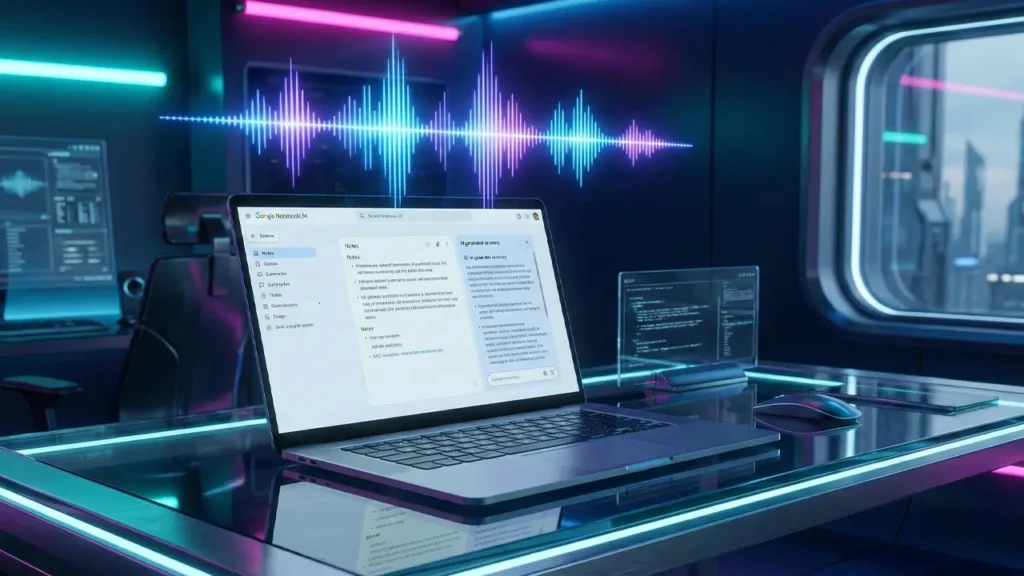
Google NotebookLM features are designed to help you work smarter with your content. NotebookLM is Google’s AI-powered research and note-taking tool that helps you organize, understand, and repurpose information from various sources. One of its standout features is Audio Overviews—a tool that transforms written content into engaging, conversational audio summaries.
Unlike traditional text-to-speech (TTS) systems that simply read text in a robotic monotone, Audio Overviews creates something much more engaging. It generates a natural-sounding conversation between two AI hosts who discuss the content as if they’re having a real podcast dialogue. They ask questions, provide insights, emphasize key points, and even add a touch of personality to the discussion.
Here’s what makes Google NotebookLM Audio Overviews special:
- Natural Conversation: Two distinct AI voices engage in dialogue, making the content more digestible and entertaining
- Smart Summarization: The AI doesn’t just read—it identifies key themes, extracts main ideas, and structures the conversation logically
- Easy Input: You can feed it PDFs, URLs, Google Docs, and other text sources
- Quick Generation: Within minutes, you have a polished audio file ready to share
- Free to Use: As of early 2025, Google NotebookLM is available at no cost for users with a Google account
The tool is built on Google’s advanced language models, which means it understands context, tone, and structure. This isn’t just automation—it’s intelligent content transformation that maintains the essence of your original material while making it accessible in a completely new format.
How a Blog Transforms into a Podcast
The magic of blog to podcast AI lies in its simplicity. You don’t need audio editing skills, expensive equipment, or hours of recording time. With Google NotebookLM, the process is straightforward and surprisingly fast.
Here’s the step-by-step breakdown:
Step 1: Upload Your Content Start by opening Google NotebookLM and creating a new notebook. You can upload your blog post in multiple formats—paste a URL, upload a PDF, connect a Google Doc, or simply copy and paste the text. The tool accepts up to 50 sources per notebook, so you can even combine multiple blog posts or product descriptions into one comprehensive audio overview.
Step 2: Generate the Audio Overview Once your content is uploaded, look for the “Audio Overview” option in the notebook. Click “Generate,” and the AI will analyze your content, identify key themes, and structure a conversational outline. This usually takes 2-5 minutes depending on the length of your source material.
Step 3: Review and Download When generation is complete, you can listen to the preview directly in NotebookLM. The two AI hosts will discuss your content in a natural, engaging way, typically lasting 5-15 minutes depending on the original length. If you’re satisfied, download the audio file as an MP3.
Step 4: Publish and Share Now you have a podcast-style audio file ready for distribution. Upload it to your website, share it on podcast platforms like Spotify or Apple Podcasts, embed it in blog posts, or use it in email marketing campaigns.
The AI does more than just read your content—it interprets it. The hosts might say things like “That’s a really interesting point about…” or “What I find fascinating here is…” This conversational approach keeps listeners engaged and makes complex information easier to understand. For bloggers and content marketers, this means you can now offer your audience multiple ways to consume the same valuable content without any additional writing or recording effort.
AI Audio Reviews for Products
Imagine a potential customer landing on your product page. They’re interested, but they’re also browsing on their phone while waiting in line or commuting. Reading through lengthy product descriptions and specifications might feel like too much effort. But what if they could simply hit play and listen to an engaging review instead?
AI product audio reviews are transforming ecommerce by making product information more accessible and engaging. With Google NotebookLM, you can convert product descriptions, specifications, customer testimonials, and review summaries into compelling audio content that helps customers make informed decisions.
Here’s how it works for ecommerce:
For Product Pages: Take your written product description and customer reviews, feed them into NotebookLM, and generate an audio overview. The AI hosts will discuss the product’s features, benefits, and even address common customer questions in a conversational format. Add this audio player to your product page, giving shoppers an alternative to reading.
For Comparison Guides: If you sell multiple variants or want to help customers choose between products, create a comparison document and convert it to audio. The two AI hosts can discuss the pros and cons of each option, making it easier for customers to understand which product best fits their needs.
For Unboxing and Setup: Combine your product manual with setup instructions and generate an audio guide. Customers can listen while they unbox and set up their purchase, creating a more seamless experience.
For Trust Building: Compile positive customer testimonials and success stories into a document, then transform it into an audio case study. Hearing about real experiences in a podcast-style format feels more authentic and trustworthy than just reading quotes.
The psychological impact is significant. Audio creates a more personal connection—it feels like someone is talking directly to the customer, answering their questions, and helping them understand why this product is right for them. This personal touch can be the difference between a bounce and a conversion.

Benefits for Ecommerce Businesses
AI podcast generator for ecommerce isn’t just a novelty—it’s a strategic tool that can directly impact your bottom line. Online stores that have implemented audio content are seeing measurable improvements in key performance metrics.
Let’s look at the concrete benefits:
Audio Integration Impact Matrix
Quantitative and qualitative assessment of audio-first content strategies on core digital metrics.
| Core Metric | Observed Impact | Strategic Value |
|---|---|---|
| Time on Page | Engagement +40% – 70% Growth |
Significantly extended sessions signal content authority to search algorithms and increase the window for brand conversion. |
| Bounce Rate | Retention -20% – 35% Reduction |
Auditory storytelling anchors visitors, reducing immediate exits and encouraging deeper exploration of the site architecture. |
| Customer Trust | Brand Affinity Superior Perception |
Audio content provides a human-centric layer that feels personal and authoritative, humanizing digital transactions. |
| Accessibility | Market Reach +15% – 20% Audience |
Effectively serves users with visual impairments, situational disabilities, or diverse cognitive preferences. |
| Mobile Experience | Convenience High UX Optimization |
Allows multi-tasking and reduces the friction of long-form reading on constrained vertical displays. |
Increased Engagement: When customers can listen to product information while browsing, they’re more likely to absorb the details. This is especially valuable for complex products or services that require explanation. The conversational format makes information more digestible than dense text blocks.
Better SEO Performance: Time on page and reduced bounce rate are important ranking signals. When Google sees that visitors are spending more time engaging with your content, it interprets this as a quality indicator, potentially boosting your search rankings.
Competitive Differentiation: In 2025, most ecommerce sites still rely solely on text and images. Adding audio content sets you apart. It shows innovation, customer-centricity, and attention to user experience—all factors that influence buying decisions.
Lower Return Rates: When customers have a clearer understanding of what they’re buying through audio explanations, they’re less likely to have unmet expectations. This means fewer returns and higher satisfaction rates.
Multi-Channel Marketing: The audio files you create aren’t just for your website. You can share them on social media, include them in email campaigns, upload them to YouTube as talking-head style videos with static images, or distribute them on podcast platforms to reach entirely new audiences.
For small to medium-sized ecommerce businesses, this levels the playing field. You don’t need a massive budget for professional podcast production—just your existing content and a free AI tool.
A New Format for Content Marketing
Audio content marketing tools are revolutionizing how brands communicate with their audiences. Traditional content marketing focuses heavily on blog posts, social media updates, and videos. While these formats remain valuable, audio opens up an entirely new dimension of engagement.
Think about your own content consumption habits. How often do you start reading an article but never finish it? How many browser tabs do you have open right now with “things to read later”? Now contrast that with podcasts or audiobooks you’ve completed. Audio has a completion advantage—once someone starts listening, they’re far more likely to finish.
Here’s why audio is becoming a content marketing essential:
Intimacy and Connection: Audio creates a sense of closeness that text struggles to match. When someone hears a voice (even an AI-generated one) discussing your brand’s ideas, it feels more personal. The conversational tone of Google NotebookLM’s Audio Overviews amplifies this effect—it’s not a lecture, it’s a discussion.
Educational Content: If your business relies on educating customers—whether you’re selling software, consulting services, or technical products—audio makes learning easier. Complicated concepts become clearer when explained conversationally rather than presented in dense paragraphs.
Brand Authority: Regularly publishing audio content positions your brand as a thought leader. A “podcast” series about industry trends, tips, or insights keeps your audience coming back and reinforces your expertise.
Content Variety: Audiences appreciate brands that offer content in multiple formats. Some people are visual learners, some prefer reading, and others are auditory learners. By providing audio versions of your written content, you’re showing that you understand and respect different preferences.
Passive Consumption: Audio doesn’t demand full attention. Your audience can listen while commuting, exercising, cooking, or working on other tasks. This means your content fits into more moments of their day, increasing the likelihood they’ll actually consume it.
Social Sharing: Audio clips are highly shareable. A 2-minute highlight from your longer audio overview can be shared on Instagram Stories, TikTok, LinkedIn, or Twitter, driving traffic back to your full content.
The best part? You’re not starting from scratch. You already have blog posts, white papers, case studies, and product information. Google NotebookLM lets you repurpose all of that into audio content with minimal effort, multiplying the value of work you’ve already done.
Voice Content for Online Stores
Voice content for online stores is more than just a nice-to-have feature—it’s becoming a conversion optimization tool. As voice search and smart speakers become more prevalent, consumers are increasingly comfortable with audio interfaces. Bringing voice content to your ecommerce site aligns with this broader behavioral shift.
Consider these use cases for voice content in online retail:
Product Education: For products that require explanation—whether it’s software, electronics, supplements, or professional tools—audio walkthroughs help customers understand what they’re buying. Instead of reading through technical specifications, they can listen to a clear, conversational explanation of features and benefits.
Size and Fit Guides: Fashion retailers struggle with returns due to sizing issues. An audio guide that walks customers through how to measure themselves and choose the right size can reduce this problem while providing a more helpful shopping experience.
Brand Story: Your “About Us” page probably tells your brand’s story, values, and mission. Converting this into an audio narrative makes it more emotionally engaging. Customers who connect with your story are more likely to become loyal buyers.
Customer Support: Common questions and troubleshooting guides can be converted into audio FAQs. This reduces the burden on your customer service team while providing instant help to shoppers.
Seasonal Promotions: Instead of just displaying sale banners, create an audio announcement that explains the promotion, highlights featured products, and creates urgency. This can be particularly effective during holiday shopping seasons.
Gift Guides: Audio gift guides feel like having a personal shopping assistant. The conversational format makes recommendations more persuasive and helps indecisive shoppers find the perfect product.
Implementation is simple: embed audio players on relevant pages, include transcripts for accessibility and SEO, and track engagement metrics to see which audio content resonates most with your audience.
The conversion impact can be substantial. When customers feel informed and confident about their purchase, they’re more likely to complete the transaction. Audio content removes uncertainty, answers objections, and guides shoppers smoothly through the buying journey.
Repurposing Content Without Extra Costs
One of the biggest challenges in content marketing is the constant demand for fresh material. Creating quality content takes time, expertise, and often money. But what if you could multiply the value of each piece of content you create without significantly increasing your workload or budget?
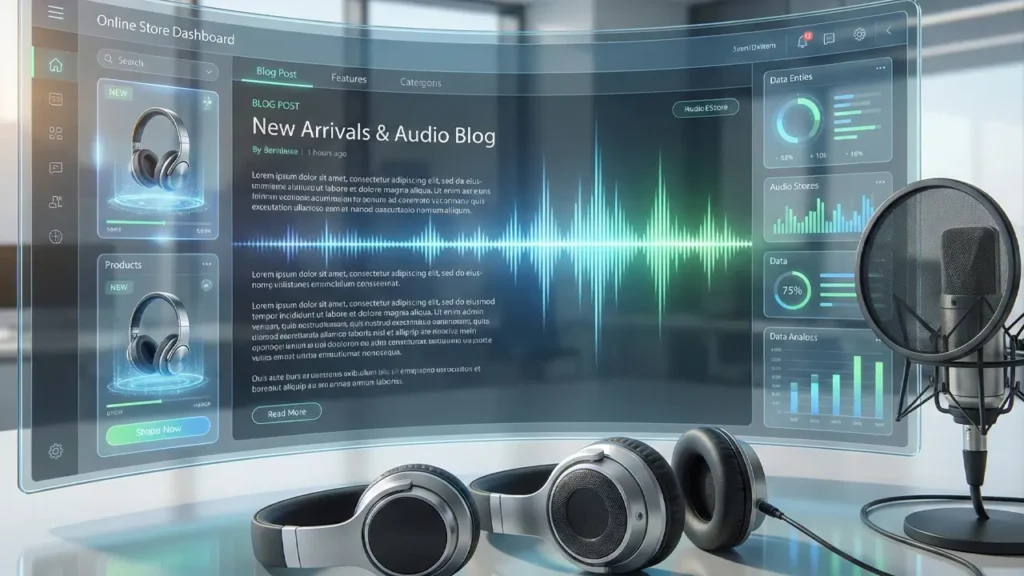
AI tools for content repurposing make this possible, and Google NotebookLM is a powerful example. The concept is simple: create once, distribute everywhere. Instead of viewing a blog post as a single asset, think of it as raw material that can be transformed into multiple formats for different channels and audiences.
Here’s how one blog post can become an entire content ecosystem:
Original Asset: A 2,000-word blog post about “Top Marketing Strategies for Small Businesses”
Repurposing Strategy:
- Audio Podcast: Use NotebookLM to generate a 10-minute audio overview. Publish it on your website, upload to Spotify and Apple Podcasts, and submit to podcast directories.
- Video Content: Take the audio file and pair it with static images, text overlays, or stock footage to create a YouTube video or LinkedIn native video.
- Social Media Clips: Extract 60-90 second highlights from the audio and share them as Instagram Reels, TikTok videos, or Twitter posts with captions.
- Email Series: Break the blog post into 5-6 email newsletters, and include a “Listen Instead” button linking to the audio version for subscribers who prefer that format.
- Slide Decks: Convert key points into a SlideShare presentation, and embed the audio as background narration.
- Infographic: Design a visual summary of the main points, and share it on Pinterest and LinkedIn with a link to the full audio/blog.
- Short Quotes: Pull compelling snippets from the AI-generated conversation and share them as quote graphics on social media.
The time investment for repurposing is minimal compared to creating entirely new content from scratch. You’re leveraging the research, writing, and editing you’ve already done, simply reformatting it for different consumption preferences and platforms.
This strategy also improves SEO. When your content exists in multiple formats across different platforms—all linking back to your main site—you create more entry points for potential customers to discover you. Google recognizes this cross-platform presence as a signal of authority and relevance.
For small businesses and solo entrepreneurs with limited resources, repurposing is a game-changer. You don’t need a large content team or expensive tools—just smart workflows that maximize the value of every piece of content you create.
AI Audio Summaries for Blog Content
Let’s face it: not everyone will read your entire blog post, no matter how valuable it is. Attention spans are shrinking, and competition for that attention is fierce. This is where AI audio summaries for blogs come in as a retention and engagement tool.
Think of an audio summary as a gateway to your full content. It serves multiple purposes:
For Skimmers: Many readers skim content to decide if it’s worth their time. An audio summary gives them that overview in a more engaging format. They can press play, hear the main points in 3-5 minutes, and decide whether to dive deeper.
For Returners: Someone might discover your blog post but not have time to read it immediately. If you offer an audio version, they can save it or listen on their commute, significantly increasing the likelihood they’ll actually consume your content.
For Accessibility: Audio makes your content accessible to people with visual impairments, dyslexia, or other reading difficulties. This isn’t just good ethics—it’s good business, as it expands your potential audience.
For SEO: While search engines can’t “listen” to audio, they index transcripts and metadata. Offering audio content increases time on page (a ranking factor) and can improve your site’s overall user experience signals.
For Lead Generation: You can gate longer audio content behind an email signup, turning valuable blog posts into lead magnets. A full 15-minute audio deep dive might be worth an email address to many visitors.
Here’s how to effectively implement audio summaries:
Placement: Add an audio player at the very beginning of your blog post, right after the title and before the main text. Include a brief note like “Prefer listening? Press play for a 5-minute audio summary of this article.”
Transcript: Always provide a transcript below the audio player. This helps with SEO, serves users who prefer to read along, and makes the content accessible to those who are deaf or hard of hearing.
Promotion: When sharing your blog post on social media, mention that an audio version is available. This small detail can significantly increase click-through rates from people who prefer audio content.
Analytics: Track audio engagement using tools like Google Analytics events or specialized audio players that provide metrics. Monitor play rates, completion rates, and how audio affects overall page engagement.
Call-to-Action: At the end of your audio summary, the AI hosts can naturally include a call-to-action, like “To read the full article with examples and resources, visit the blog post linked below” or “If you found this helpful, subscribe to our newsletter for more insights.”
The beauty of Google NotebookLM is that it generates these summaries with minimal effort on your part. You don’t need to script, record, or edit. Just upload your blog post, generate the audio, and embed it on your page.
For content-heavy sites—like industry blogs, educational platforms, or news sites—audio summaries can dramatically improve engagement metrics and help your content reach audiences who would otherwise never read it.
Why You Should Implement Audio Content Now
We’ve reached the critical point in the conversation: audio marketing trend 2025 isn’t just a prediction—it’s happening right now, and early adopters are reaping the rewards.
Here’s why you should act now rather than wait:
Low Competition: While audio content is growing rapidly, most businesses—especially in ecommerce and B2B—haven’t adopted it yet. Right now, you can be one of the first in your niche to offer audio versions of product pages, blog posts, and guides. This first-mover advantage builds brand recognition and positions you as innovative.
Free Tools Available: Google NotebookLM is currently free. There’s no financial barrier to entry. As the tool proves its value, it’s possible that pricing or limitations could be introduced. Taking advantage now means you can experiment, learn, and build an audio content library without any investment beyond your time.
Audience Expectations Are Shifting: Younger demographics, particularly Gen Z and younger Millennials, increasingly prefer audio and video over text. As these groups gain more purchasing power, businesses that already offer audio content will have a significant advantage.
SEO Benefits: Early adoption gives you time to accumulate engagement metrics that improve your search rankings. The longer you wait, the more you fall behind competitors who are already seeing improved time-on-page, lower bounce rates, and higher user satisfaction scores.
Skill Development: Learning to effectively repurpose content into audio takes practice. Starting now gives you and your team time to develop workflows, understand what content works best in audio format, and refine your approach before it becomes an industry standard.
Content Library Growth: Every piece of audio content you create now is an asset that continues to provide value. The sooner you start, the larger your audio content library becomes, giving your audience more reasons to engage with your brand repeatedly.
Platform Opportunities: Podcast platforms are actively looking for new content. By converting your blog posts into audio, you can distribute them on Spotify, Apple Podcasts, Google Podcasts, and other platforms, reaching audiences who would never visit your website through search.
Customer Feedback: Starting now allows you to gather feedback and refine your audio strategy. You’ll learn which types of content work best in audio format, what length your audience prefers, and how to optimize the experience—insights that will be valuable as audio content becomes more competitive.
The barrier to entry has never been lower. You don’t need:
- Expensive microphones or recording equipment
- Audio editing skills or software
- Professional voice actors
- A dedicated podcast studio
- Months of planning
You just need your existing content and a willingness to try something new.
Getting Started: Your Action Plan
Ready to implement Google NotebookLM Audio Overviews? Here’s a practical roadmap:
Week 1: Setup and Testing
- Create a Google account if you don’t have one
- Access Google NotebookLM (visit notebooklm.google.com)
- Start with 2-3 of your best-performing blog posts
- Generate audio overviews and listen to evaluate quality
- Make note of what works well and what might need adjustment in future content
Week 2: Integration
- Embed audio players on your blog posts
- Add transcripts below each audio file for SEO and accessibility
- Update your site’s navigation or blog layout to highlight audio availability
- Test the user experience on mobile devices
Week 3: Expansion
- Convert product descriptions into audio reviews
- Create audio versions of your FAQ pages
- Experiment with combining multiple short pieces into longer compilations
- Start building a content repurposing workflow
Week 4: Distribution and Promotion
- Set up podcast distribution (Spotify for Podcasters, Apple Podcasts Connect)
- Create social media clips from your audio content
- Email your subscribers about the new audio format option
- Track analytics to measure engagement and identify improvements
Ongoing Optimization
- Review which audio content performs best
- Survey your audience about their audio preferences
- Experiment with different content types and lengths
- Stay updated on new features Google adds to NotebookLM
Remember: you don’t have to do everything at once. Start small, learn from the experience, and scale as you see positive results. Even converting just your top 10 blog posts to audio can make a meaningful difference in engagement and brand perception.
Final Thoughts
Audio content isn’t replacing text or video—it’s complementing them. The most successful content strategies in 2025 and beyond will be multi-format, meeting audiences wherever they are and however they prefer to consume information.
Google NotebookLM Audio Overviews represents a significant democratization of audio content creation. What once required professional equipment, editing skills, and significant time investment can now be accomplished in minutes with AI assistance. For businesses, this is an unprecedented opportunity to expand reach, improve engagement, and build stronger connections with customers.
The question isn’t whether audio content will become important—it already is. The question is whether you’ll be early to the opportunity or playing catch-up later when competition increases.
Start today. Take one blog post, generate an audio overview, and see how your audience responds. The investment is minimal, but the potential return—in engagement, SEO, accessibility, and competitive differentiation—is substantial.
Audio marketing isn’t the future. It’s the present. And with tools like Google NotebookLM, creating compelling audio content has never been easier or more accessible. Your audience is ready to listen. Are you ready to give them something worth hearing?
Looking for your next premium home cinema upgrade? The JMGO N1S Ultra is redefining portable 4K projection with stunning brightness, smart features, and futuristic design. If immersive visuals matter to you, this review breaks it all down. Explore full specs and performance insights here: https://bestchinagadget.com/jmgo-n1s-ultra-review/ 🎬✨
Stream adult content securely on reputable adult platforms.
Find safe streaming hubs for a premium experience.
my webpage …