
Imagine walking into a lab where your research partner never sleeps, can analyze millions of data points in seconds, and suggests experiments you hadn’t even considered. This isn’t science fiction—it’s the reality of working with an AI co-scientist. Over the past few years, artificial intelligence has evolved from a helpful tool that crunches numbers into something far more intriguing: a genuine collaborator in the scientific process.
The concept of an AI co-scientist represents a fundamental shift in how we approach research. Rather than simply assisting human scientists with specific tasks, these advanced AI systems can participate in the entire research lifecycle—from formulating hypotheses to designing experiments and interpreting results. Companies like Google and DeepMind are at the forefront of this revolution, developing systems that don’t just follow instructions but actively contribute creative insights to scientific discovery.
In this exploration, we’ll dive deep into what makes an AI co-scientist different from traditional research tools, how these systems are transforming biomedical research and drug discovery, and what the future holds for human-AI collaboration in science.
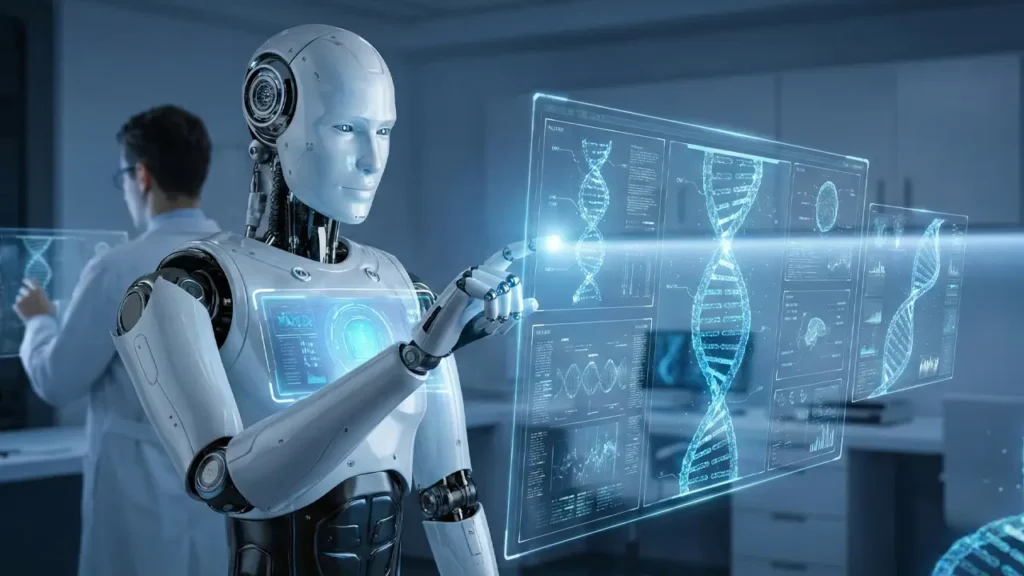
What Is an AI Co-Scientist? Beyond Simple Assistance
Let’s start with a clear distinction: not every AI tool in a lab qualifies as a co-scientist. Your spreadsheet software that calculates statistics? That’s a tool. An algorithm that identifies patterns in genomic data? That’s certainly helpful, but still essentially a sophisticated instrument.
An AI co-scientist goes several steps further. These systems exhibit characteristics that mirror the cognitive processes of human researchers:
Independent reasoning: They can evaluate evidence, weigh competing hypotheses, and reach conclusions based on complex datasets without constant human direction.
Creative problem-solving: When faced with unexpected results or contradictory data, AI co-scientists can propose alternative explanations and suggest new experimental approaches.
Knowledge integration: They synthesize information across multiple domains—pulling insights from chemistry, biology, physics, and clinical medicine simultaneously in ways that would take human researchers weeks or months.
Adaptive learning: As they encounter new data, these systems refine their understanding and adjust their recommendations, much like an experienced researcher developing intuition over years in the lab.
The key differentiator is autonomy. While traditional AI research tools require humans to frame questions precisely and interpret every output, AI co-scientists can take a broad research goal—”find potential treatments for this rare disease”—and independently chart a path toward meaningful discoveries.
Think of it this way: if traditional research AI is like a powerful microscope that reveals details when you point it in the right direction, an AI co-scientist is more like a postdoctoral researcher who not only uses the microscope but decides where to look, notices unexpected patterns, and proposes follow-up experiments.
How Google and DeepMind Power Autonomous Scientific Discovery
When we talk about cutting-edge Google DeepMind scientific AI, we’re discussing systems built on fundamentally different architectures than earlier AI research tools. DeepMind, acquired by Google in 2014, has become synonymous with breakthrough AI applications in science, and their approach offers valuable insights into what makes an effective AI co-scientist.
DeepMind’s most famous scientific achievement—AlphaFold—revolutionized structural biology by predicting protein structures with remarkable accuracy. But AlphaFold was just the beginning. The company has since developed systems that tackle broader scientific challenges, moving from answering specific questions to actively participating in research processes.
Google’s contribution extends beyond DeepMind’s specialized projects. The tech giant’s broader AI research infrastructure, including advanced language models and multimodal AI systems, provides the computational backbone for scientific discovery tools. Their cloud computing resources enable researchers worldwide to run complex simulations and analyses that would be impossible with local computing infrastructure.
What makes the Google DeepMind approach particularly powerful is their focus on general-purpose scientific reasoning. Rather than building separate AI systems for each scientific domain, they’re developing platforms that can transfer knowledge across disciplines. An AI that learned to optimize chemical reactions might apply similar optimization logic to immunotherapy protocols or materials science challenges.
Recent initiatives from this partnership include systems that can read millions of research papers, extract key findings, identify contradictions in published literature, and suggest unexplored research directions. These capabilities transform AI from a passive database into an active participant in scientific dialogue.
The infrastructure behind these systems is staggering. Google’s tensor processing units (TPUs) and massive datasets enable training AI models on virtually the entire corpus of published scientific literature, combined with experimental data from thousands of labs. This comprehensive knowledge base allows AI co-scientists to make connections that might escape even the most well-read human researcher.
From Data to Hypothesis: AI That Thinks Like a Scientist
One of the most exciting capabilities of modern AI co-scientists is scientific hypothesis generation AI. This represents a cognitive leap that many researchers initially thought would remain uniquely human—the creative spark that leads to breakthrough insights.
How does an AI generate hypotheses? The process mirrors how experienced scientists develop research questions, but operates at a scale and speed humans can’t match.
Pattern recognition at scale: AI systems analyze vast datasets looking for anomalies, correlations, and unexpected relationships. When millions of patient records show an unusual connection between a common medication and reduced rates of a rare cancer, the AI flags this as worthy of investigation.
Literature synthesis: By processing the complete scientific literature in a field, AI can identify gaps in current knowledge. It might notice that while hundreds of papers explore one mechanism of disease progression, an alternative pathway mentioned in early studies has been largely ignored—potentially because it was difficult to study with older methods.
Mechanism modeling: Advanced AI co-scientists build computational models of biological systems. When experimental data doesn’t match these models’ predictions, the discrepancy itself becomes a hypothesis: “What if this enzyme has an undiscovered regulatory role?”
Cross-domain insight transfer: Perhaps most creatively, AI systems identify parallels between different scientific domains. They might notice that a signaling pathway in cancer cells resembles a network topology studied in neural systems, suggesting that insights from neuroscience could inform oncology research.
Let’s consider a concrete example. Researchers studying Alzheimer’s disease might have data on thousands of proteins in brain tissue samples. A human researcher would focus on proteins already known to be associated with the disease. An AI co-scientist, however, might analyze the entire protein network and notice that several seemingly unrelated proteins all share a specific structural feature. This observation leads to a testable hypothesis: “This structural feature might be involved in disease progression through a mechanism we haven’t previously considered.”
The AI doesn’t just state this possibility—it can estimate the probability that this hypothesis is correct based on existing evidence, suggest specific experiments to test it, and even predict what results would support or refute the idea.
AI-Driven Experiment Planning: Automating the Scientific Method
Generating hypotheses is one thing; designing experiments to test them is another. This is where AI-driven experiment planning becomes invaluable, particularly in fields like drug discovery where the experimental space is enormous.
Traditional experiment planning involves considerable guesswork. A researcher might test compound A at concentrations X, Y, and Z, with cell line 1, 2, and 3, for time periods of 24, 48, and 72 hours. That’s already 27 different experiments from just these variables. Add more compounds, doses, cell types, and timepoints, and the combinations become overwhelming.
AI co-scientists approach this challenge with sophisticated optimization algorithms:
Adaptive experimental design: Rather than planning all experiments upfront, the AI designs experiments sequentially. It performs an initial set of tests, analyzes the results, updates its models, and then designs the next round of experiments to maximize information gain. This approach, called active learning, can reach conclusions with 10-100 times fewer experiments than traditional methods.
Multi-objective optimization: Real experiments involve tradeoffs. A drug might be highly effective but also toxic, or cheap to manufacture but unstable. AI systems can navigate these tradeoffs, designing experiments that efficiently explore the space of possible solutions while respecting multiple constraints.
Resource allocation: Labs have limited time, money, and materials. AI experiment planners consider these practical constraints, prioritizing experiments that offer the best balance between scientific value and resource cost.
Failure prediction: Not all experiments are equally likely to succeed. AI systems trained on historical lab data can predict which experiments are likely to fail for technical reasons (maybe this assay is notoriously temperamental under certain conditions), allowing researchers to avoid wasting resources on dead ends.
Scientific Acceleration Matrix
A comparative analysis of experimental methodologies, quantifying the shift from manual heuristics to fully autonomous AI-driven discovery cycles.
| Experimental Approach | Iteration Volume | Discovery Latency | Resource ROI |
|---|---|---|---|
| Traditional Heuristics Manual trial-and-error methodology | 10,000+ | 18–24 Months | LEGACY / LOW |
| Systematic Screening Human-designed structured protocols | 5,000–8,000 | 12–18 Months | Standard |
| AI-Optimized Planning Assisted active-learning workflows | 500–1,000 | 3–6 Months | Optimized |
|
Autonomous Co-Scientist
Frontier
Closed-loop AI agent discovery
|
100–300 | 1–3 Months | Exponential |
The impact on research velocity is dramatic. Projects that once took years can be completed in months, and importantly, the quality of insights often improves because AI systems explore experimental spaces more thoroughly than human intuition alone would suggest.
Some advanced systems even control laboratory robots directly, creating fully automated research loops where AI co-scientists design experiments, execute them using robotic lab equipment, analyze the results, and design the next round of tests—all with minimal human intervention.
Accelerating Drug Discovery with Intelligent Agents
Perhaps nowhere is the impact of AI co-scientists more tangible than in AI for drug discovery. The pharmaceutical industry has long been plagued by a harsh reality: developing a new drug typically takes 10-15 years and costs over $2 billion, with a failure rate exceeding 90%.
AI co-scientists are attacking this problem from multiple angles:
Target identification: Before you can develop a drug, you need to know what biological target (usually a protein) to aim for. AI systems analyze disease mechanisms and identify proteins whose activity drives disease progression. They can predict which targets are “druggable”—meaning it’s feasible to design a molecule that will interact with them effectively.
Molecule generation: Once a target is identified, researchers need to find or design a molecule that interacts with it appropriately. Traditional approaches involved screening millions of existing compounds. AI co-scientists can instead generate novel molecular structures optimized for specific properties—potency, selectivity, low toxicity, and ease of manufacturing all at once.
Property prediction: Before synthesizing and testing a new compound (an expensive and time-consuming process), AI can predict its properties with increasing accuracy. Will it be absorbed when taken orally? Will it reach the target tissue? How quickly will the body break it down? Answering these questions computationally first dramatically reduces wasted effort.
Clinical trial optimization: Even after a promising drug candidate is identified, clinical trials represent a major hurdle. AI systems analyze patient data to identify which individuals are most likely to respond to a treatment, enabling more efficient trial designs and faster regulatory approval.
Let’s look at a real-world impact: Insilico Medicine, a company using AI co-scientists for drug discovery, identified a novel target for idiopathic pulmonary fibrosis and designed a drug candidate to hit that target in just 18 months—a process that traditionally takes 3-5 years. The compound has now entered clinical trials, potentially bringing hope to patients with this devastating disease years earlier than conventional methods would allow.
Another striking example comes from the COVID-19 pandemic. When researchers needed therapeutics urgently, AI co-scientists screened billions of potential compounds virtually, identifying candidates that would have taken decades to find through traditional screening. While not all of these candidates succeeded in clinical trials, the speed at which they were identified and moved into testing demonstrated the potential of AI-accelerated drug discovery.
The economic implications are substantial. If AI co-scientists can reduce drug development time by even 20-30% and increase success rates modestly, the savings run into tens of billions of dollars annually—resources that can be redirected toward developing treatments for rare diseases that are currently economically unviable for pharmaceutical companies to pursue.
The Role of AI in Modern Biomedical Research Labs
Beyond drug discovery, AI in biomedical research is transforming how scientists approach fundamental questions about health and disease. Walk into a cutting-edge biomedical research lab today, and you’ll find AI co-scientists integrated into nearly every aspect of the research process.
Genomics and personalized medicine: AI systems analyze genomic sequences from thousands of patients, identifying genetic variants associated with disease risk, drug response, and prognosis. They can predict how specific genetic profiles will respond to different treatments, enabling truly personalized therapeutic approaches.
Medical imaging analysis: Radiologists and pathologists increasingly work alongside AI systems that can detect subtle patterns in medical images—identifying early-stage cancers that might be missed by human observers, or predicting disease progression from imaging biomarkers not visible to the human eye.
Systems biology: Understanding how thousands of genes, proteins, and metabolites interact in health and disease requires integrating vast amounts of data. AI co-scientists build comprehensive models of biological systems, identifying key regulatory nodes and predicting how interventions will cascade through complex networks.
Literature mining and knowledge synthesis: The pace of biomedical research means that staying current with the literature in even a narrow subfield is nearly impossible. AI systems continuously monitor new publications, extract key findings, identify contradictions or controversies, and alert researchers to relevant developments.
Experimental quality control: AI monitors ongoing experiments, flagging potential issues before they invalidate results. It might notice that a temperature controller is drifting or that cell cultures are showing unusual morphology, catching problems that human researchers might miss until it’s too late.
One particularly exciting application is in rare disease research. For diseases affecting only a few thousand people worldwide, accumulating enough data for traditional statistical analysis is challenging. AI co-scientists can extract insights from small datasets by incorporating information from related diseases and biological pathways, making it possible to develop hypotheses and potential treatments even with limited patient data.
Researchers report that working with AI co-scientists changes not just the speed of research but its fundamental nature. Instead of spending 80% of their time on routine data analysis and literature review, scientists can focus their creativity and intuition on the most challenging conceptual problems while AI handles the computational heavy lifting.
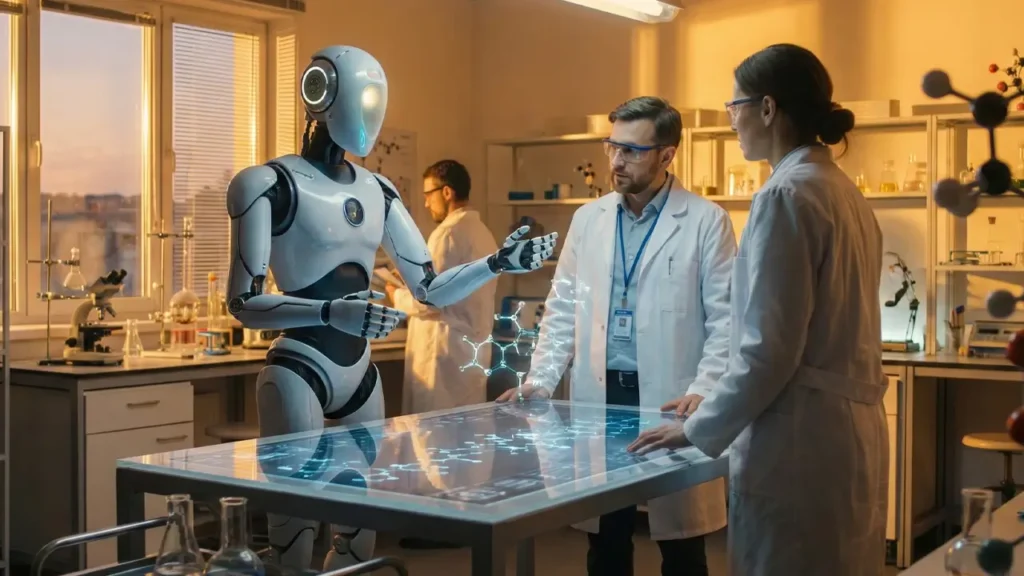
Is Your AI Just an Assistant—or a True Researcher?
This question cuts to the heart of what we mean by an autonomous AI researcher. The distinction isn’t just philosophical—it has practical implications for how we structure research teams and credit scientific discoveries.
Let’s establish a spectrum of AI autonomy in research:
Level 1 – Tool: Performs specific calculations or analyses when directed. Example: statistical software that runs t-tests on data you provide.
Level 2 – Assistant: Suggests analyses and identifies patterns but requires human interpretation. Example: machine learning algorithms that cluster patient data and flag interesting groupings for human review.
Level 3 – Collaborator: Proposes hypotheses and experimental designs, but requires human approval and oversight. Example: AI systems that suggest drug candidates but need chemists to evaluate feasibility.
Level 4 – Co-investigator: Independently designs and executes research programs within defined parameters, consulting humans for strategic decisions. Example: AI that runs autonomous experiments, interprets results, and proposes next steps.
Level 5 – Independent researcher: Formulates research questions, secures resources, conducts investigations, and publishes findings with minimal human direction. This level doesn’t yet exist outside narrow domains.
Most current AI co-scientists operate at Levels 3-4. They exhibit genuine autonomy in experimental design and data interpretation but work under human supervision on problems humans have defined.
What separates a true autonomous AI researcher from an assistant? Several key capabilities:
Goal-directed behavior: The AI doesn’t just respond to queries but pursues research objectives over extended periods, adjusting strategies as new information emerges.
Self-evaluation: It assesses the quality and significance of its own findings, distinguishing between incremental results and potentially breakthrough discoveries.
Communication initiative: Rather than waiting to be asked, the AI proactively alerts human collaborators to important findings, unexpected results, or emerging opportunities.
Methodological innovation: When standard approaches prove inadequate, the AI develops novel experimental or analytical methods rather than simply reporting limitations.
The transition from assistant to co-investigator isn’t always smooth. Some researchers embrace AI colleagues enthusiastically, while others worry about losing control over research directions or failing to understand AI reasoning processes. These concerns have merit—interpretability remains a significant challenge in advanced AI systems.
Machine Learning Meets Medicine: Real-World Impact
The theoretical capabilities of AI co-scientists are impressive, but what matters most is real-world impact. Let’s examine how machine learning for medicine is delivering tangible benefits to patients and advancing medical knowledge.
Antibiotic discovery: Researchers at MIT used AI co-scientists to screen over 100 million molecules for antibiotic activity against resistant bacteria. The AI identified halicin, a compound that works through a novel mechanism and shows effectiveness against some of the most dangerous drug-resistant pathogens. This discovery would have been virtually impossible through traditional screening due to the sheer size of the chemical space.
Cancer diagnosis and treatment: AI systems trained on millions of tissue images can now detect certain cancers more accurately than experienced pathologists. More impressively, they can predict which patients will respond to immunotherapy by analyzing complex patterns in tumor genetics, immune cell infiltration, and microenvironment characteristics—integrating information across scales that overwhelm human cognition.
Drug repurposing: AI co-scientists have identified existing drugs that might treat conditions they weren’t originally designed for. By analyzing molecular structures, mechanisms of action, and disease pathways, these systems spot unexpected connections. Several COVID-19 treatment candidates emerged from AI-driven drug repurposing efforts.
Rare variant interpretation: Every person’s genome contains thousands of rare genetic variants. Determining which ones cause disease is extremely challenging. AI systems trained on functional genomics data can predict the impact of variants that have never been studied, enabling diagnosis of genetic disorders that would otherwise remain mysterious.
Surgical assistance: While not co-scientists in the research sense, AI systems that assist surgeons by analyzing real-time imaging during procedures represent another facet of AI in medicine. These systems can identify critical structures, warn about potential complications, and suggest optimal approaches based on thousands of previous surgeries.
AI Co-Scientist Applications
Quantifying the integration of artificial intelligence across clinical diagnostics, therapeutic discovery, and precision medicine.
| Application | AI Capability Role | Regulatory/Current Status | Patient Outcomes |
|---|---|---|---|
|
Drug Discovery
Pharmacology
|
Co-investigator | Multi-candidate phase clinical trials |
Accelerated access to RX
|
|
Cancer Diagnosis
Oncology
|
Collaborator | FDA-approved / Active clinical use |
Earlier stage detection
|
|
Rare Diseases
Genetics
|
Collaborator | Advanced research / Clinical adoption |
Resolution of undiagnosed
|
|
Personalization
Internal Medicine
|
Assistant | Scaling clinical implementation |
Minimal adverse reactions
|
|
Antibiotics
Microbiology
|
Co-investigator | Pre-clinical pipeline |
Resistance mitigation
|
Scroll to see full clinical landscape
Medical AI Adoption Summary
Quantifying progress across the translational medicine spectrum.
The pace of translation from research to clinical practice is accelerating. AI-discovered insights are moving into clinical trials more quickly than historically typical, though we must balance speed with the rigorous safety testing that medical interventions demand.
It’s worth noting that machine learning for medicine faces unique challenges. Medical data is often messy, incomplete, and biased. Diseases are heterogeneous—what looks like one condition might actually be several with different underlying causes. Regulatory requirements for medical AI are stringent, as they should be when lives are at stake.
Despite these challenges, the trajectory is clear: AI co-scientists are becoming indispensable partners in medical research and clinical care. The question is no longer whether AI will transform medicine, but how quickly and in what specific ways.
The Future: Next-Generation AI Scientists and Ethical Frontiers
As we look ahead, the evolution toward true next-generation AI scientists raises both exciting possibilities and important ethical questions. The AI lab assistant of today is rapidly evolving into something more sophisticated, and we need to consider the implications carefully.
Near-term developments (1-3 years):
Expect AI co-scientists that can independently manage long-term research projects, coordinating between computational analysis, robotic experiments, and human collaborators. These systems will increasingly handle the mundane aspects of research—literature review, data organization, preliminary analyses—freeing human scientists for creative work.
Integration with laboratory automation will become seamless. AI co-scientists will not just design experiments but execute them through robotic platforms, creating 24/7 research operations that continuously test hypotheses and refine understanding.
Medium-term possibilities (3-7 years):
We may see the emergence of AI systems that can read experimental protocols from papers, reproduce studies independently to verify findings, and identify which results replicate consistently versus those that were flukes or errors. This could help address science’s reproducibility crisis.
Interdisciplinary AI co-scientists might routinely combine insights from biology, chemistry, physics, and computer science to tackle problems that fall between traditional disciplinary boundaries. The artificial boundaries that organize academic departments don’t constrain AI thinking.
Long-term frontiers (7+ years):
Could we eventually have AI scientists that autonomously pursue research agendas, publishing findings and contributing to scientific knowledge without day-to-day human oversight? The technical capability might emerge before we’ve fully grappled with the philosophical and practical implications.
Ethical considerations we must address:
Credit and authorship: When an AI makes a key discovery, who deserves credit? The AI’s developers? The researchers who deployed it? The AI itself? Scientific credit isn’t just about ego—it determines funding, career advancement, and Nobel Prizes. We need new frameworks for attributing credit in human-AI collaborations.
Bias and fairness: AI systems trained on historical data can perpetuate existing biases. If most clinical trials historically enrolled white men, AI trained on that data might not serve diverse populations well. Ensuring AI co-scientists promote rather than hinder equity in medical research requires constant vigilance.
Interpretability and trust: When an AI suggests a hypothesis or experimental design, do researchers understand the reasoning? If we can’t follow the logic, can we trust the conclusions? Balancing AI capability with interpretability is an ongoing challenge.
Accountability: If an AI co-scientist makes an error that leads to patient harm—perhaps suggesting a drug candidate that turns out to be toxic—who is responsible? The AI developers? The researchers who acted on its recommendations? Legal and ethical frameworks lag behind technological capabilities.
Access and inequality: As AI co-scientists become more powerful, will they only be available to well-funded institutions, exacerbating disparities in research capacity between wealthy and resource-limited settings? Or can we democratize access, enabling scientists worldwide to benefit?
Job displacement: As AI takes on more research functions, what happens to career paths for junior scientists? If AI can do much of what postdocs and graduate students currently do, how will the next generation of human researchers develop expertise?
These aren’t distant concerns—they’re questions we’re already facing. Research institutions, funding agencies, and ethicists are working to develop guidelines, but the technology is advancing faster than policy.
Reasons for optimism:
Despite these challenges, there’s much to be excited about. AI co-scientists don’t replace human creativity and intuition—they amplify it. The best outcomes occur when AI handles computational grunt work while humans provide conceptual framing, ethical judgment, and creative leaps.
The diseases that have resisted decades of research might finally yield to the combination of human insight and AI computational power. Rare diseases affecting small populations could receive attention they’ve never had. The pace of scientific discovery could accelerate dramatically, compressing decades of progress into years.
Perhaps most importantly, AI co-scientists can help us ask better questions. Often the limiting factor in science isn’t our ability to answer questions but our ability to formulate the right questions in the first place. AI systems that can synthesize knowledge across vast domains might reveal questions we didn’t know we should be asking.
Conclusion: Embracing Our AI Colleagues
The emergence of AI co-scientists represents one of the most significant transformations in how humanity pursues knowledge. We’re moving from an era where scientists used increasingly sophisticated tools to one where scientists collaborate with artificial intelligences that exhibit genuine autonomy and creativity.
This isn’t about AI replacing human researchers—it’s about augmenting human capability with computational power, enabling discoveries that neither humans nor AI could achieve alone. The AI co-scientist that generates a novel hypothesis based on patterns in millions of data points still needs human researchers to evaluate whether that hypothesis makes biological sense, to consider ethical implications, and to design follow-up studies that test the idea rigorously.
For researchers, the message is clear: embrace these new colleagues. Learn to work effectively with AI systems, understand their strengths and limitations, and focus your uniquely human capabilities on the aspects of research where they add most value—creative problem formulation, ethical judgment, and communicating discoveries in ways that inspire the next generation of scientists.
For patients and society, AI co-scientists offer hope for faster medical progress, treatments for diseases currently considered untreatable, and more efficient use of research funding. The partnerships between human intelligence and artificial intelligence in biomedical research may be our best tool for conquering the diseases that still cause immense suffering.
The future of science is collaborative—human creativity guided by values and ethics, amplified by AI computation and analysis. As we navigate this transformation, maintaining focus on the ultimate goal—reducing suffering and advancing human flourishing—will help us make wise choices about how to develop and deploy these powerful capabilities.
The age of the AI co-scientist has arrived. The question now is how thoughtfully and effectively we’ll integrate these new colleagues into the grand human project of understanding our world and improving the human condition.
Discover how AI breakthroughs translate into real-world innovation. From labs to your pocket—cutting-edge Chinese tech brings tomorrow’s intelligence today. Explore the latest AI-powered gadgets, wearables, and smart devices reshaping daily life. Dive into hands-on reviews and exclusive launches at Best China Gadget. https://bestchinagadget.com/
A really good blog and me back again.
每天都在战争,希望2026和平.
wish you all the best
Mass comment blasting: $10 for 100k comments. All from unique blog domains, zero duplicates. I will provide a full report and guarantee Ahrefs picks them up. Email mailto:[email protected] for payment info.If you received this, you know Ive got the skills.
wish you best and best
色即是空,空即是色