
If you follow the AI world even casually, you already know how fast things move. New models arrive almost every week, and keeping up can feel like a full-time job. But every once in a while, a release comes along that actually deserves your full attention. The MiMo V2.5 Pro AI model is one of those releases.
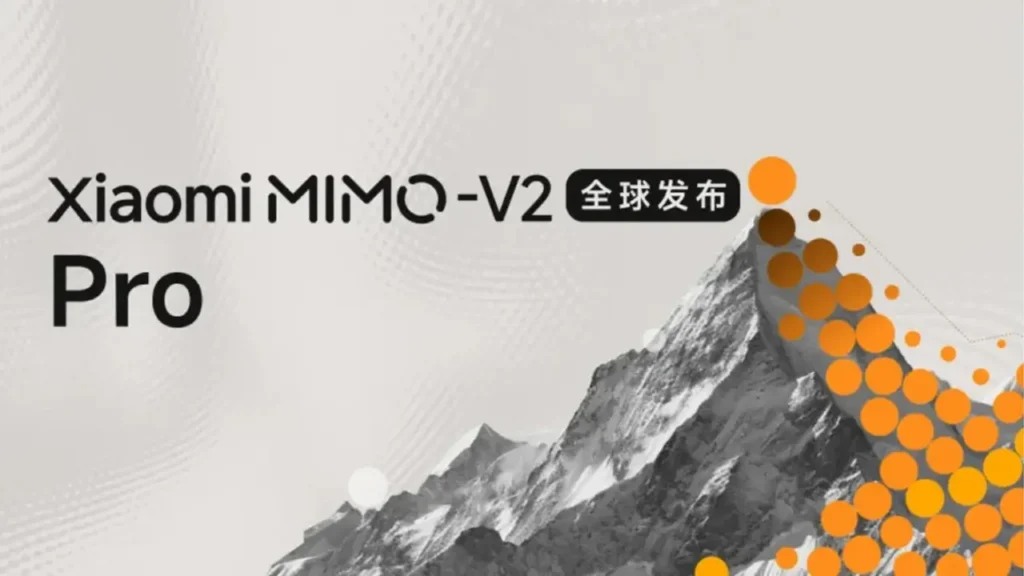
MiMo-V2.5-Pro is Xiaomi’s flagship AI model, officially released on April 22, 2026. It is not an incremental update. It is a complete rethink of what an open-weight AI model can do — combining multimodal understanding, massive scale, and agentic performance in a way that puts it squarely in the conversation with the most powerful closed-source models in the world.
Whether you are a developer, a tech enthusiast, or someone who simply wants to understand where AI is heading in 2026, this guide will walk you through everything you need to know about MiMo V2.5 Pro. From its architecture to its benchmarks, from its multimodal capabilities to how it stacks up against GPT and Claude — we have got you covered. For more deep dives like this one, visit www.aiinovationhub.com, where we track the most important developments in artificial intelligence.
What Is MiMo V2.5 Pro AI Model?
Let’s start with the basics. What exactly is MiMo V2.5 Pro, and why should you care?
MiMo-V2.5-Pro is a 1.02-trillion-parameter Mixture-of-Experts model with 42 billion active parameters, built on a hybrid-attention architecture with a 1-million-token context window. That is a lot of numbers, so let us unpack what they actually mean for real-world use.
The “1.02 trillion parameters” figure refers to the total number of learned values stored inside the model — think of them as the model’s accumulated knowledge and reasoning ability. But here is where the MoE architecture gets clever: not all of those parameters activate at once. Only 42 billion are used per request. This means the model achieves frontier-level intelligence while remaining dramatically more efficient than a traditional dense model of similar size.
The 1-million-token context window is equally important. One million tokens translates to roughly 750,000 words — enough to hold an entire novel, a massive codebase, or hours of transcribed conversation in a single session. This is not a feature for edge cases; it is a practical capability that changes what autonomous AI agents can actually do.
Why does this matter right now? Because 2026 is the year AI stopped being just a chatbot and became an autonomous worker. MiMo V2.5 Pro is built precisely for that shift — it can carry out long, complex tasks without losing context, without needing human hand-holding at every step, and without the enormous token costs that have made frontier AI expensive to run at scale.
Xiaomi AI Model 2026: Strategy and Vision
It might seem surprising that Xiaomi — best known globally as a smartphone manufacturer — is now releasing trillion-parameter AI models that compete with OpenAI and Anthropic. But when you look at Xiaomi’s broader strategy, it makes complete sense.
In March 2026, Xiaomi CEO Lei Jun announced that the company planned to invest at least 8.7 billion US dollars in artificial intelligence over the following three years. That announcement came the day after MiMo-V2-Pro launched, and the release cadence since then has made clear the budget is already moving.
The MiMo division is led by Luo Fuli, a former core contributor at DeepSeek who worked on the R1 and V-series models before joining Xiaomi in late 2025. Her background explains a great deal of the architectural DNA in the MiMo family — the efficiency-first approach, the emphasis on sparse architectures, and the focus on agentic performance over pure benchmark chasing.
For Xiaomi, the AI push is about more than API revenue. The company has an enormous hardware ecosystem — smartphones, smart home devices, electric vehicles, and HyperOS, its cross-device operating system. A powerful in-house AI model makes every one of those products smarter. MiMo V2.5 Pro is not just a standalone product; it is the intelligence layer that can power Xiaomi’s entire ecosystem over the coming years.
The go-to-market approach has also been unconventional and genuinely clever. Before officially revealing MiMo-V2-Pro, Xiaomi quietly listed it on OpenRouter under the anonymous codename “Hunter Alpha.” Within seven days, it had processed over one trillion tokens in total usage and topped daily charts on the platform, with developers comparing it favorably to GPT and Claude. By the time Xiaomi officially revealed it was their model, they already had proof of real-world demand. That kind of stealth launch — iterate based on real usage, then announce — is a new playbook for AI releases in 2026.
By early April 2026, Xiaomi’s models accounted for roughly 21% of all traffic on OpenRouter, approximately three times OpenAI’s 7.5% share on the same platform. That number tells you everything about how quickly the developer community has embraced MiMo.
AndreevWebStudio.com
Professional web development and design services. Custom WordPress sites, landing pages, e-commerce solutions, and 3D printing content creation for businesses and creators.
- • WordPress Development
- • Custom Web Design
- • E-Commerce Solutions
- • 3D Printing Content
MiMo V2.5 Pro Benchmark and Intelligence Index
Let us talk numbers, because the benchmark story for MiMo V2.5 Pro is genuinely impressive — and worth understanding in detail.
On the Artificial Analysis Intelligence Index, MiMo-V2.5-Pro scores 54, placing it well above average among open-weight models of similar size. The median score for comparable open-weight models is 30, which means MiMo V2.5 Pro is performing nearly twice as well as the average model in its class on this index.
The coding and agentic benchmarks are where MiMo V2.5 Pro really stands out. On SWE-bench Verified — a benchmark that tests whether models can fix real bugs in real codebases — MiMo-V2.5-Pro scores 78.9%. On SWE-bench Pro, a harder version using real startup codebases, it scores 57.2%. That puts it within half a point of GPT-5.4 at 57.7% and ahead of Claude Opus 4.6 at 53.4%.
On Terminal-Bench 2.0, MiMo-V2.5-Pro scores 68.4 — actually leading both Claude Opus 4.6 and Gemini 3.1 Pro on this metric. On ClawEval, an agentic benchmark measuring real multi-step autonomous task completion, it scores 63.8 (Pass³), ahead of GPT-5.4 and Gemini 3.1 Pro at comparable capability levels.
One of the most striking benchmark stories is token efficiency. On ClawEval, MiMo-V2.5-Pro reaches its scores using approximately 70,000 tokens per task trajectory — roughly 40 to 60 percent fewer tokens than Claude Opus 4.6, Gemini 3.1 Pro, and GPT-5.4 need to reach similar results. For developers running production-scale agent pipelines, that is not a minor efficiency gain — it is a material cost reduction.
| Evaluation Benchmark | MiMo V2.5 Pro | Claude Opus 4.6 | GPT-5.4 | Gemini 3.1 Pro |
|---|---|---|---|---|
|
SWE-bench Verified (%)
Codebase Resolving
|
78.9 | 77.1 | — | 67.8 |
|
SWE-bench Pro (%)
Enterprise Agents
|
57.2 | 53.4 | 57.7 | — |
|
Terminal-Bench 2.0
CLI Automation
|
68.4 | Trailing | — | Trailing |
|
ClawEval Pass³ (%)
Complex Logic
|
63.8 | Lower | Lower | Lower |
|
Intelligence Index (AA)
Synthetic Reasoning
|
54 | — | — | — |
MiMo V2.5 Pro
SOTA Coding Agent78.9%
68.4
Frontier Baselines
SWE-bench Pro DeltaThe real-world demonstration that perhaps captures MiMo V2.5 Pro’s capabilities best is its performance on a Peking University compiler project. The task — building a complete SysY compiler in Rust from scratch, including lexer, parser, abstract syntax tree, IR code generation, and RISC-V assembly backend — typically takes a PKU computer science student several weeks. MiMo-V2.5-Pro completed it in 4.3 hours, across 672 tool calls, scoring a perfect 233 out of 233 on the course’s hidden test suite. That is not a marketing claim; it is a measurable, reproducible result.
MoE Architecture Explained in MiMo V2.5 Pro AI Model
One of the most important technical decisions behind MiMo V2.5 Pro is its use of a Mixture-of-Experts architecture, often called MoE. If you have not encountered this term before, do not worry — it is actually a very intuitive concept once explained properly.
Think of a traditional AI model as a single massive brain that processes every request using its entire capacity, all the time. That is computationally expensive. Now imagine instead that the model is divided into many specialized sub-networks — “experts” — each trained to handle different types of tasks. When a request comes in, only the most relevant experts activate to process it. The rest stay idle.
That is the core idea of MoE. MiMo-V2.5-Pro has 1.02 trillion total parameters spread across its expert sub-networks, but only 42 billion activate per token during inference. This means you get the knowledge and capability of a trillion-parameter model at the computational cost of a much smaller one.
The architecture also uses hybrid attention — a design that interleaves local attention (focused on nearby tokens in the sequence) with global attention (which can look anywhere in the full 1-million-token window). This hybrid approach allows the model to maintain coherence across extremely long documents and task trajectories without the full computational cost of purely global attention at every layer.
Why does this matter for practical applications? Because it means MiMo V2.5 Pro can run faster, cost less per inference, and handle longer tasks than a comparable dense model would. The 40 to 60 percent token efficiency advantage over GPT-5.4 and Claude Opus 4.6 on agentic benchmarks is a direct consequence of this architectural efficiency. For developers building production systems, that efficiency translates directly into lower bills and faster applications.
The MoE approach is also part of a broader trend in Chinese AI labs in 2026. DeepSeek, Qwen, Kimi, and now Xiaomi have all converged on sparse architectures as the path to frontier capability at manageable cost. It is increasingly clear that MoE is not a compromise — it is the right architecture for the next generation of large models.
Multimodal AI Capabilities of MiMo V2.5 Pro
One of the most significant upgrades in MiMo V2.5 Pro compared to its predecessor is the integration of native multimodal understanding. This deserves its own section because it changes the nature of what the model actually is.
MiMo-V2-Pro, the previous generation flagship, was a text-and-code model. Multimodal capabilities existed in a separate model — MiMo-V2-Omni — but that was a distinct product with lower benchmark scores on reasoning tasks. MiMo V2.5 Pro collapses both capabilities into a single unified architecture. It processes text, images, audio, and video natively, in the same model, without requiring separate pipelines or separate API calls.
This native integration is more meaningful than it might initially appear. When multimodal capability is added as a bolt-on feature — by attaching an image encoder to a text model — the reasoning quality across modalities tends to suffer. The model sees the image and the text, but it does not naturally reason across them the way a human would. When multimodality is trained into the architecture from the beginning, the model develops genuine cross-modal reasoning.
On the CharXiv RQ benchmark, which measures the ability to understand and interpret complex academic charts and diagrams, MiMo-V2.5 scores 81.0 — nearly matching GPT-5.4 at 81.2. On Video-MME, MiMo-V2.5 scores 87.7, compared to Gemini 3 Pro’s 88.4, placing it among the best available models for video understanding.
What does this look like in practice? Here are a few real-world scenarios where MiMo V2.5 Pro’s multimodal capabilities shine:
A developer uploads a screenshot of a UI bug and asks the model to identify the issue and suggest a code fix. MiMo processes the visual, understands the layout, and outputs actionable debugging steps — all in one conversation turn.
A researcher uploads a PDF with dense academic charts and asks for a structured summary. MiMo reads the charts as data, not just as images, and produces a precise, quantitative summary.
A content creator records a product demo video and asks MiMo to generate a step-by-step written tutorial. The model watches the video, understands the sequence of actions, and produces accurate documentation automatically.
A product manager shares a voice memo from a client meeting and asks MiMo to extract action items. The model transcribes, understands context, and delivers a structured list — without any intermediate tool or separate transcription service.
These are not hypothetical use cases invented for marketing materials. They are the kinds of tasks that the 1-million-token context window and native multimodal architecture were specifically designed to handle.
Open Source Multimodal AI: Why Open Weights Matter
One of the most important aspects of MiMo V2.5 Pro is that Xiaomi has committed to open-sourcing it. The previous generation model, MiMo-V2-Flash, was released under the MIT license in December 2025 with 309 billion parameters, freely available on Hugging Face. For the V2.5 series, Xiaomi has confirmed open-source plans, with the model card and weights published on Hugging Face under a permissive license.
Why does this matter so much? Because open weights fundamentally change the relationship between a model and its users.
When a model is closed-source — available only through a commercial API — developers are entirely dependent on the provider. Pricing can change. Access can be restricted. Data processed through the API may be subject to the provider’s terms in ways that create compliance issues for enterprises. And critically, the model cannot be fine-tuned, customized, or deployed in a self-hosted environment.
Open weights eliminate all of these concerns. A developer can download MiMo V2.5 Pro, run it on their own infrastructure, fine-tune it on their own data, and deploy it in an environment where they have full control over what happens to the inputs and outputs. For companies in healthcare, finance, legal services, and other regulated industries, that level of control is not a preference — it is a requirement.
For individual researchers and small teams, open weights mean frontier-level AI without a frontier-level budget. The ability to experiment, build prototypes, and develop production systems without being locked into expensive API pricing is transformative.
The trend toward open weights among Chinese AI labs in 2026 is also creating competitive pressure on the broader market. When DeepSeek, Qwen, Kimi, and Xiaomi all release capable open-weight models, the implicit message to closed-source providers is clear: if you want developer loyalty, you need to compete on cost, customization, and transparency, not just raw benchmark scores. This is genuinely good news for the AI ecosystem as a whole.
MiMo AI Performance Test: Real-World Results
Benchmark scores are useful, but what really matters is how a model performs on actual work. MiMo V2.5 Pro has a growing body of real-world performance data that is worth looking at directly.
The compiler project described earlier — building a complete SysY compiler in Rust in 4.3 hours, scoring 233/233 on a hidden test suite — is the most dramatic example. But it is not the only one.
Xiaomi also demonstrated MiMo V2.5 Pro completing an analog circuit engineering task: designing and optimizing a complete FVF-LDO low-dropout regulator from scratch in the TSMC 180nm CMOS process. The model had to size the power transistor, tune the compensation network, and select bias voltages so that six performance metrics were all simultaneously within specification. A trained analog designer would typically spend several days on this project. MiMo V2.5 Pro, connected to an ngspice simulation loop, completed it in approximately one hour — and produced a design where every target metric was met, with four key metrics improved by an order of magnitude over its own initial attempt.
In a separate demonstration, the model built a complete desktop video editor end-to-end — 8,192 lines of production code, 1,868 tool calls, 11.5 hours of autonomous work. The resulting application included AI voice-over functionality driven by a companion text-to-speech model.
On raw performance metrics, MiMo-V2.5-Pro generates output at approximately 57 tokens per second (based on the median across providers serving the model), with a time to first token of 2.72 seconds. These figures place it competitively within its class of open-weight models of similar scale.
The token efficiency story is particularly important for performance at scale. Using approximately 70,000 tokens per task trajectory on ClawEval — 40 to 60 percent fewer than competing frontier models — MiMo V2.5 Pro effectively delivers the same output for significantly less cost. On a large-scale deployment running thousands of agent tasks per day, that efficiency difference compounds dramatically.
MiMo AI vs GPT Comparison: Who Wins?
This is the question everyone wants answered, so let us address it directly and honestly. No model wins on everything — what matters is understanding where each model is strongest.
On coding and software engineering: MiMo V2.5 Pro is genuinely competitive with the best models available. On SWE-bench Pro, it scores 57.2% — within half a point of GPT-5.4 (57.7%) and ahead of Claude Opus 4.6 (53.4%). On Terminal-Bench 2.0, it actually leads both Opus 4.6 and Gemini 3.1 Pro. For developers focused on code generation, debugging, and autonomous software engineering tasks, MiMo V2.5 Pro is a first-tier option.
On agentic tasks: MiMo V2.5 Pro leads the field on ClawEval, beating GPT-5.4 and Gemini 3.1 Pro. The combination of long-context coherence, tool-use reliability, and token efficiency makes it particularly strong for autonomous, multi-step workflows.
On multimodal tasks: MiMo-V2.5 scores put it on par with GPT-5.4 and Gemini 3.1 Pro on multimodal benchmarks, including near-parity with GPT-5.4 on chart understanding and near-parity with Gemini 3 Pro on video understanding.
On general reasoning: This is where MiMo V2.5 Pro is more honest about its limitations. On benchmarks like HLE and GDPVal-AA, which reward broad general reasoning over focused coding depth, competing frontier models maintain an advantage. MiMo V2.5 Pro is a coding-first, agentic-first model, and the benchmark profile reflects that clearly.
On cost: MiMo V2.5 Pro costs 1.00 USD per million input tokens and 3.00 USD per million output tokens. At comparable capability levels on agentic tasks, it uses 40 to 60 percent fewer tokens than its main competitors — making it significantly cheaper in practice for the workloads it was designed to handle.
| Capability Area | MiMo V2.5 Pro | GPT-5.4 | Claude Opus 4.6 | Gemini 3.1 Pro |
|---|---|---|---|---|
|
Coding Pro efficiency
SWE-bench Matrix
|
||||
|
Agentic Tasks
ClawEval Framework
|
||||
|
Multimodal Intel
Vision & Spatial
|
||||
|
General Reasoning
Logic & Mathematics
|
||||
|
Token Efficiency
Context Cost Delta
|
||||
|
Open Weights
Licensing Model
|
Yes | No | No | No |
|
Context Window
Maximum Capacity
|
1M tokens | — | — | — |
MiMo V2.5 Pro
Open Weights MatrixGPT-5.4 & Baselines
Cloud InfrastructureПроприетарные модели (GPT-5.4, Gemini 3.1) сохраняют абсолютное лидерство () в мультимодальном анализе и общих логических рассуждениях, уступая MiMo в эффективности потребления токенов.
The honest verdict: if you are building autonomous coding agents, long-context workflows, or agentic pipelines where token efficiency matters — MiMo V2.5 Pro is among the best options available, including among closed-source models. If you need the strongest possible general reasoning or computer use capabilities, GPT-5.4 and Claude Opus 4.6 still have an edge in those specific areas. The right choice depends on your use case, not on any single ranking.
Final Verdict on MiMo V2.5 Pro AI Model
So where does all of this leave us? What is the honest, final assessment of MiMo V2.5 Pro?
It is, without question, one of the most significant open-weight AI releases of 2026. Xiaomi has done something genuinely difficult: they have built a multimodal, trillion-parameter AI model that matches frontier closed-source systems on the benchmarks that matter most for agentic work — and they have done it while achieving dramatically better token efficiency.
The combination of factors that makes MiMo V2.5 Pro special is not any single feature in isolation. It is the sum of them: the scale of the MoE architecture, the native multimodality built in from training rather than bolted on afterward, the 1-million-token context window that enables true long-horizon autonomy, the open weights that give developers real freedom, and the token efficiency that makes all of this practical to deploy at scale.
For developers and enterprises evaluating AI infrastructure in 2026, MiMo V2.5 Pro deserves serious consideration for coding-intensive and agentic workloads. It is already compatible with popular agentic scaffolds including Claude Code, OpenCode, and Kilo, making adoption straightforward for teams already working in those environments.
For the broader AI community, the arrival of MiMo V2.5 Pro signals something important about where the industry is heading. The gap between open and closed models is narrowing faster than most observers expected. The pattern emerging across Chinese AI labs — DeepSeek, Kimi, Qwen, and now Xiaomi — is that frontier-equivalent capability at significantly lower token cost is increasingly available without an API contract. That is good for competition, good for developers, and good for the long-term health of the AI ecosystem.
Xiaomi has already stated that the next generation of MiMo is in training, with a focus on deeper reasoning, tighter tool integration, and richer real-world grounding. Given the release cadence since December 2025 — three major model families in under five months — it would be unwise to assume the current version represents a ceiling.
The MiMo V2.5 Pro AI model is worth your attention today. And the next release from Xiaomi’s MiMo team is worth watching closely.
For the latest analysis on MiMo V2.5 Pro and every other significant AI release, visit www.aiinovationhub.com — your hub for clear, accurate, and up-to-date coverage of the AI models shaping 2026 and beyond.
🇺🇸 Michael Johnson ⭐⭐⭐⭐⭐
This article about MiMo V2.5 Pro is honestly one of the clearest AI breakdowns I’ve read. Everything is explained in a simple way, even complex concepts like MoE architecture. The site is super helpful if you follow AI trends.
Highly recommend checking it out: https://aiinovationhub.com/
🇪🇸 Carlos Martínez ⭐⭐⭐⭐⭐
Excelente contenido sobre MiMo V2.5 Pro. Me gustó mucho cómo explican la inteligencia artificial de forma sencilla y clara. El sitio tiene artículos muy útiles y actuales.
Recomiendo leerlo aquí: https://aiinovationhub.com/
🇸🇦 أحمد الحربي ⭐⭐⭐⭐⭐
مقال رائع عن MiMo V2.5 Pro! الشرح بسيط ومفهوم حتى للمبتدئين في مجال الذكاء الاصطناعي. الموقع غني بالمعلومات الحديثة والمفيدة.
أنصح بزيارته: https://aiinovationhub.com/
🇨🇳 李伟 (Li Wei) ⭐⭐⭐⭐⭐
关于MiMo V2.5 Pro的文章写得非常清晰,内容专业又容易理解。这个网站对关注AI发展的人来说非常有价值。
推荐访问:https://aiinovationhub.com/
🇫🇷 Jean Dupont ⭐⭐⭐⭐⭐
Très bon article sur MiMo V2.5 Pro. Les explications sont simples mais précises, parfait pour comprendre les nouvelles technologies AI. Le site est vraiment intéressant pour suivre les tendances.
À lire ici : https://aiinovationhub.com/
🇩🇪 Lukas Schneider ⭐⭐⭐⭐⭐
Ein sehr informativer Artikel über MiMo V2.5 Pro. Die Inhalte sind klar strukturiert und leicht verständlich. Perfekt für alle, die sich für KI interessieren.
Hier ansehen: https://aiinovationhub.com/