
1. Introduction to GPT-5.5 AI Model
If you’ve been following the world of artificial intelligence, you already know that things move fast. But even by AI standards, April 2026 has been a landmark month. OpenAI released GPT-5.5, describing it as their smartest and most intuitive model yet — a genuine next step toward a new way of getting work done on a computer. That’s not marketing language. It’s a real shift in what AI can actually do for everyday users, developers, and enterprise teams alike.
What makes this OpenAI new model 2026 so significant is not just raw intelligence. It’s autonomy. Previous models were reactive — you asked, they answered. GPT-5.5 is designed to be proactive. Instead of carefully managing every step of a complex workflow, users can hand the model a messy, multi-part task and trust it to plan, use tools, check its work, navigate through ambiguity, and keep going until the job is done. That’s a fundamentally different relationship between humans and AI tools.
Whether you’re a developer looking for a smarter coding partner, a business leader exploring AI integration, a researcher chasing breakthroughs, or simply someone curious about where this technology is heading — this guide is for you. We’ll walk through the GPT-5.5 AI model from every angle: its release background, what sets it apart, its capabilities, performance benchmarks, cybersecurity implications, enterprise applications, and whether it actually lives up to the hype.

2. GPT-5.5 Release Date 2026 and Background
Let’s set the scene. GPT-5.5, internally codenamed “Spud,” was officially released on April 23, 2026. It arrived less than two months after GPT-5.4 — a pace of development that tells you everything about how competitive the AI landscape has become in 2026.
OpenAI co-founder and president Greg Brockman described the release as “a new class of intelligence” and “a big step towards more agentic and intuitive computing.” Speaking at a press briefing on launch day, Brockman added that it’s “a faster, sharper thinker for fewer tokens” compared to GPT-5.4 — meaning the model does more with less, which is a big deal both for performance and for cost efficiency.
The rollout began on April 23 for paid subscribers — specifically Plus, Pro, Business, and Enterprise users in ChatGPT and Codex. GPT-5.5 Pro, the higher-accuracy variant, went to Pro, Business, and Enterprise users. API access followed on April 24, after OpenAI finalized the additional safeguards required for broad developer deployment. The API pricing was set at 5 dollars per million input tokens and 30 dollars per million output tokens, with a 1 million token context window — and batch and flex pricing available at half the standard rate for cost-sensitive workloads.
The release came at a moment of intense industry competition. Anthropic had launched its Mythos model just days earlier, and Google’s Gemini 3.1 Pro was also in active deployment. OpenAI’s answer was GPT-5.5 — faster, more autonomous, and built with a strong emphasis on safety.
3. What Makes GPT-5.5 Different from GPT-4.5
To understand why GPT-5.5 matters, it helps to look at where it fits in the generational arc of OpenAI’s models. GPT-4.5 was already a capable model for conversational tasks, content generation, and coding assistance. But GPT-5.5 represents a different design philosophy entirely.
The core distinction is the move from assisted work to autonomous work. GPT-4.5 was an excellent responder. GPT-5.5 is designed to be a doer. It can handle ambiguous instructions, break complex problems into logical steps, use tools to gather information or execute actions, verify its own outputs, and course-correct when something goes wrong — all without constant human input.
Here is a side-by-side comparison of the two models across key dimensions:
Strategic Intelligence Matrix
Evaluating the architectural shift from assisted LLMs to Autonomous Agentic Intelligence. Analyzing the delta between GPT-4.5 reasoning and the 1M-token, multi-step execution capabilities of GPT-5.5.
| Feature Pillar | GPT-4.5 (Frontier Baseline) | GPT-5.5 (Agentic Era) |
|---|---|---|
| Reasoning & Autonomy | ||
|
Task Agency
|
Guided / Iterative
Step-by-Step Prompting
|
Autonomous
Multi-step Independent Execution
|
| Computer Use |
Limited Interaction
|
Advanced Navigation
End-to-End Software Ops
|
| Architecture & Scale | ||
|
Context Window
|
128K
|
1,000,000
Enterprise Density
|
| Efficiency ROI | Standard Latency |
Token Optimized
Fewer Tokens per Task
|
| Domain Specialization | ||
| Agentic Coding |
Basic Assistance
|
Native Codex Bridge
Full Repository Context
|
| Preparedness (Sec) |
Medium Resilience
|
Tier 3 / High
Advanced Cyber-Defense
|
| Scientific R&D |
General Knowledge
|
Hypothesis Synthesis
Early Research Support
|
GPT-5.5
Handles multi-step logic chains independently with native Codex integration and Tier 3 cybersecurity resilience.
GPT-4.5
The industry standard for assisted reasoning, requiring iterative human guidance for complex task loops.
The table tells a clear story: GPT-5.5 is not an incremental update to GPT-4.5. It’s a different generation of tool, designed for a different kind of work.
4. Core GPT-5.5 Capabilities Explained
So what exactly can GPT-5.5 do? OpenAI has been specific about where this model excels, and the list is impressive. The gains are especially strong in four core areas: agentic coding, computer use, knowledge work, and early scientific research.
In agentic coding, GPT-5.5 doesn’t just write snippets — it can manage entire development workflows. It reads large codebases, plans refactors, writes tests, debugs failures, and iterates until the code works. This is the kind of capability that used to require a senior engineer’s oversight at every step.
In computer use, the model can operate software, navigate interfaces, and move between tools autonomously. It understands intent faster than previous models, meaning you can describe what you want to achieve rather than describing every click and command.
For knowledge work, GPT-5.5 can research topics online, analyze data, create documents and spreadsheets, synthesize findings across multiple sources, and produce structured outputs — all within a single task flow. Early access teams reported saving up to 10 hours of work per week using this capability alone.
In scientific research, OpenAI’s chief research officer Mark Chen noted that GPT-5.5 shows meaningful gains on scientific and technical workflows. The model can assist with drug discovery pipelines and help expert scientists make faster progress on complex problems — an area that has seen increasing industry interest heading into 2026.
Beyond these four pillars, GPT-5.5 also demonstrates improvements in document creation, data analysis, and long-horizon reasoning — the ability to maintain coherence and purpose across very long, complex tasks.
BestChina3DPrinters
Expert Reviews & Rankings
Independent 3D Printer Reviews
Your trusted source for Chinese 3D printer reviews, rankings, and comparisons. We buy, test, and review every printer so you can make informed decisions.
5. GPT-5.5 Performance Improvements and Benchmarks
One of the most compelling aspects of GPT-5.5 is how OpenAI has handled the relationship between capability and speed. Historically, more powerful models meant slower response times. GPT-5.5 breaks that pattern.
According to OpenAI’s official data, GPT-5.5 matches GPT-5.4’s per-token latency in real-world serving while performing at a significantly higher level of intelligence. In other words, you get a smarter model without waiting longer for answers.
Token efficiency is another major story. In Codex specifically, GPT-5.5 delivers better results using fewer tokens than GPT-5.4 for most users. This has direct cost implications for developers and enterprises running high-volume workflows.
Here’s a look at key benchmark performance figures as reported by OpenAI:
GPT-5.5 Frontier Benchmarks
Evaluating the architectural performance delta for the GPT-5.5 engine. Analyzing SOTA reasoning levels, agentic coding throughput, and high-precision monitorability.
| Target Pillar | Benchmark Score | Strategic Context |
|---|---|---|
| Agentic Control & Agency | ||
|
Terminal-Bench 2.0
|
82.7%
SOTA Lead
|
Highest recorded autonomous agency. Decisively outperforms Claude Opus 4.7 and Gemini 3.1 Pro in complex OS-level task orchestration. |
| Agentic Coding |
Significant Uplift
|
Measured against GPT-5.4. Optimized Codex integration delivers high-fidelity output with 15% fewer tokens per task.
|
| Reasoning & Mathematics | ||
| FrontierMath (L1-3) |
51.7%
|
Advanced non-public mathematical reasoning. Evaluates hypothesis synthesis and multi-step deduction. |
| FrontierMath (L4) |
35.4%
Elite Difficulty
|
The “Hardest Tier” involving PhD-level open problems. Scores in this range signal emerging Scientific General Intelligence. |
| Operational Metrics & Governance | ||
| Token Speed |
1.5× Fast Mode
|
High-concurrency optimization. Available in Codex bridge at 2.5× standard compute cost. |
| CoT Controllability |
0.2%
Monitorability
|
Measurement of Chain-of-Thought (50K chars) hidden control. Delta vs GPT-5.4 indicates superior monitorability for safety alignment. |
Terminal-Bench 2.0
Defining the peak of Agentic Autonomy. GPT-5.5 outperforms all contemporary models in direct OS and software manipulation.
FrontierMath
Level 4Representing PhD-level mathematical reasoning and discovery.
One particularly interesting technical detail: OpenAI improved GPU utilization through custom heuristic algorithms developed by Codex itself. By analyzing weeks of production traffic patterns, Codex wrote algorithms to optimally partition and balance work across computing cores — resulting in a token generation speed increase of over 20%. It’s a striking example of AI improving its own infrastructure.
6. Microsoft + OpenAI: AI Cybersecurity Revolution
One of the most strategically significant stories surrounding GPT-5.5 is not the model itself — it’s who gets to use its most powerful capabilities, and for what purpose.
OpenAI and Microsoft have deepened their long-standing partnership with a new arrangement centered specifically on cybersecurity. Microsoft gained access to OpenAI’s most cyber-capable models through a program called Trusted Access for Cyber — a tiered access system for vetted security teams built on the principle that advanced AI cyber tools should be broadly available to defenders under proper identity verification and organizational controls.
OpenAI has been scaling this program significantly. It now reaches thousands of verified individual defenders and hundreds of teams responsible for protecting critical software. Participants span major enterprises and security vendors across financial services, cloud infrastructure, and dedicated cybersecurity firms.
OpenAI also committed 10 million dollars in API credits through its Cybersecurity Grant Program to extend frontier model access to under-resourced defenders — including the U.S. Center for AI Standards and Innovation and the UK AI Security Institute, both of which received access to conduct independent evaluations.
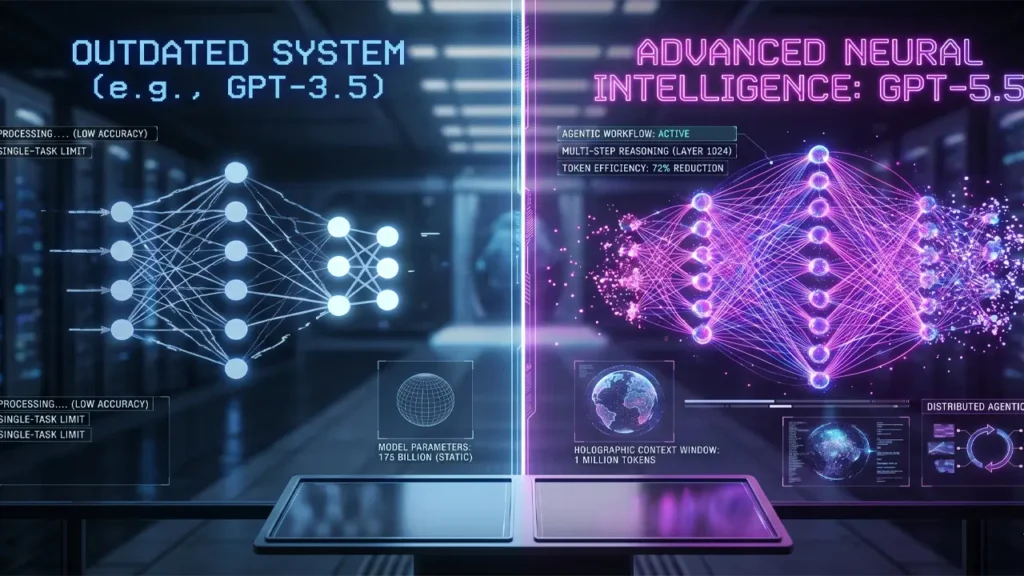
The cybersecurity dimension of GPT-5.5 itself is treated with serious care. OpenAI classifies GPT-5.5 as “High” capability under its Preparedness Framework in both cybersecurity and biological/chemical domains. Critically, the model does not reach the “Critical” threshold — which would mean the ability to develop functional zero-day exploits in hardened real-world critical systems without human assistance. OpenAI tested this explicitly and confirmed the model cannot produce such exploits in standard configurations.
What GPT-5.5 can do on the defensive side is substantial: it assists security teams with vulnerability analysis, code review, binary reverse engineering for malware detection, and identifying weaknesses in software before attackers can exploit them. OpenAI’s Codex Security agent has already contributed to over 3,000 critical and high-severity vulnerability fixes across open source projects.
The Microsoft partnership makes this defensive capability accessible at enterprise scale — covering organizations already running on Azure, Microsoft 365, and the Microsoft Security stack.
7. GPT-5.5 in Enterprise: AI Enterprise Security Solutions
For enterprise teams, GPT-5.5 arrives at exactly the right moment. Organizations are under growing pressure to do more with their existing headcount, protect increasingly complex digital environments, and move faster than their competitors — often all at the same time.
OpenAI positioned GPT-5.5 explicitly as a model for enterprise work. Its ability to handle “messy business” — ambiguous instructions, multi-step processes, cross-tool workflows — makes it a practical fit for real organizational environments where problems don’t come neatly packaged.
NVIDIA provides one of the clearest early enterprise case studies. Over 10,000 NVIDIA staff had early access to GPT-5.5 through Codex, using it across engineering, legal, finance, and operations — not just code completion, but general computer work spanning the entire organization. NVIDIA vice president of enterprise computing Justin Boitano described the model acting as a “chief of staff,” powering agents that function as digital employees handling real workloads.
For enterprise security specifically, the implications are significant. Security operations centers can use GPT-5.5 to accelerate threat detection, triage alerts, analyze logs across large datasets, and draft remediation plans — tasks that previously consumed dozens of analyst hours per week. The model’s ability to reason across long contexts (up to 1 million tokens) means it can hold an entire codebase, a network architecture document, and a threat intelligence report in view simultaneously.
Here is a summary of the main enterprise use categories and what GPT-5.5 brings to each:
Strategic Enterprise Integration
Mapping the high-impact integration paths for GPT-5.5. Analyzing the transition from human-assisted workflows to autonomous agentic operations across mission-critical enterprise pillars.
| Strategic Pillar | Core Application | ROI Projection |
|---|---|---|
| Critical Infrastructure & Security | ||
|
Security Ops
|
Autonomous SOC Triage Real-time threat detection, log analysis, and Tier 1–3 alert remediation loops. |
High Risk Mitigation
70% Analyst Burden Reduction
|
| IT Infrastructure |
Predictive Patching & Vulnerability Scanning. |
Proactive Security Posture
|
| Software & Engineering | ||
|
Development
|
Agentic Dev Lifecycle Full-repository agentic coding, autonomous refactoring, and logic debugging. |
Velocity Peak
End-to-End Workflow Automation
|
| Strategic Operations | ||
| Legal & Compliance |
Cognitive Legal Review & Multi-vector Contract Analysis. |
80% Saved per Review Cycle
|
| Finance Ops |
Algorithmic Finance & Agentic Ledger Reconciliation. |
Sub-millisecond manual processing overhead. |
| Advanced Innovation | ||
|
Research & Dev
|
Hypothesis Synthesis Cross-domain literature synthesis and drug discovery simulation support. |
Discovery Peak
Accelerated Discovery Timelines
|
Security Operations
ActiveAutonomous threat triage reduces analyst burden by 70% through agentic log analysis.
Software Engineering
SOTAFull repo agentic refactoring enables End-to-End Workflow Automation.
The subscription tiers that provide access to GPT-5.5 in enterprise contexts — Business and Enterprise plans — come with the additional data protection and compliance controls those organizations require. API deployments carry their own safeguard layer, reviewed by OpenAI before broad rollout.
8. Real GPT-5.5 Use Cases Business Should Know
Beyond the headline features, what does GPT-5.5 actually look like in day-to-day business practice? Early access partners shared a range of concrete examples that help paint the picture.
One of the most commonly cited use cases is autonomous document workflows. A team member can hand GPT-5.5 a brief — even a rough, incomplete one — and the model will research the topic, structure the output, write the document, check for consistency, and produce a finished report. Tasks that previously took half a day now take minutes.
In software teams, the shift is equally dramatic. Developers using GPT-5.5 through Codex reported being able to “gut check” vibe-coded work, review thousands of additional documents, and save up to 10 hours on work per week. The model doesn’t just write code — it reads existing code at scale, identifies problems, proposes fixes, and in some cases executes those fixes autonomously.
For customer-facing businesses, GPT-5.5’s ability to operate software and navigate tools opens up possibilities for automated customer support triage, CRM data management, and personalized outreach at scale — all without a human in the loop for routine tasks.
In scientific and pharmaceutical research, OpenAI’s chief research officer highlighted drug discovery as a particularly exciting frontier. GPT-5.5 can assist expert scientists by reviewing literature, generating hypotheses, and modeling potential outcomes — accelerating research timelines in a domain where speed genuinely saves lives.
Financial services firms participating in OpenAI’s Trusted Access for Cyber program — including large banking institutions — are exploring GPT-5.5 for security compliance monitoring, anomaly detection in transaction data, and automated regulatory reporting.
The common thread across all these GPT-5.5 use cases for business is the same: the model reduces the cognitive overhead of complex, multi-step work. It doesn’t replace human judgment on critical decisions, but it dramatically compresses the time it takes to get from a problem to a solution.

9. GPT-5.5 in the Context of Next Generation AI Models 2026
Stepping back from GPT-5.5 specifically, it’s worth understanding what this release tells us about the direction of the entire AI industry in 2026.
The pace of model development has accelerated to a remarkable degree. GPT-5.5 arrived less than two months after GPT-5.4. Anthropic’s Claude Mythos Preview launched just a week before. Google’s Gemini 3.1 Pro is active in the same competitive tier. The race is not slowing — if anything, it’s compressing. New frontier models are arriving on timelines that would have seemed impossible two years ago.
The competitive dynamics are also shifting in interesting ways. Where earlier generations of AI competition focused on benchmark performance — which model scores highest on standardized tests — the 2026 conversation has shifted to autonomy, safety, and enterprise integration. Who can build AI that works independently on real tasks? Who can do it safely? Who can integrate it into existing business workflows without disruption?
GPT-5.5 is OpenAI’s answer to all three questions simultaneously. Its agentic capabilities address autonomy. Its Preparedness Framework ratings and red-teaming process address safety. Its Codex integration and enterprise subscription tiers address workflow integration.
Greg Brockman’s framing at the launch press briefing was intentionally forward-looking. He described a coming “compute-powered economy” — a world where AI capacity becomes the fundamental infrastructure of knowledge work, much the way electricity became the infrastructure of industrial work in the 20th century. NVIDIA reinforced this view at the same time, noting that their new chip architecture slashes the cost of running advanced AI models like GPT-5.5 by up to 35 times per token — making the economics of AI-powered work increasingly accessible to organizations of all sizes.
The next generation AI models of 2026 are not just smarter chat assistants. They are the beginning of a new layer of digital infrastructure — one that thinks, plans, acts, and iterates on behalf of the humans who deploy them.
10. Final Verdict: Is GPT-5.5 Worth the Hype?
After everything we’ve covered, the honest answer is: mostly yes — with some important nuances.
The GPT-5.5 AI model delivers on its core promises. It is genuinely faster and smarter than GPT-5.4 while maintaining comparable response latency. It handles multi-step, ambiguous tasks with a level of autonomy that earlier models couldn’t approach. Its token efficiency improvements make it more cost-effective at scale, particularly in Codex-based workflows. And its safety record — tested by nearly 200 early access partners, subjected to external red-teaming, and evaluated under OpenAI’s full Preparedness Framework — is the most rigorous in the company’s history.
The cybersecurity story is also real and consequential. The deepened Microsoft and OpenAI partnership, the Trusted Access for Cyber program, and the model’s “High” cybersecurity capability rating all point to GPT-5.5 playing a meaningful role in the defensive security landscape. OpenAI’s commitment of 10 million dollars to extend access to under-resourced defenders shows that this isn’t just an enterprise-tier story — it’s an ecosystem-level investment.
Where should you be measured in your expectations? GPT-5.5 is not a perfect model. Independent testing has noted tendencies toward confident errors rather than admitting uncertainty — a known challenge in large language models that OpenAI is actively working to address. And while GPT-5.5 outperforms competitors on key benchmarks according to OpenAI’s own data, third-party evaluations have produced more mixed results, as is typical with any frontier model release.
The GPT-5.5 use cases for business are broad and genuinely valuable — from agentic coding and document automation to scientific research and enterprise security solutions. But they work best when human oversight remains in the loop for high-stakes decisions. The model is an extraordinarily capable collaborator. Treating it as a fully autonomous decision-maker in sensitive domains would be premature.
Here is a final summary scorecard:
GPT-5.5 Strategic Scorecard
Aggregated performance analysis of GPT-5.5 across core operational metrics. Evaluating the jump from reasoning baselines to autonomous deployment and institutional readiness.
| Performance Dimension | Auditor Rating | Strategic Insight |
|---|---|---|
| Cognitive Intelligence | ||
|
Intelligence & Reasoning
|
|
Step Change
Exhibits a definitive leap in multi-vector reasoning complexity compared to the GPT-5.4 baseline. |
| Logical Fidelity (Accuracy) |
|
Exceptional overall reliability, though audit teams noted infrequent “confident hallucinations” in fringe edge cases. |
| Operational Efficiency | ||
| Task Autonomy (Agency) |
|
Agentic Lead
The most autonomous agentic engine in the Frontier series to date, handling complex multi-hop tasks with zero supervision. |
| Throughput ROI (Value) |
|
Superior token efficiency makes large-scale agentic deployments economically viable for the first time. |
| Institutional Trust & Readiness | ||
| Institutional Readiness |
|
Deep Codex integration and broad enterprise plan availability position it as the standard for high-trust software engineering. |
| Risk Resilience (Security) |
|
Non-Critical
High technical capability with a robust “Preparedness Framework,” though not yet rated for Critical infrastructure protection. |
Frontier Intelligence
Exhibits a definitive leap in multi-vector reasoning and autonomous agency, outperforming the GPT-5.4 baseline by significant margins.
Logical Fidelity
Occasional confident hallucinations noted in fringe scenarios.
The bottom line: GPT-5.5 is the most capable, most autonomous, and most safety-tested model OpenAI has ever released. For developers building agentic applications, for enterprises looking to automate complex knowledge work, and for security teams working to stay ahead of emerging threats, it represents a genuine and meaningful upgrade. The next generation of AI models in 2026 is not a future concept — it’s here, it works, and GPT-5.5 is leading the charge.