
The AI video generation landscape is evolving at breakneck speed, and 2026 has brought us something truly special: Vidu Q3 AI video generator. If you’ve been following the AI space, you know that most video generators are great at creating clips, but they often lack one crucial element—storytelling. That’s where Vidu Q3 comes in, changing the game entirely.
Developed by ShengShu Technology, Vidu Q3 isn’t just another AI tool that stitches frames together. It’s the first AI storytelling video model designed to understand narrative flow, emotional arcs, and cinematic composition. Whether you’re a content creator, marketer, or just someone curious about the future of AI video, this tool deserves your attention.
In this article, we’ll dive deep into what makes Vidu Q3 special, how it compares to other models, and whether it’s the right tool for your creative needs. Let’s explore the future of story-driven AI video creation together.
1. Introduction to Vidu Q3 AI Video Generator
The Vidu Q3 AI video generator represents a significant leap forward in how artificial intelligence approaches video creation. Unlike traditional AI video tools that focus purely on visual generation, Vidu Q3 introduces a storytelling-first approach that feels more like working with a creative director than a software tool.
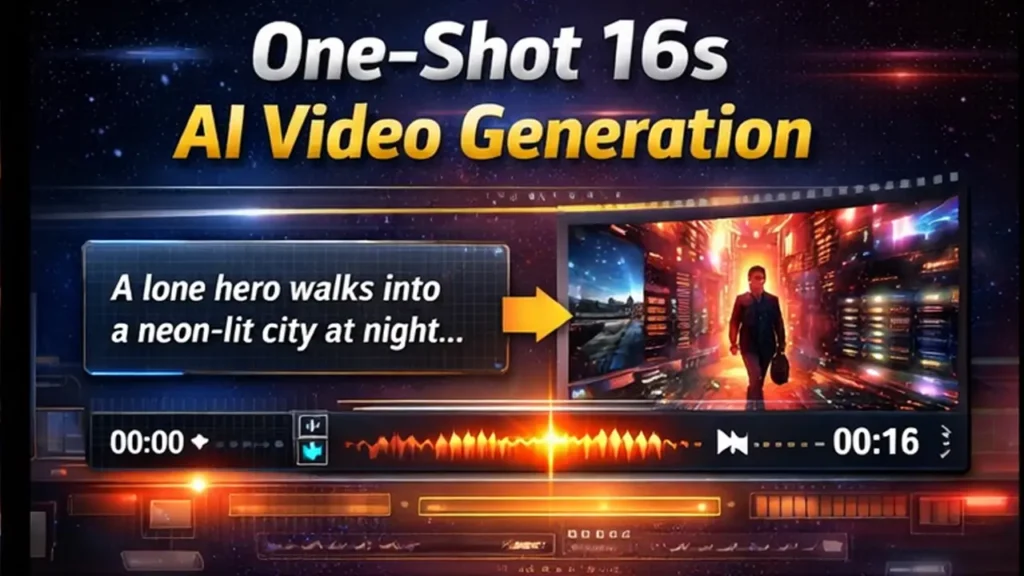
What makes this AI storytelling video model unique is its ability to understand context, narrative structure, and emotional pacing. When you feed it a prompt, Vidu Q3 doesn’t just generate random visuals—it crafts a mini-story with a beginning, middle, and end, all within its signature 16-second format.
The model uses advanced understanding of cinematic language, meaning it knows when to use close-ups for emotional moments, wide shots for establishing scenes, and dynamic camera movements to build tension or excitement. This isn’t just automation; it’s creative collaboration with AI.
For content creators who’ve struggled with the robotic feel of AI-generated videos, Vidu Q3 offers something refreshingly different. It’s particularly impressive for short-form content platforms like TikTok, Instagram Reels, and YouTube Shorts, where storytelling in seconds is an art form.
2. Who is ShengShu Technology and Why It Matters
ShengShu Technology AI might not be a household name yet, but this Chinese AI research company is quickly becoming a major player in the generative AI space. Founded by a team of researchers with backgrounds in computer vision, natural language processing, and creative AI applications, ShengShu has been quietly developing some of the most innovative AI video models in the industry.
The company’s philosophy differs from Western AI giants. While companies like OpenAI and Runway focus on broad accessibility and rapid iteration, ShengShu takes a more refined approach, spending extensive time on training data quality and model architecture before public release. This patience shows in Vidu Q3’s polish and capability.
ShengShu Technology has partnerships with several major Chinese tech companies and media organizations, giving them access to vast libraries of professional video content for training. This access to high-quality, professionally shot footage is part of why Vidu Q3’s output feels so cinematic compared to competitors trained primarily on internet videos.
The company’s commitment to storytelling AI specifically stems from their research into how humans process visual narratives. They’ve published several papers on neural networks that can understand plot structure, character development, and emotional arcs—research that directly feeds into Vidu Q3’s capabilities.
What makes ShengShu’s approach matter for users is simple: they’re not just building tools for generating pretty pictures. They’re building creative partners that understand what makes videos compelling to human audiences.
3. Why Storytelling is the New Standard in AI Video
The shift toward storytelling in AI video storytelling tools isn’t just a trend—it’s a necessary evolution. Early AI video generators could create stunning visuals, but they often felt empty, like beautiful shells without substance. Viewers could watch them once, maybe marvel at the technology, but they rarely felt emotionally engaged.
Human brains are wired for stories. We remember narratives far better than random sequences of images. When you see a video with a clear story arc—even just 16 seconds long—your brain engages differently. You anticipate what comes next, you feel invested in the outcome, and you’re more likely to watch until the end.
This matters enormously for practical applications. Marketers know that storytelling drives conversions. A product demo with narrative structure performs better than a simple showcase. A brand video with emotional beats creates stronger connections than pure information delivery.
Vidu Q3 recognizes this fundamental truth. When you prompt it to create a video, it doesn’t just visualize your words—it structures them into narrative moments. A prompt like “a coffee shop on a rainy morning” becomes a micro-story: the establishment shot of rain on windows, a close-up of steam rising from a cup, a wider shot revealing a cozy interior where someone finds comfort.
The cinematic AI video generator approach also means better pacing. Instead of maintaining constant visual intensity (which causes viewer fatigue), Vidu Q3 knows when to build, when to pause, and when to deliver a payoff. This natural rhythm makes even simple prompts feel professionally directed.
4. One-Shot Video Generation Explained
The concept of Vidu Q3 one-shot video generation is both technically impressive and practically useful. “One-shot” means the entire video is generated as a single, coherent sequence rather than stitching together separately generated frames or clips.
This matters more than you might think. Many AI video generators actually create videos by generating individual frames and then smoothing transitions between them. This approach often leads to inconsistencies—characters might shift appearance, lighting changes unnaturally, or objects appear and disappear randomly.
Vidu Q3’s one-shot approach maintains consistency throughout the entire clip. If your video features a character, that character’s appearance, clothing, and features remain stable from start to finish. Backgrounds don’t morph unexpectedly. The lighting and atmosphere stay coherent with the story’s emotional tone.
Technically, this is achieved through a unified temporal model that considers the entire video sequence simultaneously during generation. Rather than asking “what should the next frame look like?” it asks “what should the complete 16-second story look like?” and then generates it holistically.
For creators, this means less time fixing inconsistencies and more time refining creative direction. You’re not playing whack-a-mole with visual glitches—you’re working with complete narrative sequences that either work or don’t, making iteration faster and more purposeful.
The one-shot approach also enables better narrative flow. Camera movements feel intentional rather than random. Visual transitions support the story rather than distract from it. The result is videos that feel professionally shot rather than algorithmically assembled.
5. 16-Second Cinematic Clips: Why Duration Matters
You might wonder why 16-second AI video generation is the sweet spot for Vidu Q3. The answer comes from both technical constraints and creative strategy, and it’s actually brilliant for modern content consumption.
From a technical standpoint, generating longer videos with perfect consistency is exponentially more difficult. Computational requirements scale dramatically with duration. Maintaining narrative coherence, visual consistency, and temporal stability becomes harder with every additional second. By focusing on 16 seconds, ShengShu Technology ensures maximum quality within practical processing limits.
But there’s creative wisdom here too. Sixteen seconds is long enough to tell a complete micro-story—to establish a setting, introduce a moment of tension or interest, and deliver a conclusion. It’s short enough to maintain viewer attention in our age of rapid content consumption, but long enough to create emotional impact.
Consider the platforms dominating video content in 2026: TikTok, Instagram Reels, YouTube Shorts. These platforms have trained audiences to consume and enjoy very short content. A 16-second video fits perfectly into these ecosystems. You can use Vidu Q3’s output directly, or combine multiple clips into longer sequences.
Content Distribution Matrix
Strategic channel mapping for Vidu Q3 generated assets based on temporal engagement and platform utility.
| Social Platform | Ideal Duration | Vidu Q3 Utility |
|---|---|---|
| TikTok | 15 – 60 SEC | High Impact Optimized for standalone high-engagement clips or fast-paced trend compilations. |
| Instagram Reels | 15 – 30 SEC | Direct Upload Native length compatibility ensures high organic reach and direct feed integration. |
| YouTube Shorts | 15 – 60 SEC | Narrative Focus Excellent for vertical storytelling and rapid-fire visual hooks. |
| Twitter / X | 06 – 30 SEC | Viral Utility Optimized for rapid scrollers; perfectly balanced for high-fidelity loops. |
| 30 – 90 SEC | Modular Sequence Synthesize 2–3 Vidu clips into a professional explainer sequence for maximum B2B impact. |
The 16-second format also encourages creative discipline. When you know you have exactly this much time, you focus on what truly matters in your story. No fluff, no filler—just pure narrative essence. This constraint actually liberates creativity rather than limiting it.
For marketers and advertisers, 16 seconds is often enough to communicate a single powerful idea, showcase a product benefit, or create an emotional connection—all while fitting neatly into pre-roll ad slots and social media feeds where attention is precious.
6. Director-Style Prompts and Cinematic Control
One of the most exciting features of Vidu Q3 is its support for AI director-style prompts, which give creators unprecedented control over the cinematic qualities of their generated videos. Instead of just describing what happens, you can now describe how it should be shot and presented.
Traditional AI video prompts work like this: “A cat walking through a garden.” That’s descriptive, but it leaves all creative decisions to the AI. Director-style prompts work differently: “A cat walking through a garden, shot with a handheld camera following behind, golden hour lighting, shallow depth of field focusing on the cat, slow-motion capture.”
See the difference? You’re not just describing the subject—you’re directing the cinematography, lighting, and camera work. Vidu Q3 understands these creative instructions and implements them with impressive accuracy.
The model recognizes a wide range of cinematic terminology:
Camera movements: dolly in, dolly out, pan left, pan right, tilt up, tilt down, crane shot, handheld, steady tracking, orbital, Dutch angle
Lighting styles: golden hour, blue hour, harsh sunlight, soft window light, dramatic shadows, high key, low key, rim lighting, practical lights, neon glow
Shot types: extreme close-up, close-up, medium shot, full shot, wide shot, establishing shot, over-the-shoulder, point-of-view, bird’s eye view
Lens effects: shallow depth of field, deep focus, bokeh, lens flare, anamorphic aspect ratio, wide-angle distortion, telephoto compression
Mood and color: warm tones, cool tones, desaturated, high contrast, film noir, pastel palette, vibrant colors, monochrome
This level of control means you can maintain consistent visual branding across multiple videos, recreate specific cinematic styles, or experiment with different approaches to see what resonates with your audience. For professional creators, this bridges the gap between “AI-generated” and “professionally produced.”
7. Comparison with Other AI Video Models (2026)
The next-gen AI video models 2026 landscape is competitive, with several strong players. Let’s see how Vidu Q3 stacks up against the major alternatives based on official documentation and public testing.
AI Video Intelligence Matrix
A technical assessment of temporal synthesis models, narrative coherence, and operational utility.
| Model Architecture | Max Duration | Narrative Focus | Coherence Level | Production Utility |
|---|---|---|---|---|
| Vidu Q3 | 16.0s | Excellent | One-Shot Coherence | Cinematic shorts, narrative storytelling, and character-driven clips. |
| Runway Gen-3 | 10.0s | Moderate | Very High | Rapid creative iteration, prompt exploration, and marketing assets. |
| Pika 2.0 | 08.0s | Basic | Standard | Animated VFX, stylized visual polish, and artistic experimentation. |
| Sora (OpenAI) | 60.0s | Good | Variable | Long-form generative sequences and high-flexibility video synthesis. |
| Synthesia | Variable | Template-Based | Absolute | Corporate training, scalable presentations, and avatar-led instruction. |
Vidu Q3’s advantages include superior storytelling understanding, one-shot generation for perfect consistency, and exceptional handling of director-style prompts. The cinematic quality often surpasses competitors, particularly in lighting, composition, and emotional tone.
Sora offers much longer duration, making it better for extended narratives or complex scenes that need time to develop. However, maintaining consistency over 60 seconds can be challenging, and the storytelling isn’t as refined as Vidu Q3’s focused approach.
Runway Gen-3 excels at rapid iteration and experimentation. It’s faster than Vidu Q3 and offers more creative control through editing features, though its storytelling capabilities are more basic. Great for creators who want to tweak and adjust rather than get polished results on the first try.
Pika 2.0 focuses heavily on visual effects and stylization, making it excellent for surreal or artistic content. However, for realistic, narrative-driven videos, Vidu Q3 has the edge.
Synthesia serves a completely different niche—corporate communication and training—so direct comparison isn’t entirely fair. But if your goal is storytelling rather than information delivery with AI avatars, Vidu Q3 is the better choice.
The choice between these models ultimately depends on your specific needs. For story-driven AI video creation in short formats, Vidu Q3 currently leads the pack.
8. Use Cases: Marketing, TikTok, YouTube Shorts, Ads
The cinematic AI video generator capabilities of Vidu Q3 open up numerous practical applications across different content types and industries. Let’s explore how creators and businesses are actually using this tool.
Social Media Content Creation
For TikTok creators, Vidu Q3 solves a major problem: consistent, high-quality content production. Instead of spending hours filming and editing, creators can generate cinematic B-roll, story sequences, or even complete narrative clips. A beauty creator might generate atmospheric product shots with perfect lighting. A travel blogger could create destination teasers before even visiting a location. The tool doesn’t replace authentic personal content, but it supplements it beautifully.
Instagram and YouTube Shorts creators use Vidu Q3 for visual storytelling that would be impractical or expensive to film traditionally. Fantasy sequences, impossible camera angles, or scenarios requiring expensive locations become accessible to everyone. The 16-second format aligns perfectly with these platforms’ content expectations.
Marketing and Advertising
Marketing teams are using Vidu Q3 to create concept videos and storyboards before investing in full production. A campaign idea can be visualized quickly, tested with focus groups, and refined—all before a single dollar is spent on actual filming. This dramatically reduces creative risk and speeds up the approval process.
Small businesses without video production budgets can now create professional-looking ads for social media. A local restaurant can generate appetizing food sequences with cinematic presentation. A boutique can create fashion content showing products in aspirational contexts. The barrier to quality video marketing has dropped significantly.
Brand Storytelling
Brands are discovering that Vidu Q3’s narrative approach helps communicate values and identity in ways static images can’t match. A sustainability-focused brand might create short sequences showing nature’s beauty and fragility. A tech company could visualize future scenarios where their product makes a difference. These aren’t product demos—they’re emotional connections through visual storytelling.
Content Testing and A/B Experimentation
One powerful but less obvious use case is rapid content testing. Because Vidu Q3 can generate videos quickly, marketers can create multiple variations of an ad concept, test them with small audiences, and scale up only the winners. This data-driven approach to creative development was previously only available to large companies with substantial budgets.
Educational Content
Educators and course creators use Vidu Q3 to create engaging visual examples and scenarios. A history teacher might generate atmospheric period scenes to illustrate a lesson. A science instructor could visualize abstract concepts that are difficult to film in reality. The storytelling focus helps maintain student engagement better than static images or text.
Influencer Economy
Influencers with brand partnerships use Vidu Q3 to create sophisticated sponsored content that feels authentic rather than advertorial. By generating cinematic sequences that integrate products naturally into storytelling, they maintain their creative voice while delivering brand value.
The common thread across all these use cases is that Vidu Q3 democratizes cinematic storytelling. What was once accessible only to creators with significant budgets or technical skills is now available to anyone with a compelling idea and the right prompt.
9. Pros and Limitations of Vidu Q3
Every tool has strengths and weaknesses, and understanding both helps you make informed decisions about when and how to use the Vidu Q3 AI video generator.
Key Advantages
The storytelling-first approach is genuinely revolutionary. Where other tools generate impressive visuals, Vidu Q3 generates narratives. This difference matters enormously for engagement and emotional impact. Your videos don’t just look good—they feel purposeful and complete.
One-shot generation ensures consistency that multi-stage models struggle to match. Characters, environments, and lighting remain stable throughout the clip, creating a professional polish that’s immediately noticeable. This reliability saves enormous time in post-production fixing or tweaking.
Director-style prompts give creative control that feels more like collaborating with a cinematographer than operating software. For creators with visual vision but limited technical skills, this bridge between imagination and execution is invaluable.
The 16-second duration, while limited, is actually perfectly optimized for modern content consumption patterns. It forces creative discipline while fitting seamlessly into social media ecosystems where most video consumption happens.
Cinematic quality consistently impresses, with lighting, composition, and camera movement that demonstrate real understanding of visual storytelling principles. The output often rivals professionally shot footage in terms of aesthetic appeal.
Current Limitations
The 16-second maximum duration is both a strength and limitation. While perfect for short-form content, it makes Vidu Q3 unsuitable for longer narratives, tutorials, or detailed demonstrations. Creators needing extended videos must either accept this constraint or combine multiple clips.
Customization of specific visual elements can be challenging. While director-style prompts offer control over cinematography, precisely controlling specific object appearances, character features, or detailed settings requires careful prompting and sometimes multiple generation attempts.
Processing time, while reasonable, isn’t instant. Generating a high-quality 16-second cinematic sequence takes several minutes. This is understandable given the computational complexity, but it means rapid iteration isn’t as fast as with some simpler tools.
Availability and access vary by region. As a product from ShengShu Technology, international availability can be limited, and pricing structures may differ across markets. Western users sometimes face access challenges compared to domestic Chinese users.
Text generation within videos (like signage, labels, or subtitles) remains imperfect. While improving, AI-generated text in scenes can appear distorted or nonsensical, requiring either careful prompting to avoid or post-production correction.
Human figures, particularly faces in close-up, sometimes show the uncanny valley effect—looking almost but not quite right. This has improved significantly with Q3 compared to earlier versions, but it’s still occasionally noticeable and may distract viewers in certain contexts.
Vidu Q3 Performance Audit
A multi-dimensional assessment of architectural strengths, visual fidelity, and operational constraints.
| Capability Aspect | Strength Level | Technical Notes |
|---|---|---|
| Storytelling Quality | Excellent | Industry-leading narrative understanding and logical sequence progression. |
| Visual Consistency | Excellent | Advanced one-shot generation ensures temporal stability of objects and environments. |
| Cinematic Quality | Very Good | Exhibits professional-grade volumetric lighting and sophisticated frame composition. |
| Prompt Control | Very Good | Extensive director-style control over camera movement and scene dynamics. |
| Human Realism | Good | High fidelity in skin textures, though occasional uncanny valley effects persist in complex micro-expressions. |
| Text Handling | Moderate | Improving typographic rendering; still faces challenges with precise character legibility in motion. |
| Processing Speed | Moderate | Computationally intensive architecture; typically requires several minutes for a 16s high-res export. |
| Duration Flexibility | Limited | Temporal output is currently fixed at a 16-second maximum window per generation. |
Understanding these strengths and limitations helps set appropriate expectations and guides you toward use cases where Vidu Q3 truly excels while avoiding scenarios where its constraints might be problematic.
10. Final Verdict: Is Vidu Q3 the Future of AI Video?
After exploring the Vidu Q3 AI video generator from every angle, it’s time for the ultimate question: Is this the future of AI video creation, or just another impressive but ultimately limited tool?
The answer is nuanced but ultimately optimistic. Vidu Q3 represents a genuine paradigm shift in how AI approaches video generation. By prioritizing storytelling over mere visual generation, ShengShu Technology has addressed the single biggest weakness of earlier AI video models—the lack of narrative coherence and emotional resonance.
For short-form content creators, marketers, and brands operating in the social media space, Vidu Q3 is genuinely transformative. The ability to generate cinematic, story-driven 16-second videos that feel professionally directed rather than algorithmically assembled is enormously valuable. This isn’t just about saving time or money—though it does both—it’s about making a level of quality accessible that was previously gatekept by technical skills and production budgets.
The AI storytelling video model approach will undoubtedly influence competitors. We’re already seeing other platforms experiment with narrative understanding and longer temporal coherence. Vidu Q3 has demonstrated that there’s demand for AI that understands not just what to show, but how to show it for maximum impact.
However, calling it “the future” suggests it’s the final evolution, which seems premature. Current limitations—particularly the 16-second duration cap and occasional quality inconsistencies with human faces—suggest there’s still room for improvement. The ideal AI video tool would combine Vidu Q3’s storytelling sophistication with greater length flexibility and even finer control over specific visual elements.
Who should use Vidu Q3?
- Social media content creators focused on TikTok, Reels, or Shorts
- Marketing teams needing rapid concept visualization and ad creation
- Small businesses without video production budgets
- Brands prioritizing storytelling in their visual communication
- Educators looking to create engaging visual content
- Anyone needing cinematic short-form video without filming
Who might want alternatives?
- Creators needing videos longer than 16 seconds
- Projects requiring precise control over every visual detail
- Content featuring text-heavy scenes or signage
- Productions where human close-ups are central
- Users needing instant generation for rapid iteration
The cinematic AI video generator space is evolving rapidly, and what seems cutting-edge today may be standard tomorrow. But Vidu Q3 has established a new benchmark for what AI video generation should aspire to—not just visual impressiveness, but narrative coherence, emotional resonance, and cinematic sophistication.
For now, if you’re creating short-form content and storytelling matters to you, Vidu Q3 deserves serious consideration. It’s not perfect, but it’s genuinely special, representing a meaningful step toward AI that doesn’t just mimic human creativity but enhances it.
As we move further into 2026 and beyond, tools like Vidu Q3 will continue democratizing sophisticated video creation, enabling more people to tell their stories with cinematic quality. That’s an exciting future worth embracing.
Want to stay updated on the latest AI video generation tools and techniques? Visit aiinovationhub.com for in-depth reviews, comparisons, and tutorials on cutting-edge AI technologies shaping creative industries.
If you’re exploring where AI tools are heading next, it’s worth looking beyond just software reviews. On https://aiinnovationhub.shop/ you’ll find practical AI solutions, curated tools, and digital products designed for real-world use — from content creation to business automation. A smart next step for anyone building with AI today.