
Decart Oasis world model lets you play a Minecraft-like world generated live by AI—no engine, no textures. What it means for games.
Decart Oasis World Model — What It Is and Why the Hype
The Decart Oasis world model represents a groundbreaking advancement in artificial intelligence, particularly in the realm of generative technologies. Developed collaboratively by Decart.ai and Etched.ai, this model creates an interactive, open-world environment reminiscent of popular sandbox games, but entirely powered by AI without relying on traditional programming or game engines. At its core, Oasis functions as a real-time generative system that simulates a virtual world based on user inputs, producing each frame dynamically. This innovation has generated significant excitement in the tech and gaming communities because it demonstrates the potential for AI to handle complex simulations autonomously.
Officially released on October 31, 2024, as detailed in Etched’s announcements and the model’s GitHub repository, Oasis leverages diffusion transformers to generate video frames autoregressively. This means the AI predicts and renders the next visual state of the world in response to player actions, such as movement or block placement, without predefined rules or code. The hype stems from its open-source nature—the 500M parameter model weights are available on Hugging Face, allowing developers to experiment and build upon it. According to Etched’s blog and collaborative research, Oasis is optimized for their upcoming Sohu ASIC chip, which promises to scale performance dramatically, handling larger models at higher resolutions.
In essence, the Decart Etched Oasis model challenges conventional game development paradigms by showing how AI can create coherent, playable experiences from scratch. It’s not just a demo; it’s a proof-of-concept for future applications where worlds are generated on-the-fly, adapting to user behavior in real time. This has implications for accessibility in game creation, potentially democratizing development for non-programmers. While still in early stages, with limitations like low resolution (360p) and occasional inconsistencies, the model’s ability to mimic physics and interactions without explicit coding has sparked discussions on AI’s role in entertainment. For enthusiasts, it’s a glimpse into a new era where creativity meets computation seamlessly.
The project’s collaborative roots between Decart, an AI research firm, and Etched, a hardware innovator, add to the buzz. Decart focuses on multimodal models, while Etched’s expertise in transformer ASICs ensures efficient inference. Together, they’ve created something that feels like science fiction made real. If you’re curious about AI’s evolving capabilities, Oasis exemplifies why this technology is capturing imaginations worldwide—it’s interactive, innovative, and infinitely expandable. Decart Oasis world model
How to Launch and What You See in Oasis AI Minecraft Demo
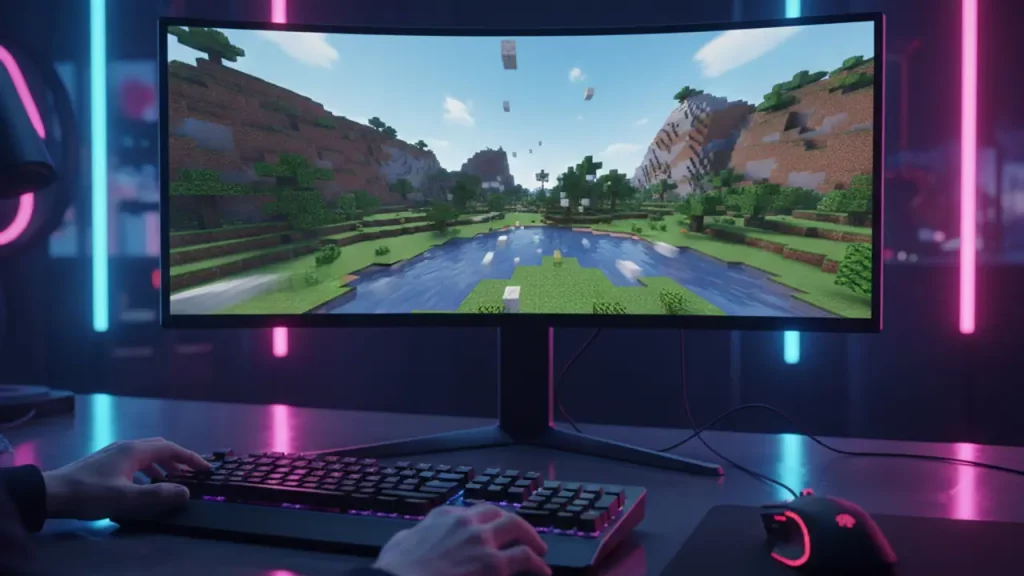
Exploring the Oasis AI Minecraft demo is an accessible way to experience this innovative technology firsthand. To get started, visit the official demo site at oasis.decart.ai, where you can play directly in your browser without needing high-end hardware. The setup is straightforward: select a starting point like a village or desert biome, or even upload your own Minecraft screenshot to seed the generation.
Once loaded, the AI generates a low-resolution (360p) world that you navigate using standard keyboard controls—WASD for movement, space for jumping, and mouse for looking around. For local runs, download the open-source code from GitHub (etched-ai/open-oasis) and the model weights from Hugging Face (Etched/oasis-500m). You’ll need a compatible setup with Python and libraries like PyTorch, though performance varies based on your GPU—expect around 1-2 FPS on consumer hardware without optimizations.
What you’ll see in the demo is a procedurally generated landscape that echoes Minecraft’s blocky aesthetic, complete with terrain, structures, and interactive elements. The AI renders everything in real time, creating hills, trees, water, and even rudimentary mobs or items as you explore. However, it’s not a perfect replica; the world emerges from the model’s learned patterns, trained on millions of hours of Minecraft footage, leading to surreal moments like floating blocks or morphing textures. As per the technical details from Etched’s release, the demo operates at approximately 20 FPS on optimized servers, providing a smooth enough experience for short sessions (limited to five minutes online to manage server load).
This hands-on interaction highlights Oasis’s strengths: immediate responsiveness to inputs and endless variability. For instance, digging or placing blocks alters the environment dynamically, with the AI predicting subsequent frames to maintain coherence. Educational value shines here—users can observe how AI interprets game logic implicitly, without explicit programming. If glitches occur, like inconsistent physics, they serve as learning opportunities about the model’s limitations. Overall, the demo is an inviting entry point for anyone interested in AI-driven creativity, blending familiarity with novelty to showcase what’s possible today. Decart Oasis world model

Why This Is an AI-Generated Minecraft Clone, But Not a “Clone” in the Usual Sense
Labeling Oasis as an AI-generated Minecraft clone captures its essence while underscoring its unique departure from traditional clones. Unlike conventional recreations that copy code, assets, and mechanics directly, Oasis reconstructs a Minecraft-like experience solely through generative AI. It doesn’t use any original Minecraft code, textures, or engines; instead, it relies on a diffusion transformer model to predict and generate each frame based on user actions. This approach, as explained in the project’s technical report on GitHub, makes it a simulation born from data patterns rather than deliberate replication.
The “clone” aspect comes from its visual and functional similarities: block-based building, exploration in an open world, and basic interactions like mining or crafting. Trained on vast datasets of Minecraft gameplay footage, the model infers rules implicitly—gravity, block persistence, and environmental responses emerge organically. However, it’s not a true clone because there’s no underlying game logic; everything is probabilistic. For example, while you can break and place blocks, outcomes might vary unpredictably, leading to creative or bizarre results not seen in the original game. Wikipedia describes it as a 2024 project attempting to replicate Minecraft via AI, emphasizing its generative nature over exact duplication.
This distinction is crucial for understanding AI’s innovative potential. Traditional clones require painstaking programming, but Oasis demonstrates how machine learning can approximate complex systems through observation alone. Decart and Etched’s collaboration highlights this shift, with the model open-sourced to encourage further exploration. It’s a clone in inspiration but revolutionary in method, paving the way for hybrid creations where AI augments human design. For gamers and developers, this means rethinking what constitutes a “game”—is it code, or is it the emergent experience? Oasis invites us to explore these questions playfully. Decart Oasis world model
20 FPS AI Game — Why “Real-Time” Here Is Truly Important
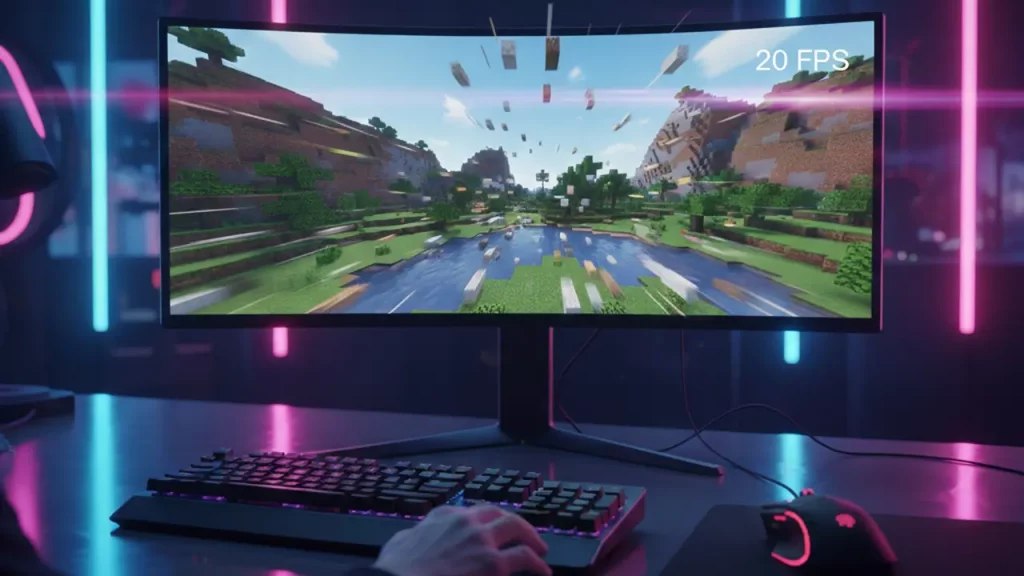
Achieving 20 FPS in an AI game like Oasis is more than a technical benchmark; it’s a pivotal milestone for real-time interactivity. In traditional gaming, frame rates ensure smooth visuals, but for Oasis, this 20 FPS threshold enables genuine playability in a fully generative environment. As noted in Tom’s Hardware coverage, the demo renders at a continuous 20 FPS in 360p resolution without a game engine, making it feasible for users to engage without frustrating lags. This real-time performance is powered by optimized inference on GPUs, with future enhancements via Etched’s Sohu chip promising even higher rates.
The importance of “real-time” lies in user immersion. At 20 FPS, actions like walking or building feel responsive, allowing the AI to update the world seamlessly. Delays would break the illusion, turning exploration into a slideshow. Oasis’s autoregressive generation—predicting each frame based on prior ones and inputs—demands this speed to maintain coherence. InfoQ’s article on the release emphasizes how this capability transforms AI from passive generators to active simulators, enabling open-world dynamics where every decision influences the next instant.
For educational purposes, this frame rate illustrates AI’s evolution toward practical applications. It shows how hardware-software synergy, like Decart’s models and Etched’s ASICs, overcomes computational hurdles. While not ultra-smooth like 60 FPS games, 20 FPS proves viability for prototypes, hinting at scalable futures. Glitches at this speed also teach about AI limitations, such as occasional frame inconsistencies. Ultimately, real-time here democratizes AI gaming, making it accessible and exciting for hobbyists to professionals. Decart Oasis world model
Technology Next-Frame Prediction Model Simple Words
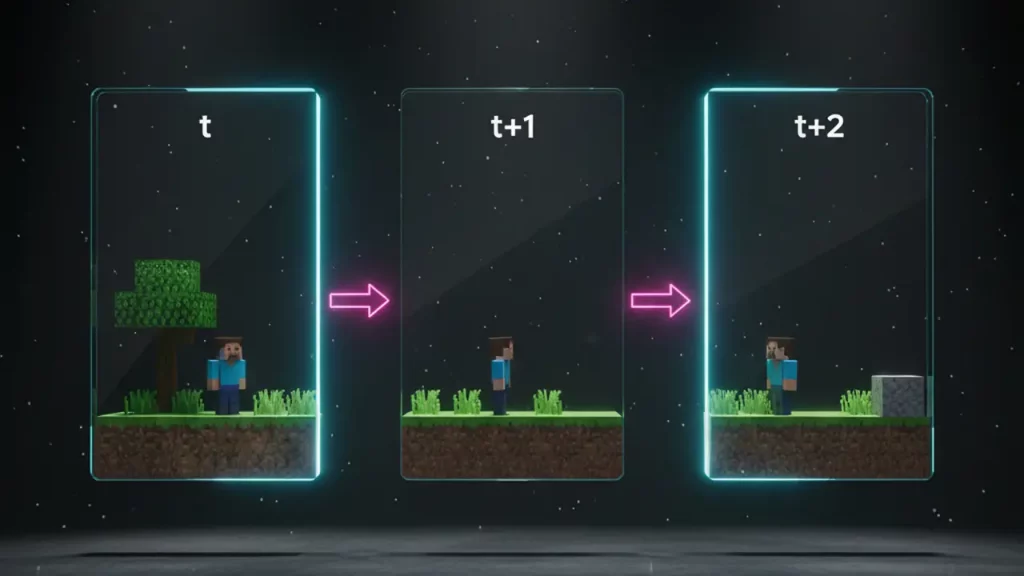
The next-frame prediction model at the heart of Oasis represents a straightforward yet powerful way to bring AI to life in interactive environments. In simple terms, think of it as an intelligent video editor that doesn’t just play back footage but creates it on the spot, responding to your every move. For example, when you press a key to dig in the game, the AI quickly figures out what the screen should look like next—a hole forms, dirt particles might scatter, and the surrounding area adjusts accordingly. This is all based on patterns the model learned from watching countless hours of Minecraft gameplay videos, allowing it to anticipate changes without any hardcoded instructions.
Delving a bit deeper without getting too technical, the process starts by compressing the current game state, including recent frames and your inputs, into a compact representation called a latent space. From there, it uses a technique known as diffusion to gradually refine random noise into a clear image for the next frame. This autoregressive method—building one frame after another—ensures smooth progression, much like how a storyteller adds details to keep the narrative flowing. According to the updated documentation on Hugging Face for Oasis 2.0, released in September 2025, enhancements include better stability through dynamic noising, which helps the model recover from inconsistencies and maintain coherence over longer sessions.
What makes this accessible is that you don’t need to be a programmer to grasp it; it’s essentially “smart guessing” powered by probability. Etched’s optimizations, including fused GPU operations, enable real-time speeds up to 30 FPS in 1080p, a significant jump from the original 20 FPS at 360p. This efficiency, highlighted in their 2025 research updates, allows for seamless integration into mods and APIs, making AI-driven worlds more practical.
Educationally, it demystifies how data can simulate physics and logic—jumping might result in a realistic arc, but occasional quirks like unexpected object behaviors remind us it’s learned, not programmed. These imperfections add a layer of fun, showing AI’s creative side. In essence, next-frame prediction bridges static generation to dynamic interaction, opening up possibilities for engine-free gaming where your actions truly shape the outcome. With Oasis 2.0’s advancements, this technology feels even more approachable, inviting users to experiment and learn through play. Decart Oasis world model
Interactive Generative World Model: Movement, Blocks, Interface
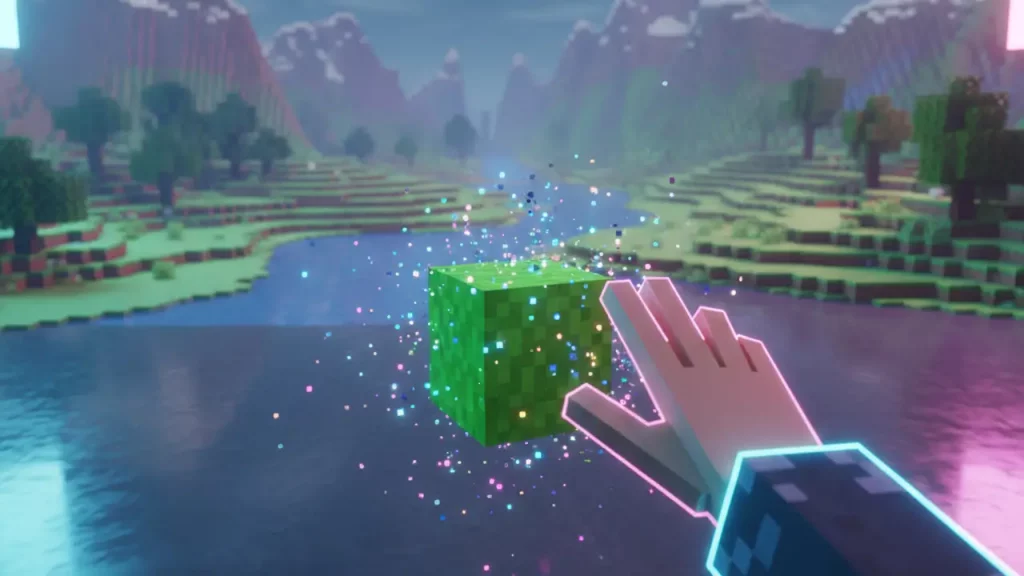
Oasis’s interactive generative world model masterfully combines user control with AI ingenuity, centering on intuitive movement, block interactions, and a clean interface that prioritizes immersion. Navigation is straightforward and engaging: standard WASD keys handle walking, spacebar triggers jumps, and mouse movements let you survey the landscape, with the AI instantly rendering responses to your path—hills rise, valleys deepen, and obstacles appear as you explore. Block manipulation forms the core gameplay loop; left-click to mine or break elements, revealing resources or creating space, while right-click places items from an AI-inferred inventory, building structures that persist across frames. These changes aren’t scripted; the model generates them dynamically, ensuring each world feels unique and reactive.
The interface remains minimalist to keep the focus on discovery—no overwhelming heads-up display (HUD) distracts you, though on-screen prompts guide basic controls when needed. As detailed on Decart’s updated demo site for Oasis 2.0, launched in 2025, this design encourages pure exploration, where the AI maintains world consistency behind the scenes. Generative features truly stand out: as you venture into new territories, the system populates them on-the-fly with elements like flowing rivers, growing foliage, or even dynamic weather, all drawn from learned patterns in training data. Voice or text commands, introduced in the XR version, allow real-time transformations, such as shifting biomes or eras, adding layers of interactivity.
From an educational standpoint, this model illustrates AI’s ability to interpret and predict without explicit rules—movements and builds lead to emergent behaviors, fostering creativity and teaching about probabilistic systems. While limitations persist, like occasional block inconsistencies or visual glitches, they contribute to the charm, highlighting areas for growth. The 2025 Minecraft mod integration expands this further, enabling higher resolutions and smoother performance, making it easier for players to mod and customize. Overall, Oasis invites users into a welcoming space for generative discovery, blending familiarity with innovation to make AI feel approachable and exciting for all levels of enthusiasts. Decart Oasis world model

AI Video Game Without Game Engine — Strengths and Glitches
Oasis stands out as an AI video game that operates entirely without a traditional game engine, offering remarkable strengths alongside some inherent glitches that stem from its generative nature. One of its biggest advantages is the boundless variability: worlds aren’t pre-built but created in real time, adapting fluidly to player inputs without needing assets, code, or predefined levels. This means infinite possibilities—every session can unfold differently, from serene explorations to chaotic builds—democratizing game creation for anyone with a browser. Etched’s open-source release, updated with Oasis 2.0 in 2025, emphasizes zero development overhead, allowing rapid prototyping where ideas come to life instantly.
Another strength lies in its accessibility and efficiency; running at 1080p and 30 FPS on optimized hardware, it showcases how AI can handle complex simulations with minimal resources, thanks to innovations like diffusion forcing and assembly-level optimizations. This engine-free approach empowers educational uses, teaching concepts like emergent physics without requiring programming knowledge. However, glitches are part of the package: visual artifacts, such as flickering textures or morphing objects, arise from prediction errors in the model’s probabilistic framework. Illogical physics—like blocks defying gravity or inconsistent interactions—highlight dependencies on training data, where rare scenarios might not be perfectly captured.
These quirks, while challenging for polished gameplay, fuel innovation by encouraging users to experiment and iterate. The 2025 updates, including better recovery mechanisms from corrupted frames, have reduced some issues, but they still serve as valuable learning points about AI limitations. In balance, Oasis excels in fostering creativity and quick ideation, ideal for prototyping and exploration, though it may not yet rival engine-based games for consistency. It’s a testament to AI’s potential in gaming, blending strengths in adaptability with glitches that remind us of the technology’s evolving state, making it perfect for those seeking educational and experimental fun. Decart Oasis world model
Real-Time World Model AI — Why It Matters for Developers and Business
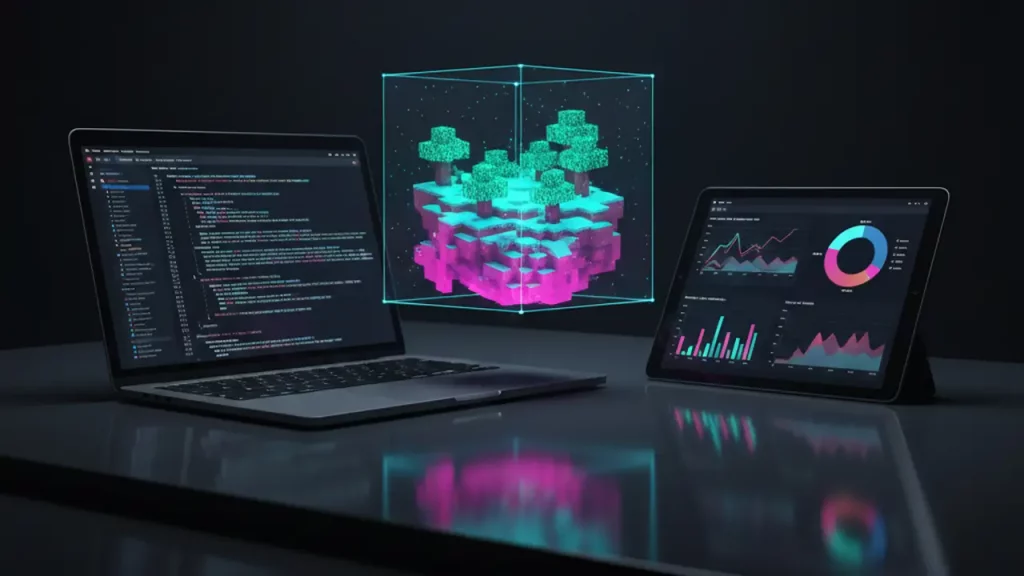
Real-time world model AI, as embodied by Oasis, provides transformative tools for developers and businesses alike, streamlining creation and opening new revenue streams. For developers, it means access to dynamic content generation that slashes manual design time—imagine prototyping entire game worlds in minutes rather than months, with AI handling terrain, interactions, and adaptations automatically. This reduces the need for large teams and complex coding, allowing focus on storytelling or unique mechanics. The open-source nature of Oasis 2.0, with its Minecraft mod and API platform launched in 2025, enables seamless integration, supporting real-time modifications via voice or text for enhanced creativity.
Businesses benefit from scalable, personalized experiences that engage users longer; personalized worlds can boost retention in gaming, education, or simulation sectors, as noted in InfoQ’s coverage of similar advancements. Cost savings are significant—lower hardware demands through Etched’s efficiencies mean broader accessibility, while the Decart API allows monetization via subscription models for high-fidelity generations. In education, it opens markets for interactive learning tools, simulating environments for STEM subjects without expensive software. For simulation businesses, like training or virtual reality, real-time adaptability enhances realism, potentially disrupting industries with cost-effective alternatives.
Developers gain a prototyping boon, iterating faster and experimenting with hybrid AI-human designs, while businesses see revenue growth through innovative products like XR apps or customizable content platforms. Challenges like data dependencies exist, but 2025 updates address them with improved stability, making adoption feasible. Overall, this technology matters because it democratizes advanced tools, fostering innovation and efficiency across sectors, positioning early adopters for competitive edges in an AI-driven future. Decart Oasis world model
Future of AI Game Development — What Might Change in Gamedev
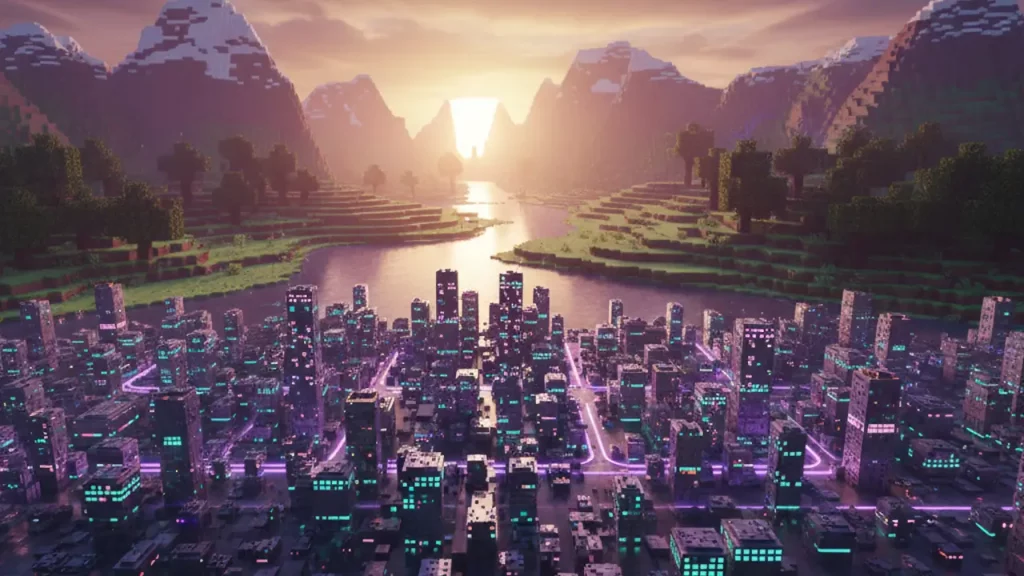
The future of AI game development, spotlighted by Oasis, promises a shift toward collaborative, hybrid models where AI partners with humans to redefine creation and play. Traditional gamedev might evolve from rigid scripting to procedural infinity, with AI generating endless variations of worlds, narratives, and mechanics on demand. This could reduce team sizes, as AI handles repetitive tasks like asset creation or bug testing, allowing designers to focus on high-level vision. Oasis 2.0’s real-time transformations, enabling style shifts mid-game at 1080p/30 FPS, hint at games that adapt to player preferences dynamically, enhancing replayability and personalization.
Changes may include ethical considerations around data use—training on vast datasets raises IP questions, prompting new standards for fair sourcing. Inclusive development could flourish, empowering indie creators without deep technical skills to build sophisticated experiences via APIs and mods. However, job shifts loom; roles might pivot from coding to AI oversight, requiring upskilling. Oasis signals potential for genre-blending, like merging simulation with XR for immersive worlds transformed by voice commands, as seen in DecartXR.
Broader impacts involve community-driven evolution, with open-source contributions accelerating progress. Challenges like ensuring consistency and addressing biases in AI outputs will drive research, but the promise of accessible, innovative gamedev outweighs them. Ultimately, Oasis exemplifies a transformative era where games become living ecosystems, co-created in real time, fostering creativity and inclusivity while navigating new ethical landscapes. Decart Oasis world model
Conclusion and CTA — Who Should Try It, Who Should Wait; Gently Guide the Reader to www.aiinovationhub.com
To sum up, the Decart Oasis world model offers an enthralling gateway to AI-simulated realms, perfect for tech enthusiasts, developers, and gamers keen on exploring generative technologies. With Oasis 2.0’s 2025 enhancements, including higher resolutions, Minecraft mods, and XR integrations, it’s more accessible than ever—dive into the free demo to experience real-time world-building firsthand, sparking ideas and learning opportunities. If you’re an early adopter thrilled by boundary-pushing innovations, start now; it’s cost-free and revealing.
That said, if you crave fully polished, glitch-free gameplay akin to AAA titles, it might be wise to wait for further refinements, such as even smoother performance or expanded features on the horizon. For deeper insights into these cutting-edge developments, head over to www.aiinovationhub.com, where you can delve into this “world-simulator” that once seemed like pure science fiction but is now readily available to run and tinker with. Join the community, share your experiences, and stay ahead in the AI innovation wave! Decart Oasis world model
If Oasis feels like AI is reinventing entertainment, Truewind shows how the same wave is rewriting business operations. It’s an AI-powered bookkeeping service built to close your monthly books faster and with fewer headaches — especially for founders who’d rather build than chase spreadsheets. Here’s the full breakdown: https://aiinnovationhub.shop/truewind-ai-bookkeeping-automation/
Decart Oasis world model
Discover more from AI Innovation Hub
Subscribe to get the latest posts sent to your email.