
Hey everyone, welcome back to the channel! Today, we’re diving deep into one of the hottest debates in tech right now: Perplexity AI vs Google. If you’ve been scrolling through your feeds or chatting with friends about AI, you’ve probably heard whispers about this “killer” of traditional search. I’m super excited to break it all down for you in this video-style rundown – think of me as your friendly guide through the world of AI search. We’ll cover everything from what makes Perplexity AI stand out as an answer engine to how it stacks up against the giant that is Google
. By the end, you’ll know exactly when to switch tabs and why this could change how you hunt for info online.
First off, why is everyone buzzing about Perplexity AI vs Google? Well, in 2025, search isn’t just about typing keywords and scrolling through blue links anymore. Perplexity AI is shaking things up by acting like a smart assistant that gives you direct answers, backed by real-time web scans and citations. It’s not trying to replace Google entirely – yet – but it’s carving out a niche for quick, ad-free insights. Imagine asking a question and getting a concise summary with sources, instead of wading through sponsored results. That’s the promise.
What sets an answer engine apart from a classic search engine? Traditional ones like Google index the web and rank pages based on algorithms, SEO, and user behavior. But Perplexity AI flips the script: it uses AI models to understand your query, scour the internet in real time, and synthesize a response. No more clicking through 10 tabs – it’s like having a research buddy who does the heavy lifting. From official sources like Perplexity’s own site, it’s designed for accuracy and trust, pulling from fresh data without the clutter.
In this post, I’ll promise you a fair breakdown: We’ll see where Perplexity AI shines in speed and cleanliness, like for fact-checking or research, and where Google still dominates, such as local searches or maps. Stick around because we’ll hit on Perplexity AI vs Google every step of the way, with real examples to help you decide. If you’re a content creator, student, or just someone tired of ad overload, this is for you. Let’s jump in!
If you’re fascinated by how Perplexity AI challenges Google, you’ll probably enjoy exploring another “reasoning-first” approach to search and answers. Check out our in-depth breakdown of xAI’s Grok 3 as a powerful reasoning agent inside X: https://aiinovationhub.com/aiinnovationhub-xai-grok-3-reasoning-agent-x/ and see how it redefines real-time information flows online today for creators everywhere.
What is Perplexity AI Answer Engine and the New Format of Search
Alright, folks, let’s get into the nitty-gritty: What exactly is Perplexity AI as an answer engine, and how does it redefine search? If you’re like me, you’ve probably used Google for years, but Perplexity AI is like the cool new kid on the block – it’s an AI-powered platform that doesn’t just list links; it answers your questions directly. From their official website, Perplexity describes itself as a free AI answer engine that delivers accurate, trusted, and real-time responses to any query. It’s not your typical Perplexity AI search engine; it’s more evolved, focusing on synthesizing information rather than dumping results.
Here’s how it works: You type in a question, and Perplexity scans the web using advanced AI models – think a mix of large language models and real-time indexing. It pulls from credible sources, summarizes the key points, and cites everything so you can verify. No ads interrupting, no endless scrolling. For example, ask about the latest tech news, and it’ll give you a bullet-point breakdown with links to articles from sites like TechCrunch or Forbes. This is a game-changer because, unlike traditional search engines, you don’t have to piece together info from multiple pages. Perplexity AI answer engine saves time, especially for busy pros.
But is it really a Perplexity AI search engine? Kinda, but better – it’s hybrid. It combines conversational AI with web crawling, making it feel like chatting with an expert. Official reviews from 2025, like those on PCMag and Zapier, praise its speed and accessibility for casual users. No need to refine keywords endlessly; natural language works fine. Imagine researching a topic: Perplexity organizes threads, saves queries, and even suggests follow-ups. It’s perfect for when you want depth without the hassle.
Of course, in the Perplexity AI vs Google debate, this format shines for knowledge-heavy tasks. Google might overwhelm with volume, but Perplexity curates. From Perplexity’s blog, they emphasize real-time capabilities, pulling fresh data that Google sometimes lags on. If you’re into Perplexity AI answer engine vibes, try it for quick facts – it’s addictive! We’ll compare more later, but this new format? It’s the future, no doubt.
Perplexity AI Review: Interface, Tariffs, and User Experience
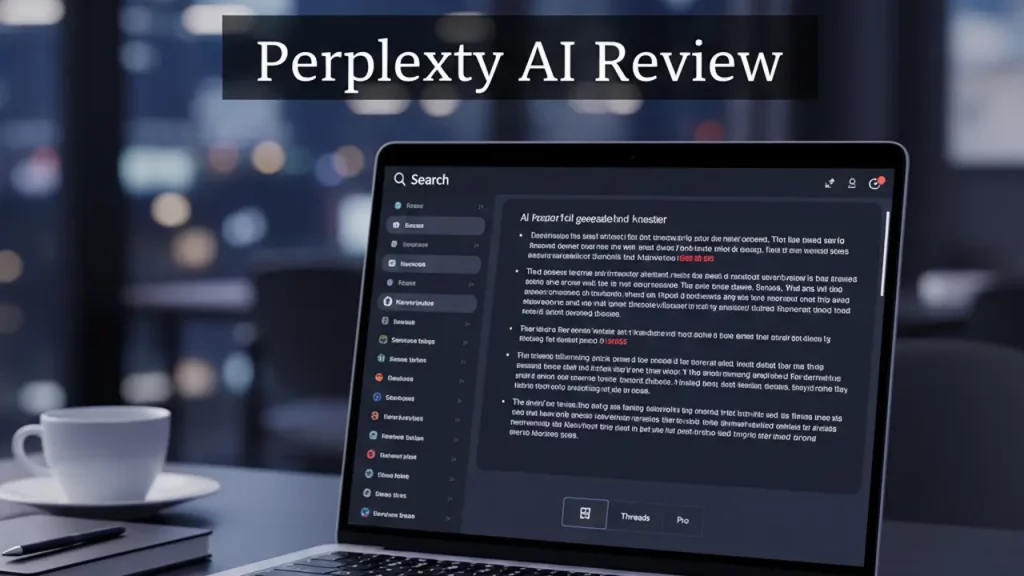
Hey team, time for an honest Perplexity AI review – let’s talk interface, pricing, and how it feels to use in real life. As someone who’s tested tons of AI tools, Perplexity stands out for its clean, intuitive design. From their official site, the interface is chat-based: You start a “thread” for your query, and it builds conversations like a smarter version of messaging. Features include saved searches, themed collections (like for research topics), and easy sharing. No clutter – just your question, the AI’s response, and cited sources popping up neatly.
Pricing-wise, Perplexity keeps it simple. There’s a free tier with unlimited quick searches and limited Pro features, perfect for casual users. The Pro plan, as detailed on their hub, unlocks advanced models, more queries per day, and extras like file uploads for analysis. It’s not a “phone book” of tariffs; think affordable monthly subs around $20, but check their site for exacts since it evolves. In 2025 reviews from sources like Humai.blog and Index.dev, users love the value – Pro handles 780M+ monthly queries globally, showing scalability.
Who does Perplexity AI fit best? Content creators dig it for brainstorming without ads; analysts use it for data synthesis; students for homework without plagiarism risks, thanks to citations; and entrepreneurs for market insights. My experience? It’s snappy – responses in seconds, with real-time updates. Compared to Google, it’s less overwhelming for focused tasks. Perplexity AI review scores high on usability in Zapier’s 2025 roundup, beating out others for research ease.
One cool perk: The mobile app integrates voice and image search, making it great on-the-go. Drawbacks? Free limits can hit hard during heavy use, but Pro fixes that. Overall, if you’re tired of Google’s ad-heavy pages, this Perplexity AI review says give it a shot. It’s user-friendly, powerful, and evolving fast in the Perplexity AI vs Google arena.

Perplexity AI Fact Checking and Perplexity AI Real Time Search
What’s up, viewers? Let’s zoom in on Perplexity AI fact checking and Perplexity AI real time search – two features that make it a powerhouse. From official guides on Perplexity’s blog, their real-time search scans the web instantly, pulling from fresh sources like news sites and journals. This isn’t cached data like some engines; it’s live, ensuring up-to-date info. Why matters? For fact-checking, it means verifying claims with current evidence, reducing misinformation risks.
Take examples: Query “latest election results” – Perplexity cites real-time articles from Reuters or BBC, summarizing without bias. Or “COVID vaccine updates 2025” – it pulls peer-reviewed studies, highlighting changes. Perplexity AI fact checking excels here because every answer includes inline citations, making verification a breeze. As per MeetGeek’s guide, this transparency beats traditional searches where you hunt for sources yourself.
Perplexity AI real time search shines for trends too: Stock prices, sports scores, or viral news – it delivers structured overviews with links. Users in business or journalism love this for quick comparisons, like “compare iPhone 16 vs Galaxy S25 specs,” pulling fresh reviews. From DataStudios.org, it’s ideal for mobile fact-checking, scanning indexed content for short, sourced answers.
In Perplexity AI vs Google, this edges out for timeliness; Google might show older results unless you filter. But Perplexity’s AI synthesizes, spotting inconsistencies for better fact-checking. Risks? Always double-check, as AI can err, but citations help. Official stats from Index.dev show 780M queries monthly, proving trust. If you’re into news or research, Perplexity AI fact checking and real time search are must-tries – fast, reliable, and ad-free!

Perplexity AI for Research: Tool for Learning and Business
Yo, let’s talk Perplexity AI for research – this thing is a beast for students, businesses, and anyone digging deep. Officially, Perplexity’s Deep Research feature (launched 2025) automates hours of work: It runs multiple searches, reads hundreds of sources, and compiles reports with citations. Perfect for academic papers, product launches, or competitor analysis.
Scenarios? Students use it for essays – query “history of quantum computing,” get structured timelines with sources from journals. Freelancers scout trends, like “2025 marketing strategies,” saving time on synthesis. Small business owners analyze markets: “EV battery competitors” yields overviews, SWOTs, and data points. Investors? “Crypto regulations 2025” pulls global insights fast. From Perplexity’s enterprise blog, BD teams use it for prospecting and RFPs, filling gaps efficiently.
How it saves time: Structured answers with quotes mean no manual note-taking. Reddit users and LinkedIn pros rave about prompts like “summarize with pros/cons” for clarity. In business, integrate with tools for workflows – think RFPs or strategy docs. Perplexity AI for research trumps Google by curating, not just listing.
From Netcomlearning.com, it’s like an AI researcher: Gathers, synthesizes, cites. For learning, it suggests follow-ups, building knowledge threads. Limitations? Niche topics might need verification, but overall, it’s transformative. If you’re in education or biz, Perplexity AI for research cuts hours, boosts productivity – pair it with your flow for max impact.
Perplexity AI vs ChatGPT: Answer Engine Against Chatbot
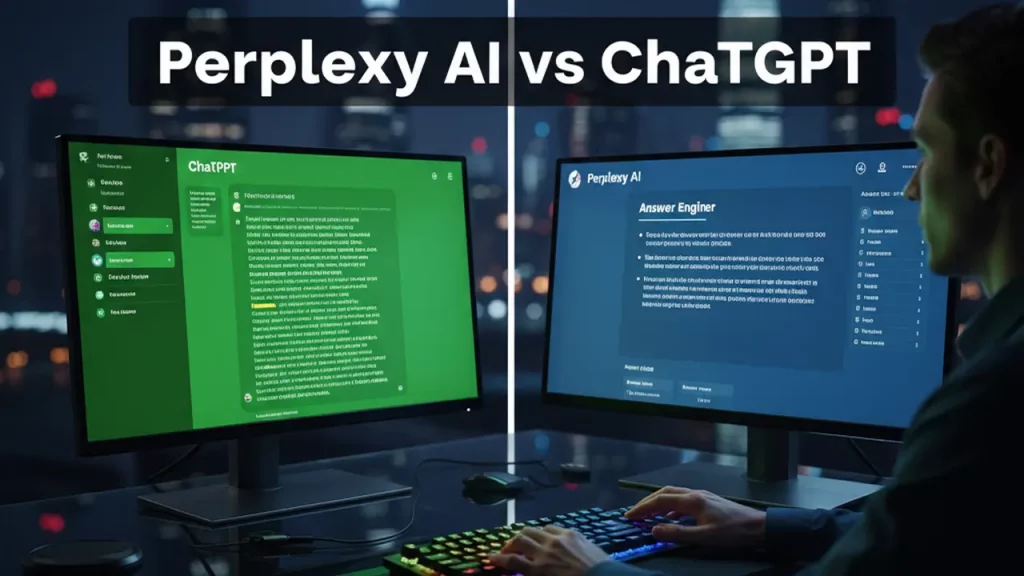
Hey squad, now for Perplexity AI vs ChatGPT – answer engine vs chatbot showdown! From Zapier’s 2025 comparison, Perplexity focuses on search-like accuracy with citations, while ChatGPT (from OpenAI) excels in conversational creativity. User view: Perplexity gives sourced facts; ChatGPT chats like a friend, generating ideas.
Differences? Perplexity pulls real-time web data – great for “current events.” ChatGPT relies on trained knowledge (up to cutoffs), better for “brainstorm blog ideas.” Tests on G2 show Perplexity wins speed/depth for research; ChatGPT for structured outputs like code or stories.
When to choose: Hit ChatGPT for creative tasks – writing, ideation, fun roleplay. Open Perplexity for fact-checking, links, real-world queries like “best laptops 2025.” Combine? Use Perplexity for research, feed to ChatGPT for polishing. From eWeek, Perplexity’s research edge vs ChatGPT’s versatility.
In daily work, I swap: Perplexity for quick facts, ChatGPT for drafting. Perplexity AI vs ChatGPT isn’t zero-sum – both elevate productivity. Official from Perplexity: They’re complementary tools.
AI Answer Engine vs Search Engine: What It Means for SEO and Content
Alright, peeps, let’s unpack AI answer engine vs search engine and its SEO shake-up. From Forbes 2025, AI like Perplexity destroys traditional SEO by prioritizing direct answers over links. Traditional search (Google) ranks via keywords, backlinks; answer engines synthesize, needing AEO (Answer Engine Optimization) – clear, factual content for AI pickup.
For site owners: Difference means optimizing for questions, not just terms. Semrush notes traditional SEO ensures visibility; AI SEO enhances for platforms like Perplexity. AEO complements SEO with structured data, direct answers. Outpace SEO says AEO shares snippets in AI responses, boosting traffic indirectly.
Implications? Content must be authoritative, cited – AI favors quality. GEO (Generative Engine Optimization) rises, per Business Insider tips from Google/Perplexity: Use quotes, stats for citations.
If you want to master this, check our marketplace at www.aiinnovationhub.shop – we’ve got AI stacks, prompts for content, SEO, automation. It’s your hub for thriving in AI answer engine vs search engine world!

How to Use Best AI Search Engine 2025 for Choosing Gadgets and Tech
What’s good? Let’s explore using the best AI search engine 2025 – Perplexity AI search engine – for gadgets. PCMag/Zapier crown Perplexity top for 2025, with real-time scans for devices like laptops/smartphones.
Examples: Query “best Chinese laptops 2025” – gets comparisons, reviews from TechRadar, no ads. “iPhone vs Huawei specs” pulls obzors, user feedback. It’s the best AI search engine 2025 for unbiased picks.
When Perplexity highlights Chinese laptops, head to www.laptopchina.tech – detailed tests, autonomy, buying tips beyond ads.
For smartphones/gadgets, post-Perplexity, visit www.smartchina.io – obzors, lifestacks for Chinese tech, user-friendly.
Perplexity as best AI search engine 2025 streamlines choices – fast, sourced!

Limitations and Risks: What Perplexity AI Cannot Do and What to Remember
Perplexity AI, while innovative, possesses several inherent limitations and associated risks that users must consider to ensure effective and secure utilization. Drawing from established sources, one prominent concern revolves around privacy and data protection. For instance, analyses indicate that Perplexity AI engages in extensive data collection practices, particularly with its expansion into web browsing functionalities in 2025, which may facilitate tracking for advertising purposes. Furthermore, compliance with regulations such as the EU AI Act, effective from August 2025, necessitates transparency and risk assessments for high-risk systems, yet Perplexity’s handling of sensitive information raises flags regarding data security. Organizations and individuals dealing with confidential data should exercise caution, as the platform’s data processing may not fully align with stringent protection standards.
In comparison to Google, Perplexity AI demonstrates weaknesses in specific functional areas. It lacks robust integration for local searches, mapping, and navigation services, which Google excels in through its ecosystem of tools like Google Maps. Additionally, complex or nuanced queries may not be handled with the same depth, as Perplexity’s reliance on AI synthesis can overlook subtle contextual elements that traditional search engines manage through broader indexing. For specialized topics, inaccuracies persist, including in niche domains where the AI may produce inconsistent outputs or fail to capture comprehensive details. Hallucinations—fabricated or erroneous information—remain a challenge, despite efforts to mitigate them through citations.
Legal and ethical considerations further underscore the risks. Perplexity AI’s paraphrasing of sources has prompted discussions on copyright infringement and intellectual property violations, as it aggregates and rephrases content from publicly available materials without always securing explicit permissions. Reports highlight instances where the platform employs undeclared crawlers to bypass website directives against scraping, potentially violating terms of service and raising ethical questions about content sourcing. Moreover, ongoing lawsuits involving Perplexity, such as those related to data practices and partnerships, introduce uncertainties for enterprise users. Security vulnerabilities in its applications could expose users to breaches, emphasizing the need for vigilant monitoring.
It is imperative for users to critically evaluate all responses, even those accompanied by links, as AI systems are not infallible. Reviews consistently stress the importance of independent verification to avoid reliance on potentially flawed outputs. By acknowledging these limitations—such as reduced capabilities in dialogue maintenance and context awareness compared to alternatives like ChatGPT—users can better integrate Perplexity AI into workflows while mitigating risks. In summary, while Perplexity offers valuable features, a balanced approach involving cross-verification and awareness of privacy implications is essential for responsible use.
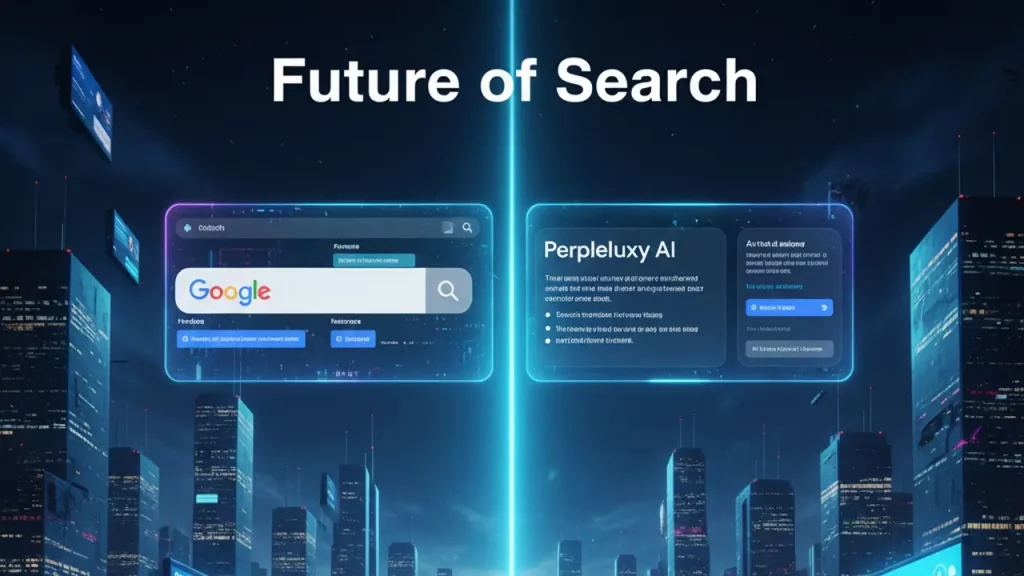
Conclusions: Will Perplexity AI vs Google Remain the Main Battle for the Future of Search?
In evaluating Perplexity AI against Google, it is evident that each platform serves distinct strengths within the evolving search landscape. Perplexity excels in delivering concise, ad-free answers supported by real-time citations, making it particularly advantageous for research and quick fact-finding. Conversely, Google maintains superiority in breadth, including local services and integrated ecosystems, which provide comprehensive results for everyday navigational queries. Forecasts for 2025 and beyond suggest a trend toward coexistence rather than outright replacement, with users increasingly adopting hybrid approaches to leverage the best of both worlds. Analyses project that AI-powered search tools like Perplexity will continue to grow, potentially capturing a larger market share through innovations in agentic AI integration.
Looking ahead, Perplexity’s trajectory indicates significant expansion, with 780 million monthly queries in 2025, reflecting a tripling from the previous year and annualized revenue exceeding $100 million. Strategic moves, such as its interest in acquiring Google’s Chrome browser amid antitrust considerations, could reshape the competitive dynamics, valuing the asset at up to $50 billion and positioning Perplexity as a formidable rival. However, challenges like reduced click-through rates to original websites due to AI summaries may impact content ecosystems, as observed in mid-2025 studies. Comparative assessments, including those pitting Perplexity against Google’s Gemini, highlight ongoing advancements in features and performance, suggesting the battle will intensify through 2030.
For practical integration, professionals are advised to incorporate Perplexity for targeted factual inquiries while relying on Google for mapping and broader explorations. This dual strategy minimizes informational overload and maximizes efficiency.
To explore further developments in AI tools and the future of search, resources are available at aiinovationhub.com. For curated AI solutions, visit www.aiinnovationhub.shop. Additionally, for specialized technology selections that align with Perplexity’s capabilities, consider laptopchina.tech and smartchina.io as reliable references.
Discover more from AI Innovation Hub
Subscribe to get the latest posts sent to your email.