
Science has always moved at the pace of human patience. Experiments take months. Calculations take years. Some questions sit unanswered for decades simply because there aren’t enough hours or hands to test every possibility. But something remarkable is happening right now: artificial intelligence is beginning to compress those timelines from years into minutes. Welcome to the era of AI for scientific discovery, where machines don’t just crunch numbers, they help researchers imagine, predict, and create in ways that were pure science fiction just a few years ago. Let’s explore how this quietly powerful shift is reshaping medicine, chemistry, materials, and even our understanding of the weather.
What Is AI for Scientific Discovery?
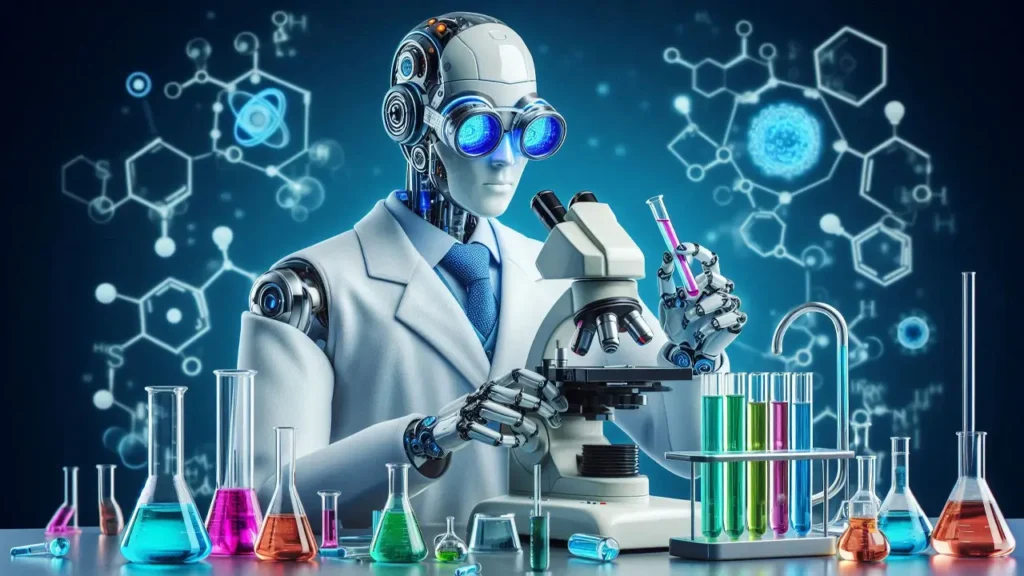
At its simplest, AI for scientific discovery means using artificial intelligence, especially machine learning, to accelerate and improve the way scientists find new knowledge. Instead of relying only on manual experiments and human intuition, researchers now train computer models on enormous datasets so those models can spot patterns, make predictions, and even suggest brand-new ideas that people might never have considered.
Think of machine learning for science as a tireless research assistant that has read millions of studies, memorized countless data points, and can test thousands of hypotheses in the time it takes you to make a cup of coffee. Machine learning is a branch of AI where systems learn directly from data rather than following rules a programmer wrote by hand. The more high-quality data they see, the sharper their predictions become.
The reason this matters so much is that modern science generates staggering amounts of data. A single genomics project or particle physics experiment can produce more information than any team could analyze in a lifetime. AI thrives exactly here. It identifies meaningful trends inside massive datasets, predicts outcomes based on those patterns, and simulates complex biological and physical scenarios. What used to require guesswork and luck is increasingly guided by data-driven insight, and that changes everything about how fast we can move from a question to an answer.
Why AI Is Becoming Essential for Modern Research
For a long time, AI in science was a helpful add-on, a nice tool for sorting data. That is no longer true. Scientific AI models have become central to how cutting-edge research gets done, and the reasons are practical rather than hype-driven.
The first reason is scale. Human researchers simply cannot examine every possible molecule, material, or weather pattern by hand. The space of possibilities is astronomically large. AI can explore that space systematically and rank the most promising candidates so scientists focus their limited lab time on the options most likely to succeed.
The second reason is speed. Traditional methods often involve slow, expensive, trial-and-error work. AI can shrink experiments that once took months into calculations that finish in minutes, freeing scientists to iterate faster and pursue more ambitious questions.
The third reason is the rise of generative AI for research. Older AI mostly recognized patterns or classified data. Newer generative models can actually propose novel structures, from candidate drug molecules to entirely new crystal designs. In a widely discussed 2025 position paper, researchers argued that foundation models such as GPT-4 and AlphaFold are catalyzing a transition toward a new scientific paradigm, moving from tools that simply enhance existing workflows toward systems that act as genuine research collaborators. That’s a profound shift: AI is no longer just answering questions, it’s helping decide which questions to ask.

AndreevWebStudio.com
Professional web development and design services. Custom WordPress sites, landing pages, e-commerce solutions, and 3D printing content creation for businesses and creators.
- • WordPress Development
- • Custom Web Design
- • E-Commerce Solutions
- • 3D Printing Content
AI Drug Discovery Is Changing Pharmaceutical Development
Nowhere is the impact more visible, or more human, than in medicine. Developing a new drug has traditionally been brutally slow and expensive. Pharmaceutical companies often spend enormous sums attempting to bring a single drug to market, and once a candidate reaches clinical trials, its odds of eventual success have historically hovered around just 10 percent. AI drug discovery is a direct response to that painful reality.
The breakthrough that captured the world’s imagination was AlphaFold, developed by Google DeepMind. For decades, predicting how a protein folds into its three-dimensional shape from its amino acid sequence was one of biology’s grand unsolved challenges, and the shape matters enormously because it determines what the protein does. AlphaFold2 essentially cracked this problem. The achievement was so significant that in 2024, Demis Hassabis and John Jumper of Google DeepMind were awarded the Nobel Prize in Chemistry for protein structure prediction, sharing the prize with David Baker for computational protein design.
The scale of AlphaFold’s impact is hard to overstate. By October 2024, the model had been used by more than two million people across 190 countries, and DeepMind used it to predict the structures of nearly all of the roughly 200 million proteins known to science. Work that once took years, if it succeeded at all, can now be done in minutes.
AI in pharmaceutical research is now moving from prediction into actual drug creation. Isomorphic Labs, a company spun out of DeepMind, is building an AI drug design engine and has secured major partnerships with pharmaceutical giants including Novartis, Eli Lilly, and Johnson & Johnson. In 2025 the company raised 600 million dollars in its first external funding round, and its leadership has stated it expects to begin its first human clinical trials for AI-designed drugs by the end of 2026, focusing initially on oncology and immunology. Other companies are moving quickly too. Insilico Medicine reported taking a generative-AI-designed compound from initial hypothesis into Phase I trials in roughly 27 months, compared with a historical median closer to 60 months.
| R&D Pipeline Stage | Traditional Approach | AI-Assisted Approach |
|---|---|---|
|
Protein structure
Target Identification
|
Months to years of intensive lab work | Minutes with AlphaFold |
|
Candidate molecules
Lead Generation
|
Manual trial and error filtering | Generated and ranked contextually by AI |
|
Discovery to Phase I
Pre-Clinical Pipeline
|
Around 60 months (median) | As fast as ~27 months (reported velocity) |
Pre-Clinical Velocity
AI Accelerated Pipeline~60 months
-55% Time reduction
Targeting & Molecules
Methodology AnalysisAI for Chemistry and Molecular Design
Chemistry sits at the heart of drug discovery, and AI for chemistry is transforming how scientists design molecules from the ground up. The central challenge in chemistry is that the number of possible molecules is almost unimaginably vast, larger than the number of stars in the observable universe. Testing them all in a lab is impossible, so chemists have always had to rely on experience and educated guesses.
AI changes the game by learning the underlying rules of chemistry from data. Foundation models for chemistry learn a representation of chemical structures so that patterns in the data capture the real physical and chemical properties of a molecule. Once a model understands these relationships, it can predict how a proposed molecule will behave, whether it will be stable, and how it might interact with a target in the body, all before a single test tube is touched.
This connects directly back to AI drug discovery. The latest generation of AlphaFold, AlphaFold 3, released in May 2024, goes beyond folding single proteins. It can predict the structures of complexes formed when proteins interact with DNA, RNA, various ligands, ions, and drug-like compounds, showing a substantial improvement in accuracy for these molecular interactions compared to earlier methods. That capability is exactly what medicinal chemists need, because most drugs work by binding to a target molecule, and understanding that binding is the key to designing effective, safe treatments.
Generative models take this further by actively proposing new molecular candidates tailored to a specific disease target. Instead of screening existing chemical libraries, researchers can ask an AI to design something entirely new, then use predictive models to filter for the candidates most likely to fold correctly, bind effectively, and avoid toxicity. It’s a shift from searching for a needle in a haystack to designing the needle on purpose.
AI in Materials Science Creates the Next Generation of Materials
Almost every modern technology, from batteries and solar panels to computer chips, depends on inorganic crystals, and those crystals must be stable or they simply fall apart. For decades, discovering new stable materials was painfully slow, a matter of tweaking known crystals or trying new element combinations through expensive, months-long experimentation. AI in materials science has rewritten that story dramatically.
The landmark example is GNoME, short for Graph Networks for Materials Exploration, another tool from Google DeepMind. In research published in the journal Nature in late 2023, DeepMind announced that GNoME had discovered 2.2 million new crystal structures, including roughly 380,000 that it predicted to be stable and therefore promising candidates for real-world use. To put that in perspective, human experimentation and earlier computational methods had identified only tens of thousands of such materials over the previous decade, so DeepMind described the achievement as equivalent to nearly 800 years of accumulated knowledge.
What makes this especially exciting is that these predictions have started to be confirmed in the real world. More than 736 of GNoME’s newly predicted materials were independently verified through concurrent physical experiments by outside researchers, and the 380,000 most stable candidates were added to the Materials Project, an open-access database maintained at Lawrence Berkeley National Laboratory, so scientists everywhere can build on them.
It’s worth noting the honest complexity here, because good science includes healthy scrutiny. Some researchers have pointed out that a portion of GNoME’s predicted stable structures may be near-duplicates of already-known crystals, raising fair questions about how many truly represent novel, useful materials. This kind of debate is a normal and healthy part of a fast-moving field, and it highlights an important theme: AI generates powerful leads, but human expertise and experimental validation remain essential. The role of foundation models for science here is to explore a vast space of possibilities far faster than humans could, giving researchers a huge head start rather than a finished answer.
Climate Modeling AI Improves Weather and Environmental Forecasting
Weather affects all of us, from how we dress in the morning to whether communities have time to prepare for a dangerous storm. Traditional weather forecasting relies on physics-based simulations that model the atmosphere using the laws of physics. These systems are remarkable achievements, but they are also slow and expensive, often requiring hours of computation on supercomputers with hundreds of machines. Climate modeling AI offers a strikingly different approach.
Google DeepMind’s GraphCast, described in a paper published in the journal Science in December 2023, is a leading example of AI climate prediction in action. Rather than simulating physics step by step, GraphCast learns patterns directly from decades of historical weather data. The results are impressive: in a head-to-head comparison across 1,380 verification targets, GraphCast outperformed the industry gold-standard High Resolution Forecast produced by the European Centre for Medium-Range Weather Forecasts on around 90 percent of measures.
The speed difference is just as striking. A conventional 10-day forecast can take hours on a supercomputer, while GraphCast can produce a full 10-day global forecast in under one minute on a single machine. And this isn’t just about convenience. GraphCast has shown real value for extreme weather. In September 2023, it accurately predicted around nine days in advance that Hurricane Lee would make landfall in Nova Scotia, and it has demonstrated skill at tracking cyclone paths, identifying atmospheric rivers linked to flooding, and flagging the onset of extreme temperatures earlier than previous methods. That extra warning time can genuinely save lives.
The scientific community has embraced this shift. The European Centre for Medium-Range Weather Forecasts, one of the most respected forecasting bodies in the world, moved its own AI-based forecasting model to operational status in 2024, becoming the first major meteorological agency to do so. That’s a powerful signal that climate modeling AI has moved from experiment to trusted, everyday tool.
| Evaluation Feature | Traditional Forecast | GraphCast AI |
|---|---|---|
|
10-day forecast time
Compute Latency
|
Hours on a supercomputer cluster | Under one minute |
|
Accuracy comparison
Prediction Fidelity
|
Industry standard baseline | Better on ~90% of verification targets |
|
Hardware needed
Infrastructure Load
|
Hundreds of distributed machines | A single machine acceleration node |
GraphCast AI
Accelerated Modeling~90% Targets
Single Node
Traditional Benchmark
Legacy SupercomputingFoundation Models for Science: The New Research Revolution
You may have noticed a common thread running through drug discovery, chemistry, materials, and climate. That thread is the rise of foundation models for science. So what exactly are they?
Foundation models are large-scale AI systems trained on massive, diverse datasets so they can be adapted to a wide range of tasks rather than being built for just one narrow job. The term was coined by researchers at Stanford, and these models are typically trained using self-supervised learning on enormous bodies of data, which lets them capture general patterns that transfer across many downstream applications. AlphaFold is a celebrated example in biology, but the concept now spans chemistry, materials science, climate, genomics, and beyond.
Why does this matter for scientific AI models? Because a foundation model trained on the underlying structure of chemistry or physics becomes a reusable engine. Researchers can fine-tune it for many specific problems instead of building a fresh model from scratch each time. In materials science and chemistry, a foundation model learns a representation that captures the physical and chemical properties of a system, and that same representation can then power simulations, guide experimental design, or fuel discovery tools across countless projects.
The significance of this trend is being recognized at the highest levels. In 2025, the U.S. National Academies of Sciences, Engineering, and Medicine published a study, requested by the Department of Energy, examining how foundation models could transform scientific discovery and innovation across the national laboratory system. The report explored how these models can complement traditional computational methods, acting as fast surrogates for expensive physics simulations in fields ranging from fusion and turbulence to Earth systems science. When national academies begin planning research strategy around a technology, it’s a clear sign that foundation models have become a genuine pillar of modern science rather than a passing trend.
Benefits and Challenges of AI for Scientific Discovery
It would be easy to get swept up in the excitement, but a balanced view of AI for scientific discovery means being honest about both the remarkable benefits and the real challenges. Machine learning for science offers extraordinary advantages, yet it also introduces genuine risks that responsible researchers take seriously.
On the benefits side, the gains are transformative. AI dramatically accelerates discovery, turning years of work into minutes. It reduces cost by narrowing enormous search spaces to a manageable set of promising candidates before any physical experiment begins. It expands what’s possible, exploring chemical and material spaces far too vast for humans to search by hand. And by making tools like AlphaFold freely available, it democratizes cutting-edge capability, putting powerful methods into the hands of millions of researchers worldwide, including those without access to expensive infrastructure.
The challenges deserve equal attention. One is the problem of hallucination and reliability. Generative models can produce plausible-looking outputs that turn out to be wrong, a risk explicitly acknowledged even in the technical documentation for advanced systems like AlphaFold 3. Another is data quality, since a model is only as good as the data it learns from, and biased or incomplete data leads to unreliable predictions.
There is also the duplicate and validation issue seen with GNoME, where a share of AI-generated results may not represent true breakthroughs and require careful experimental confirmation. Finally, there is a deeper question of trust: as AI becomes woven into research, the scientific community must decide how much to rely on tools whose reasoning can be difficult to fully inspect.
| Strategic Benefits | Critical Challenges |
|---|---|
| • Faster discovery timelines. | Risk of hallucinated or non-replicable results. |
| • Lower research and operational costs. | Heavy dependence on baseline training data quality. |
| • Wider democratized access to advanced compute tools. | Continuous need for mandatory wet-lab experimental validation. |
| • Exploring vast combinatoric possibilities at scale. | Evolving questions of system trust, bias, and transparency. |
- • Velocity: Rapidly accelerated discovery and modeling timelines.
- • Cost: Drastic reduction in initial research and screening overhead.
- • Access: Democratization of expert-level research tools.
- • Scale: Ingesting and evaluating vast combinatoric spaces.
- • Hallucinations: Risk of generating false-positive scientific data.
- • Data Skew: High sensitivity to sparse or biased training sets.
- • Validation: Hard requirement for subsequent empirical testing.
- • Trust: Black-box opacity and lack of interpretability.
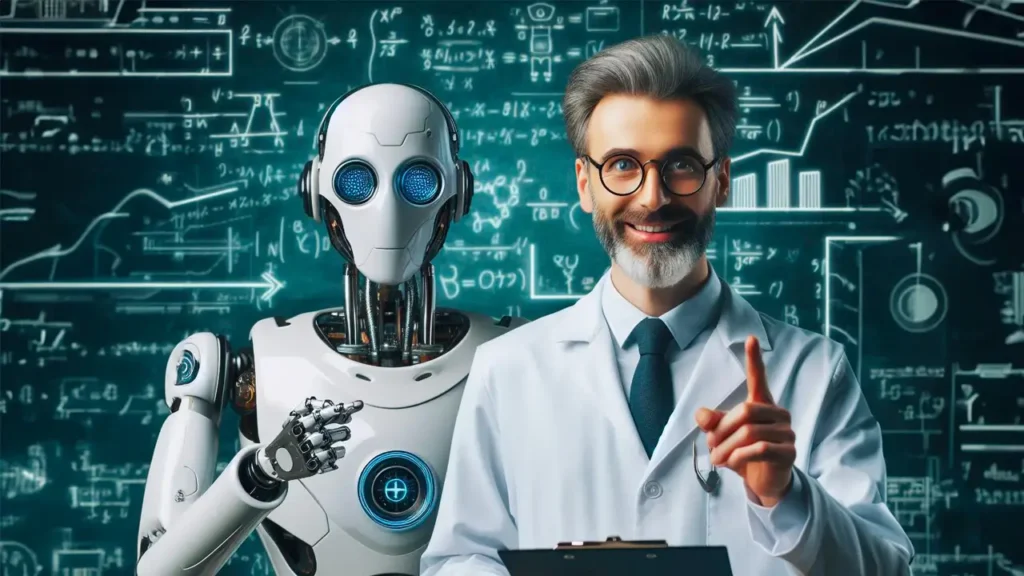
The key takeaway is that AI works best as a partner to human scientists, not a replacement. It generates leads at incredible speed, and human expertise validates, interprets, and refines those leads into real knowledge.
Real-World Examples of AI in Scientific Research
Sometimes the clearest way to understand a trend is to look at concrete examples. Across AI in pharmaceutical research, AI in materials science, and climate modeling AI, real projects are already delivering results that were unthinkable a decade ago.
In pharmaceutical research, AlphaFold predicted the structures of roughly 200 million proteins and made them freely available, giving over two million researchers a powerful foundation for studying disease and designing treatments. Building on that, Isomorphic Labs is designing its own drug candidates with AI and preparing for first-in-human clinical trials, backed by multi-billion-dollar partnerships with major pharmaceutical companies.
In materials science, GNoME discovered 2.2 million new crystal structures, added 380,000 stable candidates to a public database, and had more than 736 of them independently confirmed through physical experiments, opening doors for better batteries, solar panels, and semiconductors.
In climate and weather, GraphCast produces highly accurate 10-day forecasts in under a minute and gave nearly nine days of advance warning for a hurricane’s landfall, while a leading international weather agency has adopted AI forecasting for operational use.
| AI Tool / Model | Scientific Field | Key Breakthrough Achievement |
|---|---|---|
AlphaFold |
Biology / Pharma | Prediction of ~200M protein structures; recognized with the 2024 Nobel Prize. |
GNoME |
Materials Science | Discovery and structure prediction of 2.2M new inorganic crystals. |
GraphCast |
Climate / Weather | Generation of global 10-day medium-range weather forecasts in under one minute. |
AlphaFold
Life SciencesКартирование структуры практически всех известных белков. Фундаментальный прорыв, отмеченный Нобелевской премией по химии в 2024 году.
Physical & Earth Systems
DeepMind ModelsFuture of AI for Scientific Discovery: What Happens Next?
So where is all of this heading? The future of AI for scientific discovery looks less like a single dramatic breakthrough and more like a steady, accelerating transformation across every scientific field. Several clear directions are already coming into focus.
The first is the move toward AI as a true research collaborator. Today’s generative AI for research mostly assists with specific tasks, but experts increasingly describe a trajectory in which foundation models help frame problems, reason through evidence, and eventually operate as more autonomous scientific agents capable of proposing and testing hypotheses with limited human guidance. That vision raises exciting possibilities and important questions about oversight and trust in equal measure.
The second is deeper integration into real-world outcomes. In medicine, the coming years should bring the first drugs designed substantially by AI into human clinical trials, a genuine milestone that will test whether digital design translates into real cures. In materials, AI-predicted compounds will increasingly be synthesized and validated in automated labs, potentially unlocking better clean-energy technologies. In climate, AI climate prediction will keep improving, offering earlier and more precise warnings as extreme weather becomes more frequent.
The third direction is a stronger emphasis on reliability and responsible use. As the field matures, researchers are focusing on reducing hallucinations, improving validation, building better benchmarks, and combining data-driven AI with the physical laws that govern nature. The goal is not to replace human scientists but to amplify them, pairing the tireless speed of machines with the judgment, creativity, and ethical grounding that only people bring.
The bigger picture is genuinely inspiring. We are living through a moment when the pace of discovery itself is speeding up. Questions that once seemed permanently out of reach, from folding every protein to designing new materials to forecasting the atmosphere, are yielding to a partnership between human curiosity and machine capability. AI for scientific discovery isn’t just a new tool in the lab. It’s a new way of doing science, and we are only at the very beginning of what it can help us learn.
⭐⭐⭐⭐⭐
🇬🇧 James Whitfield · 5.0
A genuinely excellent read. The article breaks down complex topics like AlphaFold and GraphCast in a way that’s easy to follow, without dumbing anything down. I loved that every claim felt backed by real sources. The site is clean, fast, and mobile-friendly too. Bookmarked for sure!
🔗 https://andreevwebstudio.com/
⭐⭐⭐⭐⭐
🇪🇸 Lucía Fernández · 5.0
Un artículo fantástico y muy bien explicado. Me encantó cómo conecta la inteligencia artificial con la medicina, la química y el clima de forma clara y amena. La información está actualizada y las tablas se ven perfectas en el móvil. ¡Felicidades por el trabajo!
🔗 https://andreevwebstudio.com/
⭐⭐⭐⭐⭐
🇸🇦 Khalid Al-Mansouri · 5.0
مقال رائع ومفيد جدًا. شرح مبسّط وواضح لموضوع معقّد مثل الذكاء الاصطناعي في الاكتشافات العلمية. أعجبني أن المعلومات موثوقة ومن مصادر رسمية، والموقع سريع وسهل التصفح على الهاتف. شكرًا على هذا المحتوى المميز!
🔗 https://andreevwebstudio.com/
⭐⭐⭐⭐⭐
🇨🇳 李伟 (Li Wei) · 5.0
非常优秀的一篇文章!把 AlphaFold、GNoME 和 GraphCast 这些复杂的技术讲得通俗易懂,内容既专业又有趣。数据都来自官方来源,很可信。网站界面简洁,在手机上浏览也很流畅。强烈推荐!
🔗 https://andreevwebstudio.com/
⭐⭐⭐⭐⭐
🇫🇷 Camille Dubois · 5.0
Un article passionnant et très pédagogique. J’ai adoré la manière dont il explique l’IA dans la découverte de médicaments et la prévision météo, avec des exemples concrets et des chiffres fiables. Le site est agréable, rapide et parfaitement lisible sur mobile. Bravo !
🔗 https://andreevwebstudio.com/
⭐⭐⭐⭐⭐
🇩🇪 Sebastian Müller · 5.0
Ein wirklich gelungener Artikel! Komplexe Themen wie KI in der Materialforschung und Klimamodellierung werden verständlich und spannend erklärt. Besonders gut finde ich, dass alle Fakten aus offiziellen Quellen stammen. Die Webseite lädt schnell und sieht auf dem Smartphone top aus.
🔗 https://andreevwebstudio.com/