
The business technology landscape witnessed a significant milestone on February 24, 2026, with the introduction of Mercury 2, a groundbreaking reasoning AI model designed specifically for enterprise applications. Unlike conventional language models that excel at generating content, Mercury 2 represents a fundamental shift toward AI systems that can genuinely think through complex business problems, analyze multi-layered data scenarios, and deliver strategic insights with unprecedented depth.
This new class of reasoning AI models addresses a critical gap in enterprise technology. While traditional AI has automated routine tasks and generated reports, businesses have long needed systems capable of true analytical reasoning, the kind that mirrors how experienced strategists approach planning, forecasting, and decision-making. Mercury 2 fills this void by bringing advanced cognitive capabilities to business analytics, transforming how organizations leverage artificial intelligence for competitive advantage.
The timing of Mercury 2’s release aligns perfectly with the growing enterprise demand for decision intelligence platforms. Companies across industries are moving beyond simple automation, seeking AI partners that can navigate uncertainty, evaluate trade-offs, and recommend actions based on nuanced understanding of business contexts. Mercury 2 emerges as a purpose-built solution for this exact need, combining reasoning capabilities with practical business application.
What is Mercury 2 AI Model?
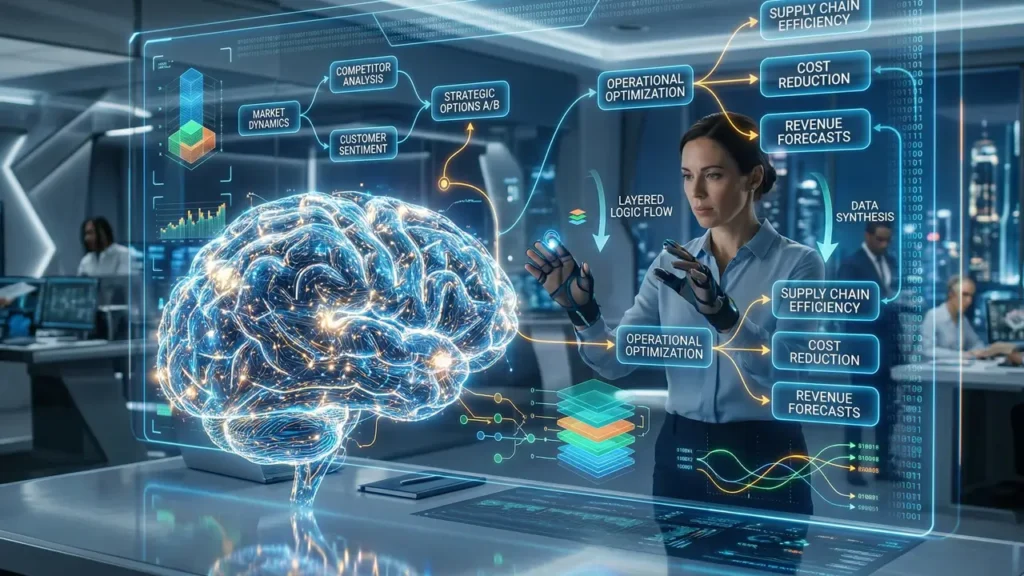
Mercury 2 belongs to a new generation of AI models that prioritize reasoning over pattern recognition. Rather than simply predicting the next word in a sequence or generating responses based on training data, Mercury 2 employs structured thinking processes to work through problems systematically. The model breaks down complex business questions into component parts, evaluates each element, considers multiple perspectives, and synthesizes findings into actionable recommendations.
At its core, Mercury 2 utilizes an architecture optimized for logical reasoning and analytical problem-solving. The system processes information through multiple reasoning layers, each designed to handle different aspects of business logic. When presented with a strategic planning challenge, for instance, Mercury 2 doesn’t just retrieve similar past examples. Instead, it constructs a reasoning framework specific to the current situation, weighs various factors, anticipates consequences, and builds its analysis from fundamental principles.
The model’s training involved extensive exposure to business scenarios, strategic frameworks, analytical methodologies, and decision-making processes across industries. This specialized training enables Mercury 2 to understand business contexts deeply, recognize patterns in market dynamics, and apply established strategic principles to novel situations. The result is an AI system that functions more like a highly experienced business analyst than a conventional chatbot.
Mercury 2 also incorporates advanced fact-checking and verification mechanisms. The model cross-references its reasoning against multiple knowledge sources, flags assumptions, and indicates confidence levels for different conclusions. This transparency proves crucial for enterprise adoption, where decision-makers need to trust and validate AI recommendations before acting on them.
How Reasoning AI Models Differ from Traditional LLMs
The distinction between reasoning AI models like Mercury 2 and traditional large language models represents one of the most important developments in artificial intelligence for business applications. Understanding this difference helps organizations deploy AI more effectively and set realistic expectations for what each type of system can accomplish.
Traditional language models, including widely-used systems like GPT variants, excel at understanding and generating human language. They predict probable next words based on patterns learned from vast text databases. When you ask such models to write an email, summarize a document, or answer factual questions, they perform remarkably well because these tasks align with their core strength, pattern matching and text generation.
However, when business challenges require genuine analytical thinking, traditional models show limitations. They might produce fluent explanations of business concepts, but they struggle with tasks requiring multi-step reasoning, maintaining logical consistency across complex arguments, or working through novel problems that demand structured analytical approaches rather than pattern recognition.
Mercury 2 and similar reasoning models approach problems fundamentally differently. They employ explicit reasoning mechanisms, actually working through problems step by step rather than simply generating plausible-sounding responses. When analyzing a business scenario, Mercury 2 identifies key variables, establishes relationships between factors, considers cause-and-effect chains, and builds conclusions through logical progression.
This difference becomes apparent in practical application. Ask a traditional language model to evaluate a market entry strategy, and it will likely generate a well-written analysis drawing on general business knowledge. Ask Mercury 2 the same question, and it will construct a reasoning framework specific to that market, systematically evaluate entry barriers, competitive responses, resource requirements, and risk factors, then synthesize findings into recommendations with explicit logical connections between evidence and conclusions.
The reasoning approach also enables better handling of uncertainty and incomplete information. Traditional models tend to generate confident-sounding responses regardless of data quality. Mercury 2, by contrast, explicitly reasons about what information is missing, how uncertainty affects different conclusions, and where additional data would most improve decision quality. This metacognitive capability makes reasoning models far more reliable for high-stakes business decisions.
Another crucial difference lies in consistency and coherence. Traditional language models sometimes contradict themselves across long conversations or complex analyses because they optimize for local coherence rather than global logical consistency. Reasoning models maintain explicit mental models throughout analysis, ensuring that conclusions remain logically compatible with earlier assessments and stated assumptions.
Mercury 2 Reasoning Architecture
Analyzing the paradigm shift from pattern-based linguistic generation to Mercury 2’s structured analytical reasoning and global logical consistency.
| Cognitive Dimension | Traditional LLM Tier | Mercury 2 Reasoning AI |
|---|---|---|
|
Intelligence Core
|
Linguistic Pattern Matching
Stochastic generation and prediction.
|
Structured Analytical Logic
Frontier Logic
|
|
Methodology
|
Data Recognition
Retrieval of learned associations.
|
Step-by-Step Inference
Formal verification of problem states.
|
|
Uncertainty
|
Confident Hallucinations
Prioritizes fluency over truth.
|
Explicit Error Modeling
Maintains awareness of logic bounds.
|
|
Consistency
|
Local Coherence
|
Global Logical Integrity
|
Intelligence Core
FrontierLanguage generation & pattern recognition.
Active analytical reasoning & strategic planning.
Strategic Applications
- • Summarization
- • Creative Writing
- • General Q&A
- • Decision Support
- • Forecasting
- • Policy Analysis
Mercury 2 for Business Analytics: Key Capabilities
Mercury 2 brings a comprehensive suite of analytical capabilities specifically designed for business intelligence and data-driven decision-making. The model processes both structured data from databases and unstructured information from reports, combining quantitative analysis with qualitative insights to deliver holistic business understanding.
One of Mercury 2’s standout capabilities is multi-dimensional data analysis. The system can simultaneously examine sales performance across product lines, geographic regions, customer segments, and time periods, identifying patterns that emerge only when viewing multiple dimensions together. Unlike traditional analytics tools that require manual specification of analysis parameters, Mercury 2 autonomously determines which dimensional combinations matter most for the business question at hand.
The model excels at root cause analysis, digging beneath surface-level metrics to understand why business outcomes occurred. When sales decline in a particular region, Mercury 2 doesn’t just report the number. It investigates potential causes by analyzing pricing changes, competitive actions, market conditions, distribution challenges, and product quality issues, then reasons about which factors most likely contributed to the decline and which are merely correlated.
Anomaly detection represents another powerful capability. Mercury 2 monitors business metrics and identifies unusual patterns that warrant investigation. Crucially, the system goes beyond simple statistical outlier detection. It reasons about whether anomalies represent genuine business concerns or expected variation, considers business context when evaluating significance, and suggests potential explanations for unusual patterns.
The model also performs sophisticated cohort analysis, tracking how different customer groups behave over time and identifying factors that influence retention, lifetime value, and engagement. Mercury 2 can automatically segment customers based on behavior patterns, predict which segments offer the greatest growth potential, and recommend targeted strategies for different cohorts.
Predictive analytics in Mercury 2 combines statistical modeling with business reasoning. The system doesn’t just extrapolate trends. It considers market dynamics, competitive factors, economic conditions, and business strategies that might accelerate or reverse current patterns. This contextual prediction proves far more valuable than pure statistical forecasting because it accounts for the business realities that drive outcomes.
Mercury 2 also synthesizes insights across multiple data sources, connecting patterns in customer behavior with inventory levels, supplier performance, market trends, and financial metrics. This integrated analysis reveals opportunities and risks that remain invisible when examining data sources in isolation.
BestChina3DPrinters
Expert Reviews & Rankings
Independent 3D Printer Reviews
Your trusted source for Chinese 3D printer reviews, rankings, and comparisons. We buy, test, and review every printer so you can make informed decisions.
AI for Decision Making in Business Using Mercury 2
Decision-making represents the ultimate application of business analytics, and Mercury 2 transforms how organizations approach critical choices. The model serves as a decision support system that structures complex decisions, evaluates options systematically, and provides evidence-based recommendations while acknowledging uncertainties and trade-offs.
When facing strategic decisions, businesses using Mercury 2 benefit from comprehensive option evaluation. The system considers each potential course of action, reasons through likely consequences, identifies risks and opportunities, and assesses alignment with strategic objectives. Importantly, Mercury 2 makes its reasoning explicit, showing decision-makers exactly how it arrived at recommendations.
Consider a company evaluating whether to launch a new product line. Mercury 2 would analyze market demand signals, competitive landscape, production capacity requirements, financial implications, brand fit, distribution challenges, and strategic alignment. The model would reason through different market scenarios, evaluate how competitors might respond, and assess which uncertainties most significantly affect decision quality.
Mercury 2 particularly excels at identifying decision-critical information. When facing choices with incomplete data, the system determines which missing information would most change the recommended decision, helping organizations prioritize research and data collection efforts before committing to major strategic moves.
The model also supports real-time operational decisions. In supply chain management, Mercury 2 can evaluate whether to expedite a shipment based on customer importance, margin implications, available alternatives, and delivery reliability considerations. The system processes multiple factors simultaneously and delivers recommendations within seconds, enabling better decisions at operational speed.
For resource allocation decisions, Mercury 2 evaluates competing priorities systematically. When multiple projects vie for limited budget or personnel, the model assesses each option’s strategic value, resource requirements, risk profile, and interdependencies with other initiatives, then recommends allocation strategies that maximize overall organizational value.
Mercury 2 also helps organizations learn from past decisions through systematic post-decision analysis. The system compares predicted outcomes against actual results, identifies where reasoning proved accurate or flawed, and incorporates these insights into future decision support, creating a continuous improvement loop in organizational decision quality.
Enterprise AI Integration: How Mercury 2 Connects Systems
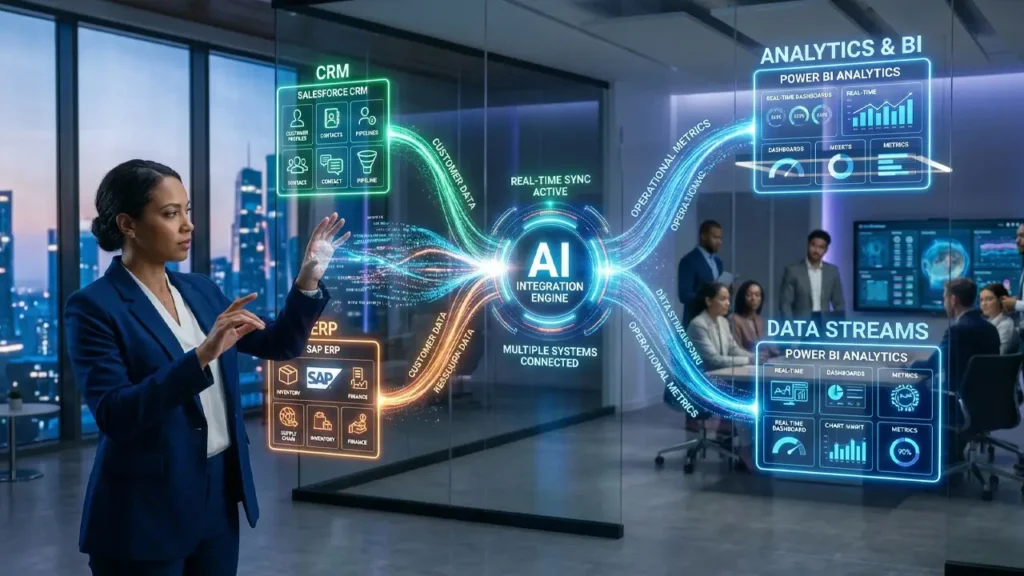
The true power of Mercury 2 emerges when integrated into enterprise technology ecosystems. The model connects seamlessly with existing business systems, drawing data from multiple sources and delivering insights through familiar interfaces that fit naturally into existing workflows.
Mercury 2 integrates with customer relationship management platforms, analyzing customer interaction histories, purchase patterns, support tickets, and engagement metrics to provide comprehensive customer intelligence. Sales teams receive AI-powered insights about which prospects to prioritize, what messaging resonates with different customer segments, and when opportunities risk stalling.
Enterprise resource planning system integration enables Mercury 2 to optimize operations by analyzing production schedules, inventory levels, procurement patterns, and resource utilization. The model identifies bottlenecks, predicts material shortages before they disrupt production, and recommends efficiency improvements based on patterns across operations.
Business intelligence platform integration allows Mercury 2 to enhance existing dashboards and reports with deeper analytical reasoning. Rather than simply displaying metrics, integrated systems provide context, highlight significant changes, explain contributing factors, and suggest actions based on current performance patterns.
The model also connects with financial systems, analyzing cash flow patterns, expense trends, revenue recognition, and profitability across business units. Financial planning and analysis teams leverage Mercury 2 for more accurate forecasting, scenario modeling, and variance analysis that explains differences between planned and actual performance.
Marketing automation platform integration enables more sophisticated campaign management. Mercury 2 analyzes campaign performance across channels, identifies which messages drive conversion with different audience segments, and optimizes marketing spend allocation based on predicted return on investment for different tactics.
Supply chain management system integration provides end-to-end visibility and optimization. Mercury 2 tracks supplier performance, predicts delivery delays, identifies alternative sourcing options, and optimizes inventory positions based on demand forecasts, lead times, and carrying cost considerations.
Human resources system integration supports talent management through analysis of recruitment effectiveness, employee engagement patterns, retention risks, and skills gap identification. Organizations use these insights to improve hiring processes, design targeted retention programs, and plan workforce development initiatives.
Mercury 2 Enterprise Integrations
Strategic overview of the integration capabilities of Mercury 2 reasoning AI across the mission-critical business systems of the modern cognitive enterprise.
| Business Infrastructure | Reasoning Capabilities | Strategic Business Value |
|---|---|---|
|
CRM Platforms
|
|
Conversion Lead
Enhanced Customer LTV & Retention
|
|
ERP Systems
|
|
Efficiency SOTA
Reduced OpEx & Operational Speed
|
|
BI Tools
|
|
Insight Speed
Factual Grounding in Data
|
|
Financial Systems
|
|
Capital Control
Precision FP&A Performance
|
Supply Chain Logic
Inventory SOTADemand forecasting, supplier behavioral evaluation, and inventory reasoning loops.
CRM Intelligence
Retention LeadTransforming customer data into predictive reasoning for high-value opportunity identification.
Strategic Planning with Advanced AI Models
Strategic planning represents one of the most valuable applications of reasoning AI in business. Mercury 2 transforms strategic planning from a periodic exercise into a continuous, data-informed process that adapts to changing business conditions.
The model supports comprehensive environmental scanning, continuously monitoring market trends, competitive movements, regulatory changes, technological developments, and economic indicators. Mercury 2 doesn’t just collect this information. It reasons about implications for specific business strategies, identifying which external changes create opportunities or threats for particular strategic initiatives.
Scenario planning becomes far more sophisticated with Mercury 2. Traditional scenario planning relies on human strategists to imagine plausible futures and think through implications. Mercury 2 augments this process by systematically exploring how different external factors might evolve, identifying scenarios that strategists might not have considered, and reasoning through business implications of each scenario in consistent depth.
The model excels at competitive strategy analysis. By examining competitor actions, financial performance, product launches, hiring patterns, and market positioning, Mercury 2 develops hypotheses about competitor strategies and predicts likely future moves. This competitive intelligence helps organizations anticipate market dynamics and position themselves advantageously.
Mercury 2 also supports portfolio strategy by analyzing business unit performance, market attractiveness, competitive position, and strategic fit. The model identifies which business units warrant increased investment, which face fundamental challenges requiring strategic repositioning, and which might be candidates for divestiture or harvest strategies.
Strategic initiative prioritization benefits enormously from Mercury 2’s reasoning capabilities. When organizations have more strategic opportunities than resources to pursue them all, the model evaluates each initiative’s strategic value, resource requirements, implementation risks, interdependencies, and timing considerations, then recommends prioritization that maximizes strategic progress within resource constraints.
The system also performs strategic risk assessment, identifying threats to strategic plans and reasoning about mitigation approaches. Rather than generic risk lists, Mercury 2 develops specific risk scenarios relevant to particular strategies, estimates likelihood and potential impact, and suggests concrete actions to reduce strategic vulnerability.
Long-range planning incorporates Mercury 2’s analytical depth to project how current strategic choices might play out over multiple years. The model considers compounding effects, market evolution, competitive responses, and capability development timelines, helping organizations understand the full implications of strategic commitments.
AI Enterprise Automation Tools Powered by Mercury 2
Beyond analytics and planning, Mercury 2 enables sophisticated business process automation that goes far beyond simple rule-based workflows. The model’s reasoning capabilities allow it to handle processes requiring judgment, adaptation to context, and intelligent exception handling.
In accounts payable automation, Mercury 2 processes invoices intelligently, matching them to purchase orders, identifying discrepancies that warrant investigation versus acceptable variances, and routing exceptions to appropriate personnel with context about why manual review is needed. The system learns from resolution patterns to handle increasingly complex scenarios autonomously.
Customer service automation reaches new levels with Mercury 2. Rather than simple chatbots following decision trees, the model understands customer issues deeply, reasons about appropriate solutions considering customer history and company policies, and escalates to human agents when situations require empathy or policy exceptions beyond its authority.
Lead qualification automation becomes more sophisticated. Mercury 2 analyzes prospect engagement patterns, company fit signals, buying intent indicators, and qualification criteria, then reasons about which leads deserve immediate sales attention versus nurturing campaigns, providing sales teams with prioritized lists and context for each interaction.
Document processing automation handles complex scenarios like contract review. Mercury 2 examines contract terms, identifies deviations from standard language, assesses risk implications, and flags clauses requiring legal review while routing standard agreements through automated approval.
Compliance monitoring automation continuously scans business activities for regulatory violations or policy breaches. The model understands regulatory requirements in context, recognizes when activities might violate rules even if not obvious pattern matches, and alerts compliance teams to situations warranting investigation.
Reporting automation goes beyond scheduled report generation. Mercury 2 creates dynamic reports that adapt to current business conditions, highlighting what matters most given recent performance, explaining significant variances, and surfacing insights most relevant to current strategic priorities.
Workflow orchestration becomes intelligent. Instead of rigid process flows, Mercury 2 adapts workflows based on transaction characteristics, resource availability, priority levels, and business context, ensuring that work moves efficiently while maintaining appropriate controls and quality standards.
Intelligent Business Forecasting AI Capabilities
Forecasting represents a critical business capability where Mercury 2’s reasoning approach delivers substantial improvements over traditional statistical methods. The model combines quantitative pattern recognition with qualitative reasoning about factors that influence future outcomes.
Demand forecasting incorporates multiple signal sources. Mercury 2 analyzes historical sales patterns, current pipeline activity, market trend indicators, economic conditions, competitive actions, and seasonal factors, then reasons about how these elements interact to shape future demand. The model explicitly considers events that might break historical patterns, such as product launches, market expansions, or regulatory changes.
Revenue forecasting extends beyond simple trend extrapolation. Mercury 2 examines deal pipelines, conversion rate patterns, sales cycle dynamics, pricing trends, and customer expansion indicators, building revenue projections that account for both bottom-up opportunity analysis and top-down market conditions.
Cash flow forecasting benefits from Mercury 2’s ability to model complex timing relationships. The system tracks receivables aging, payment pattern variations by customer segment, seasonal working capital swings, and planned capital expenditures, projecting cash positions with explicit reasoning about timing uncertainties.
Workforce forecasting helps organizations plan hiring and resource allocation. Mercury 2 analyzes growth plans, productivity trends, attrition patterns, skills requirements, and labor market conditions, forecasting headcount needs by role and identifying periods where recruitment challenges might constrain growth.
Financial statement forecasting incorporates business drivers rather than just historical financials. Mercury 2 models how volume growth, pricing changes, cost structure evolution, and investment decisions flow through to income statements, balance sheets, and cash flow statements, creating integrated financial projections grounded in operational reality.
Risk forecasting identifies potential disruptions before they materialize. The model monitors leading indicators across customer health, supplier stability, market conditions, and operational performance, flagging elevated risk of adverse events and quantifying potential impacts to help organizations prepare contingencies.
Market share forecasting considers competitive dynamics. Mercury 2 doesn’t just project your company’s performance in isolation. It reasons about how competitor actions, new market entrants, product innovations, and customer preferences might shift market share distributions, providing context for interpreting performance projections.
Forecasting Evolution Matrix
Analyzing the paradigm shift from historical extrapolation to Mercury 2’s reasoning-based predictive modeling. Moving from averages to causal logic.
| Forecasting Type | Traditional (Legacy) Tier | Mercury 2 Reasoning AI |
|---|---|---|
|
Demand
|
Historical Trend Extrapolation
Static Averages
|
Multi-Factor Market Reasoning
Causal Intelligence
|
|
Revenue
|
Pipeline Vol x Conv Rates
Funnel Assumptions
|
Deal-Level Competitive Logic
Deep analysis of buyer intent & rivalry.
|
|
Cash Flow
|
Average Payment Timing
|
Customer Behavioral Modeling
Specific pattern recognition per entity.
|
|
Risk
|
Historical Frequency Logs
|
Leading Indicator Monitoring
Scenario-based logic orchestration.
|
Demand Evolution
ReasoningExtrapolating past trends into a static future.
Multi-factor reasoning that weighs market context, weather, and consumer sentiment.
Revenue Logic
PrecisionMoving from pipeline averages to deal-level competitive reasoning.
Future of AI Reasoning Models in Enterprise
The introduction of Mercury 2 signals a broader transformation in how enterprises leverage artificial intelligence. Looking ahead, reasoning AI models will become increasingly central to business operations, strategic planning, and competitive differentiation.
We can expect reasoning models to become more specialized for specific industries and functions. While Mercury 2 provides general business reasoning capabilities, future iterations will likely incorporate deep domain expertise in areas like pharmaceutical research, financial services risk management, supply chain optimization, or legal contract analysis, combining reasoning frameworks with specialized knowledge.
Integration depth will increase substantially. Rather than reasoning models operating as standalone systems that users query periodically, they will become embedded throughout business systems, continuously reasoning about business performance, automatically flagging issues requiring attention, and proactively recommending actions within normal workflow contexts.
Collaborative reasoning represents another frontier. Future systems will enable teams to work alongside AI reasoning partners, with models participating in strategic discussions, challenging assumptions, proposing alternatives, and helping human teams think through complex problems more rigorously than either humans or AI could alone.
The speed of reasoning will improve dramatically. Current reasoning models require more processing time than simple language generation because they perform explicit analytical steps. As underlying technology advances, reasoning that currently takes minutes will happen in seconds, enabling real-time reasoning support even for complex business problems.
Explainability will become more sophisticated. Mercury 2 already provides reasoning transparency, but future models will offer even richer explanations, interactive exploration of reasoning chains, and ability for users to question assumptions or suggest alternative reasoning paths, creating genuine dialogue about analytical conclusions.
Personalization of reasoning approaches will emerge. Different executives and teams have varying decision-making styles and risk preferences. Future reasoning models will adapt their analytical approaches to match how specific users think about problems, presenting insights in frameworks that resonate with particular decision-makers.
Continuous learning from business outcomes will strengthen reasoning quality. As organizations act on AI recommendations and observe results, reasoning models will incorporate these experiences, refining their understanding of what works in specific business contexts and becoming increasingly valuable over time.
Ethical reasoning capabilities will develop. As businesses face complex decisions involving social impact, environmental consequences, and stakeholder trade-offs, reasoning models will incorporate ethical frameworks, helping organizations think through implications beyond pure financial optimization.
The competitive landscape will shift as reasoning AI becomes more accessible. Early adopters of advanced reasoning models like Mercury 2 will gain significant competitive advantages through better decisions, faster insights, and more effective strategies. Over time, reasoning AI will become table stakes, with competitive differentiation coming from how effectively organizations integrate AI reasoning into their unique strategic approaches.
Mercury 2 represents not an endpoint but a beginning. The reasoning AI capabilities it demonstrates today will evolve and expand, fundamentally changing how businesses operate. Organizations that embrace this technology now, learn how to work effectively with reasoning AI, and build processes that leverage these capabilities will position themselves advantageously for a future where AI reasoning becomes as fundamental to business as spreadsheets and databases are today.
The transformation extends beyond individual companies to entire industries and economies. As reasoning AI enables better resource allocation, more accurate forecasting, and more effective strategies, economic productivity will increase. Businesses will make fewer costly mistakes, identify opportunities faster, and respond more effectively to changing conditions.
Yet technology alone does not guarantee success. Organizations must develop new capabilities in AI partnership, learning when to trust AI reasoning, when to question it, and how to combine human judgment with machine analysis. The companies that thrive will be those that build cultures embracing AI collaboration while maintaining critical human oversight.
Mercury 2 and the reasoning AI models that follow represent powerful tools for business transformation. The question facing organizations is not whether reasoning AI will reshape business analytics and decision-making but how quickly companies will adapt to leverage these capabilities for competitive advantage. Those who move decisively to integrate reasoning AI into their strategic processes will lead their industries into this new era of intelligent business.